






A row of dark-sided single-story houses among large deciduous trees, with a trimmed hedge in the foreground and a mown lawn crossed by a paved path.

Heat Pump Repair in South Bend, IN

Tell us about the job

Takes about a minute. No obligation.

RepairHeat PumpSt. Joseph County, IN
Step 1 of 2

What ZIP code is the job in?

St. Joseph County saw 159 damaging wind events and 51 hail events between 2015 and 2024. Eight tornadoes touched down in that same stretch. The outdoor unit takes the brunt of that. It sits outside year round with coils exposed on the sides, and hail dents fins while wind-blown branches and debris can bend them or crack the fan blade. A unit that took a hit doesn't always stop working right away. It might run weeks or months with a dented coil or a bent blade before it struggles to keep up or draws more power than it should. If a storm has come through and you haven't had the outdoor unit looked at since, that's worth doing even if it's still running.

8 months
October through May, your system heats
3 months
June through August, it cools
20°F
the average winter night it heats against
81°F
the average summer afternoon it cools against
Isometric cutaway illustration of a single-story house showing interior rooms with furniture, an attic duct system connected to an indoor air handler, and an outdoor condenser unit linked by lines along the exterior wall.
Your system heats October through May and cools June through August.

NOAA nClimDiv, 1991–2020 normals

October asks your heat pump for heat for the first time in months.

A weak part that made it through summer easy can quit in the first cold week.

Half these homes are older than your heat pump's odds

Half the homes here were built by 1968
Climate zone 5A
Power here costs 16.62 cents per kilowatt-hour
Running rough costs you all year hereElectricity in St. Joseph County averages 16.62 cents per kilowatt-hour, higher than most US counties.

If your heat pump came with the house, ask the contractor how much life it has left, not just what's wrong today. A repair on a unit already past its expected years can turn into a second repair next season. Have them check the age against the model and serial plates on the outdoor unit if you don't know it already. That number, more than how the system sounds or feels right now, tells you whether to fix what's broken or start planning for the replacement.

Had the outdoor unit checked since the last storm

If the outdoor unit has taken hail or debris this year and nobody's looked at it since, that's worth doing before the next storm adds to it. A coil can run bent for a while before it costs you in output or power draw.

Find a contractor
A man in a dark long-sleeved shirt and tan work pants, seen from behind, carries a canvas tool bag up porch steps toward a blue paneled front door of a house with light lap siding and a potted flowering plant.
A gray air-source heat pump mounted on a concrete pad next to a house with gray vinyl siding, surrounded by gravel and flanked by green shrubs and white hydrangea flowers.

What you can check yourself first

Before you call, look at the thermostat first. Make sure it's set to heat and the set point is actually above room temperature, not just sitting where someone bumped it. Check the circuit breakers for the indoor air handler and the outdoor unit, since a tripped breaker on either side will stop the system cold. Walk outside and look at the unit itself. If the coil is caked in ice, leave it alone and see if it clears during a normal defrost cycle rather than chipping at it. If ice keeps building back within an hour or two, that's worth reporting when you call. Look for anything blocking airflow around the outdoor unit, like leaves, mulch or a cover left on, and clear it by hand. Inside, pull the air filter and hold it up to a light. If you can't see light through it, swap it or clean it, since a clogged filter can starve the system enough to trip a safety switch. Listen for what the unit is actually doing: a hum with no fan movement, a click that repeats without the compressor starting, or a fan that spins but weak airflow at the vents. Any of those tells the tech something useful before they even arrive. Don't take the outdoor unit apart or spray anything on the coil yourself. That part of the job needs the right tools and belongs to the person coming out.

A struggling heat pump doesn't fix itself by running more

A compressor working against a problem like a low refrigerant charge or a failing run capacitor draws harder to do the same job. Left alone, that strain is what turns a worn part into a burnt-out one. The unit doesn't rest and recover. It just keeps pulling more to make up the difference until something gives.
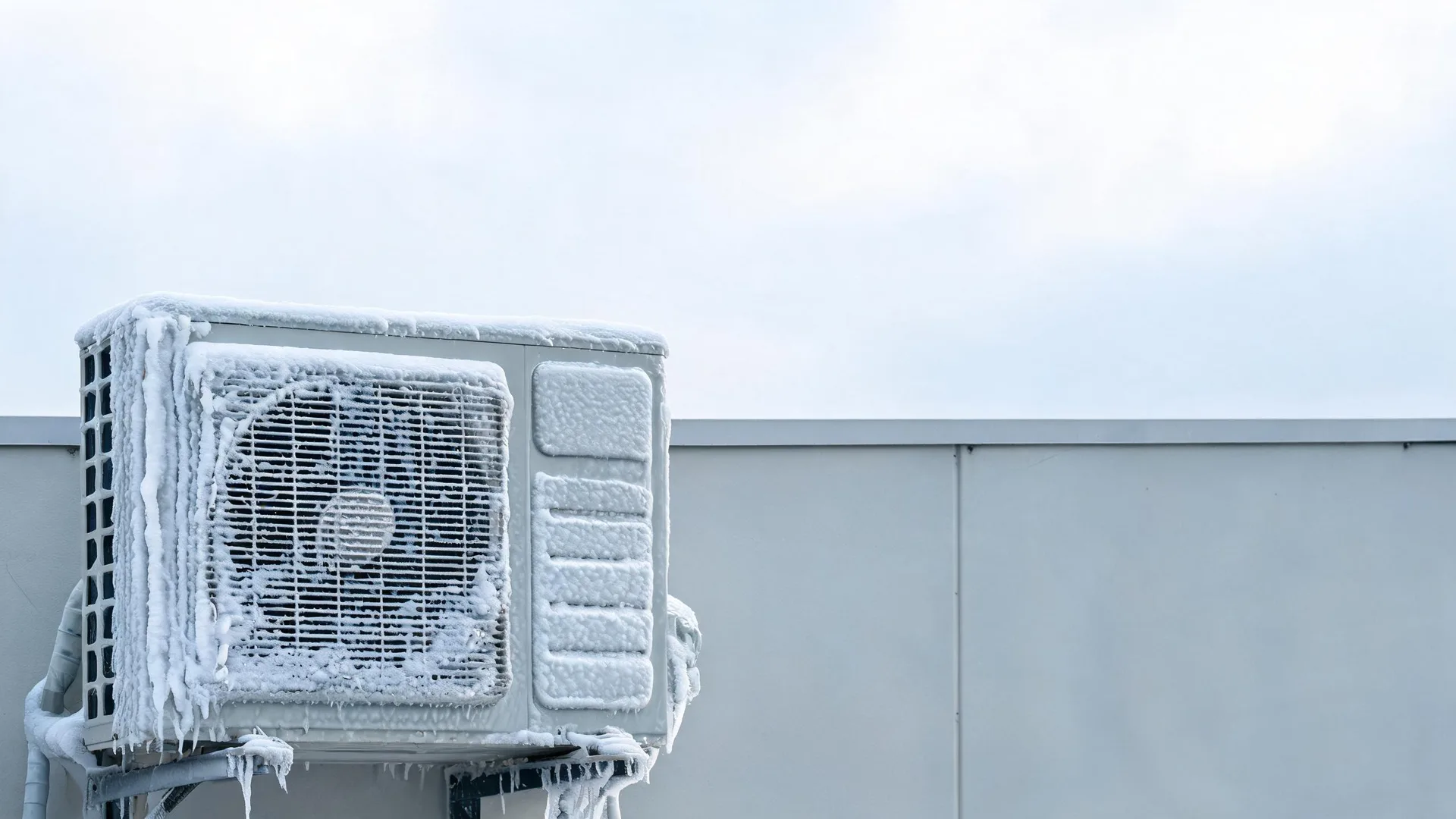
Ice and frost spread while the system keeps going

A frozen coil needs airflow or a defrost cycle to clear. If something is already keeping it from defrosting right, like a stuck reversing valve or a failing defrost sensor, running the system longer just lets the ice build past where a normal cycle can catch up. Thicker ice blocks more airflow, which makes the next cycle work harder too.

A heat pump that's struggling pulls more power to make the same heat, and power here already costs more than most places pay. That's not a one-time hit. It's every day between now and the repair at a higher draw than the system should need. A failing capacitor or a low charge doesn't ease up on its own, it runs hard the whole time it's ignored. Getting it looked at sooner means fewer weeks paying that penalty before winter settles in for good.

A diagnostic visit starts before any panel comes off. The tech asks what the system is doing, when it started, and what changed around that time. Then they check pressures on the refrigerant lines, test the capacitor and contactor, and read the amp draw on the compressor and fan motors against what the data plate calls for. Electrical readings catch a lot that you can't hear or see, like a motor pulling too hard for its size or a capacitor that's down on its rating but hasn't failed outright yet. Outside, they'll look over the coil and fan blade for damage and check that the reversing valve is actually switching when it's told to. Inside, they check the air handler, the filter, and airflow at the vents, since a problem that looks electrical sometimes traces back to something simple blocking air. By the end they can usually tell you which part is failing, why, and whether it's a repair worth making or a sign the system is nearing the end of its run.