A nighttime street view of several illuminated two-story red brick homes with front porches, flanked by a large tree.

Heat Pump Repair in Vincennes, IN

Tell us about the job

Takes about a minute. No obligation.

RepairHeat PumpKnox County, IN
Step 1 of 2

What ZIP code is the job in?

April is when a weak heat pump gets found out

Your heat pump sits idle most of September, then gets asked to switch over and run hard once October turns cold. A capacitor or contactor that was already marginal tends to fail right at that first real demand, not before.


Same thing happens in reverse come May

After months of heating, the system flips to cooling for the first time all year. If a part was already wearing down over the winter, the switch to cooling is what finally shows it.

7 months
October through April, your system heats
5 months
May through September, it cools
25°F
the average winter night it heats against
86°F
the average summer afternoon it cools against
Isometric line illustration of a cutaway house showing interior rooms with furniture, ceiling ductwork under a dark shingled roof, and an outdoor condenser unit connected by lines on the right.
Your system heats October through April and cools May through September.

NOAA nClimDiv, 1991–2020 normals

A heat pump low on refrigerant keeps running, so the compressor keeps working harder to move heat it doesn't have enough of.

Left alone, that same compressor is what fails outright and turns a repair into a replacement.

Knox County weather is ordinary. What fails in your heat pump is too.

128 severe weather events from 2015 to 2024
17% of homes statewide lost power a day or more in 2024
92 damaging wind events from 2015 to 2024
Knox County weather is ordinaryIndiana homes paid 14.77 cents per kilowatt-hour in 2024. The failures here are the usual ones.

Half the homes in Knox County were built in 1962 or earlier. If yours is one of them, the heat pump itself is almost certainly newer than the house, but check how long the current system has actually been in place. Heat pumps run every month of the year, cooling in summer and heating in winter, so the wear adds up faster than it would on a furnace that only works half the year. A system in its teens that needs a major repair is worth a second question beyond fixing it. Ask how much life is left before paying for a compressor or coil replacement.

Get the system's age before you pay for the repair

Find out how old the system is before you agree to a compressor or coil repair. If it's in its teens, ask what's left in it first.

Find a contractor
A gray heat pump outdoor unit mounted on a concrete pad next to the stone-accented exterior wall of a house.

What to check yourself first

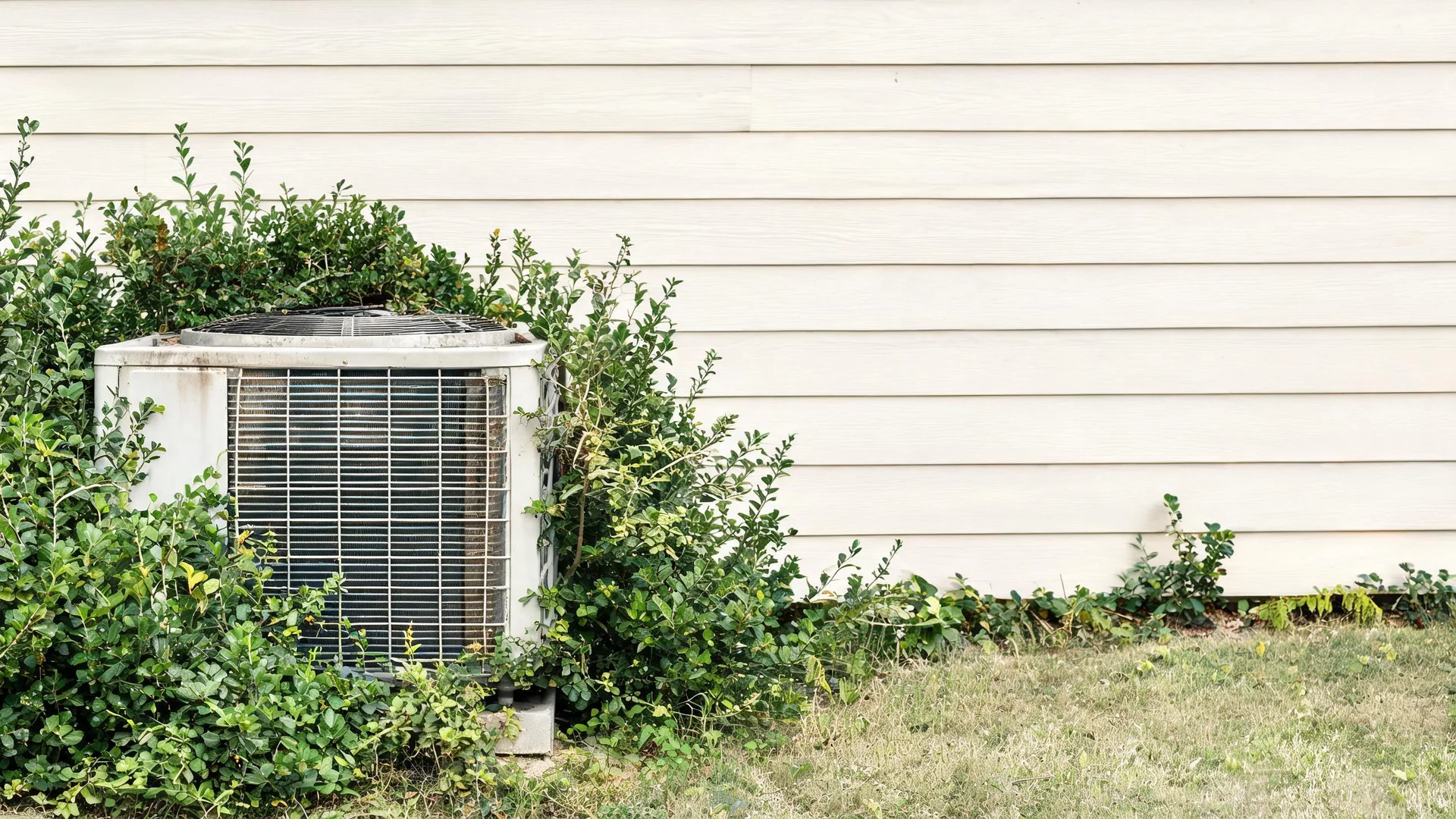
Before anyone comes out, go outside and look at the outdoor unit. If the fan isn't spinning at all, check the breaker first. A tripped breaker is something you can reset yourself, and it rules out a bigger problem fast. While you're out there, look at the coil, the finned part wrapping the unit. Some frost during a heating call is normal, the system clears it on its own a few times a day. Ice that never clears is not. Inside, check the thermostat batteries and make sure it is set to the mode you think it's in. A thermostat stuck in the wrong mode looks exactly like a failed system. Last, check the air filter. A filter choked with dust starves the system of air, and a heat pump starved for air will ice up or struggle to hold temperature no matter what else is right with it. None of this takes long, and it tells the contractor exactly where to start.

Some repairs make sense at any age

A failed capacitor, a bad contactor, a blown fan motor. These are wear parts, not signs the system is done. Replacing one brings a heat pump back to full working order no matter how old it is.

Some repairs are really a question about the whole system

A compressor or a coil is a different kind of job. Both sit at the center of how a heat pump moves heat, and both cost enough to put next to the price of starting over with new equipment. Before agreeing to either, it's worth asking what else on the system is close behind.

A heat pump in trouble rarely just stops. Short cycling is one of the clearest signs, the system kicking on, running a couple minutes, then shutting off again before it's done anything useful. That's hard on the compressor and it means the house never quite gets comfortable. Warm air coming out of the vents when it should be cold, or cool air when it should be warm, usually points to the reversing valve, the part that switches the system between heating and cooling. A hissing or bubbling sound near the lines outside is worth paying attention to as well, since that can mean refrigerant is escaping. And if the system runs constantly without ever reaching the set temperature, something is keeping it from moving enough heat, whether that's airflow, charge, or a part that's worn past doing its job.

A diagnostic visit starts outside at the unit itself, not with a clipboard. A tech will check the refrigerant pressures, pull the electrical panel and test the capacitor and contactor, and watch how the reversing valve responds when the system is asked to switch modes. Inside, they'll check the air handler, the static pressure in the ducts, and the temperature split between the air going in and the air coming out. That split tells them a lot on its own. A healthy heat pump moves a predictable amount of heat across the coil, and when it doesn't, the size of the gap points toward airflow, charge, or a failing part before anything gets opened up. Most of this happens with gauges and a multimeter, not guesswork.