Why your furnace is blowing cold air in Indiana

Send the request today and stop worrying about who to call.

Let a pro reach out

A furnace blowing cold air usually means it is stuck on the blower fan while the burners stay off. The thermostat fan setting may have been bumped to "on" instead of "auto", which keeps air moving even when nothing is heating it. It can also mean the igniter failed, the flame sensor is dirty, or the gas valve is not opening, so the burners never light and only the fan runs. A clogged filter can cause the system to overheat and shut the burners down as a safety measure, leaving the blower running on its own. On a gas furnace, this is not something to wait out. With Indiana winters, a furnace that will not hold a flame needs a look from someone who can test the igniter, the flame sensor, and the gas valve and tell you which one is the actual problem.

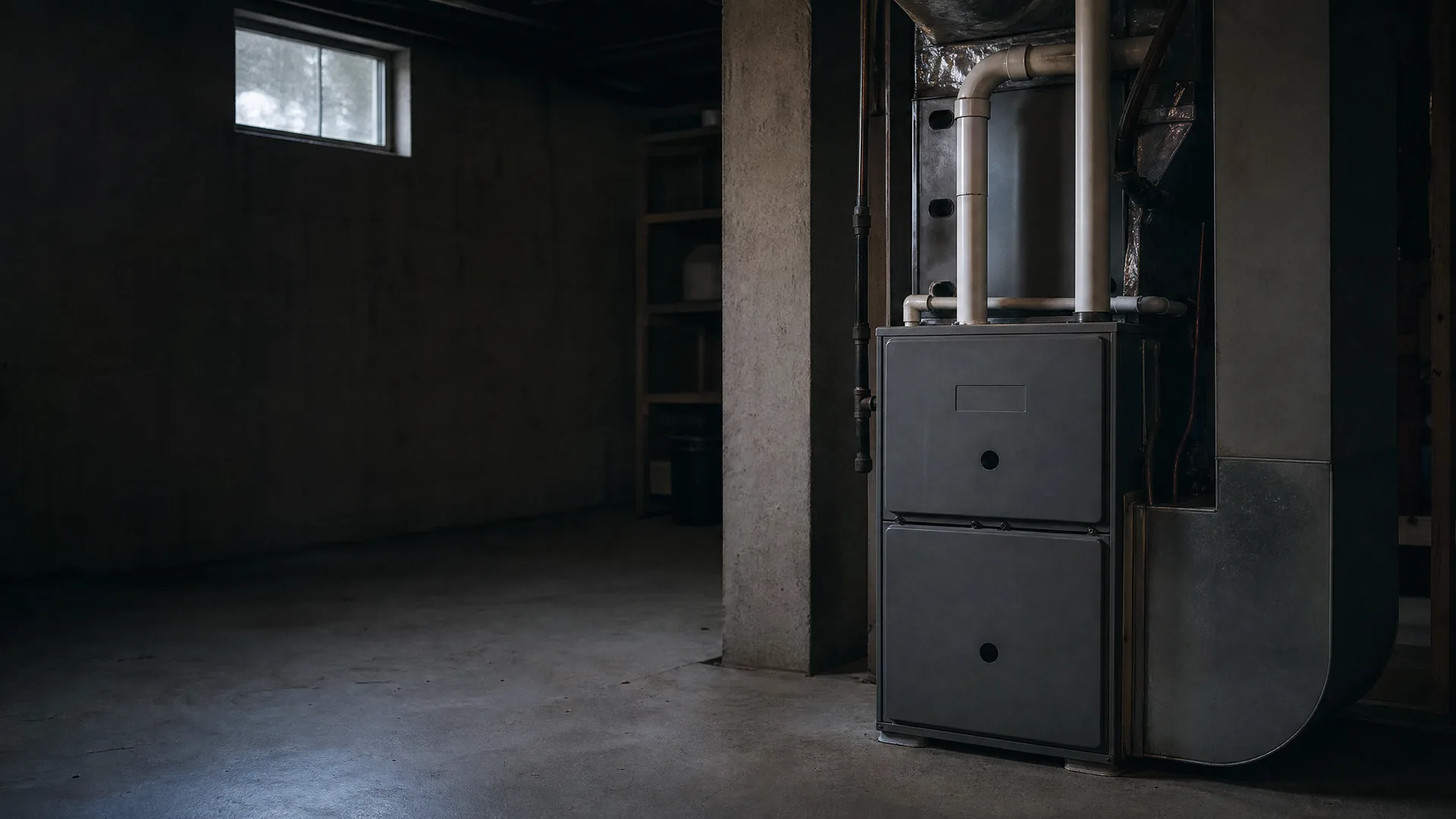
A gray high-efficiency furnace with white PVC vent pipes and attached ductwork stands beside a concrete support column in a dim, empty basement with bare concrete walls and floor and a small window.

You're down in the basement after dinner, and it's gone dark outside already, the way it does in Indiana by six in November. The furnace sits against the wall, and you notice the air coming out of the vents feels wrong before you even think about it, just moving air with nothing behind it. You crouch by the cabinet and the burners aren't lit. No hum of flame, no warmth radiating off the metal. Just the blower running steady, pulling a thin haze of dust up into the beam of your flashlight. The house is already starting to feel it, that first chill settling into the rooms upstairs while this thing keeps moving cold air through the ducts.


A gray furnace with sheet-metal ductwork, PVC vent pipes and a yellow gas line stands on a concrete basement floor beside wooden stair framing.
A furnace that still lights and only runs cold air at the end of a cycle is still doing its job most of the time.
An older gas furnace with a louvered front panel stands on a concrete basement floor beside galvanized sheet-metal ductwork, a metal flue pipe, gas piping and a flexible conduit along a concrete wall.
Gas pipes and the flue pipe all connected and none of it heating the air means the burners aren't firing at all.
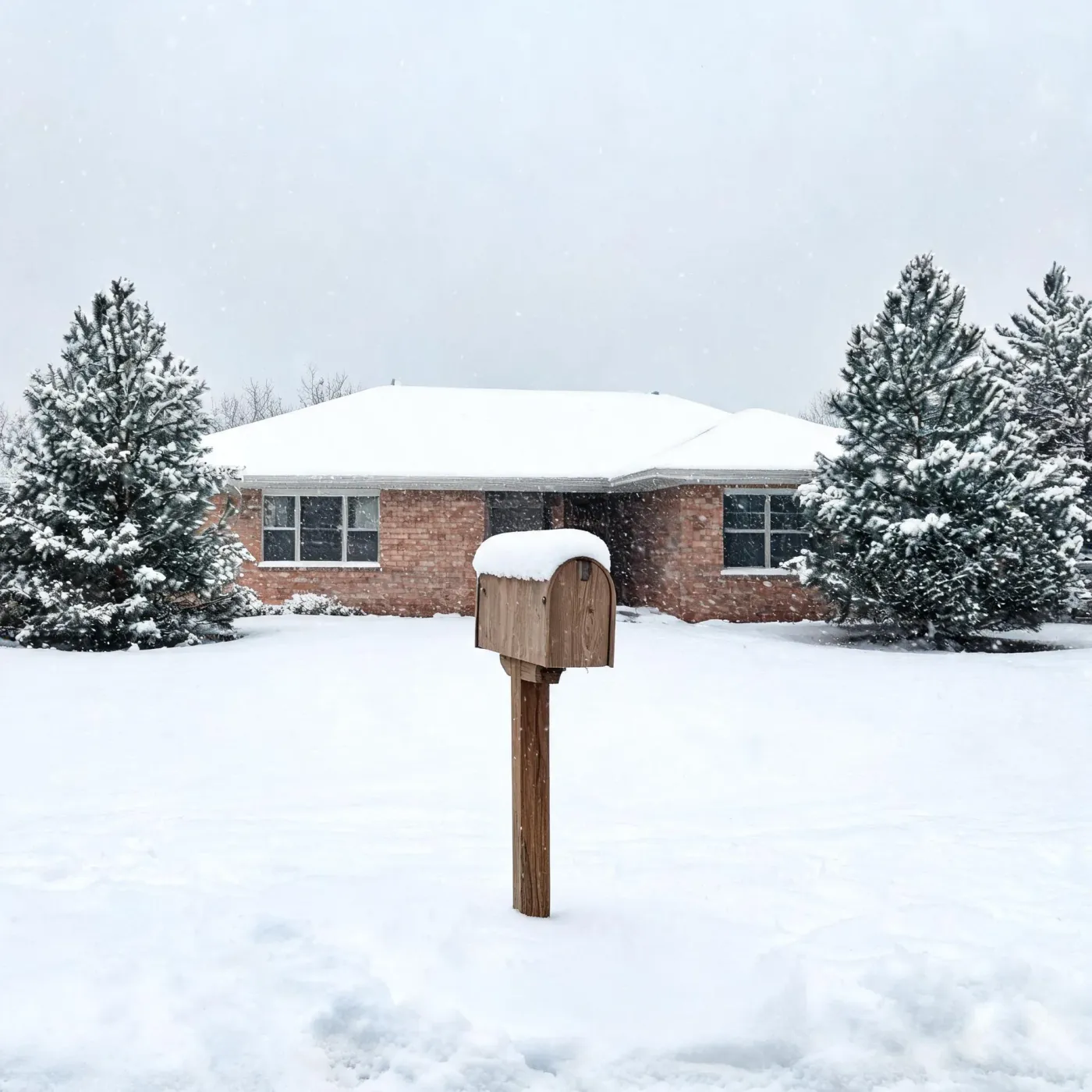
A snow-covered wooden mailbox on a post stands in a snowy yard in front of a single-story brick house flanked by snow-laden evergreen trees during falling snow.

Winter nights average 22°F across Indiana, according to NOAA climate data, and that's the stretch where a furnace blowing cold air stops being something you can put off. At 22 degrees a house loses heat fast, and a blower pushing unheated air through the ducts will drop the rooms farthest from the furnace within an hour. You'll feel it first at the floor registers in bedrooms down the hall. If the burners aren't firing, the blower running just circulates cold basement air through the whole house instead of warming it, and the thermostat will keep calling for heat that never comes.

NOAA nClimDiv 1991-2020 county normals weighted by homes

A closed dark laptop and a ceramic mug of coffee on a wooden dining table, with wooden chairs, a dark kitchen cabinet with cutting boards and a potted plant, and a leafy plant by a window in the background.

What's happening inside the cabinet

A gas furnace fires in a set order. The thermostat calls for heat, the inducer motor starts to clear the heat exchanger, the igniter glows or sparks, and the gas valve opens so the burners light. Only after the heat exchanger warms up does the blower kick on to push that heated air through your ducts. If any step before the blower fails, the blower often still runs on its own timer and you get a furnace moving air that was never heated.

A cracked igniter, a gas valve that won't open, or a flame sensor coated with residue can each stop the burners while leaving the blower doing its part. Figuring out which one takes a meter and some time with the panel off, not guessing from upstairs. Rather than calling a few places and describing the same cold air down in the basement each time, one form sends your situation to a contractor who can check the igniter, the valve, and the sensor in the order that actually finds the problem.

A living room corner with a beige sofa and cushion, a round wooden coffee table holding a pale ceramic vase of eucalyptus stems and a wooden bowl, and a curtained window with a potted plant above a latticed radiator cover in the background.
A gray high-efficiency furnace in a basement with PVC venting pipes, a yellow gas line, metal ductwork, concrete walls and floor, and a wood-framed stairway at left.

Running the way it should

This is a furnace doing its job. The burners fire, the heat exchanger warms up, and only then does the blower push air through the plenum. Stand near a vent and the air is warm within a minute or two of the cycle starting, every time.

A beige furnace with a louvered front panel and metal ductwork stands on a concrete basement floor beside pipes and a white cylindrical water heater.

Stuck on cold air

This is the same kind of setup with the burners not lighting. The blower still runs, pulling air through the ducts, but nothing upstream is heating it. Air moves through the house and never warms up, cycle after cycle, until the gas valve or igniter gets looked at.

A smiling man in a blue denim shirt over a white tee sits at a light stone kitchen counter with a grey mug and a bowl of oranges and bananas, with pendant lights and shelving behind him.
A smiling bearded man in a grey long-sleeved shirt sits at a kitchen counter with a dark mug, with a dining table, pendant light and glass doors onto greenery behind him.
A bearded man in a dark green knit sweater smiles and looks off to the side while standing at a kitchen counter with a white mug of coffee, with open shelving, a potted tree, and a dining table near large windows behind him.
A man with dark curly hair in a dark green sweater stands smiling and looking to the side in a kitchen with white cabinets, a potted plant, a stone countertop with a ceramic mug, and a dining area with framed art in the background.

Send one request and you're done looking

Explain the job once and skip repeating it on every call.

You only hire the pro if you want to.

A gray high-efficiency furnace stands on a concrete basement floor beside galvanized sheet-metal ductwork, with white PVC vent pipes, gas and water lines, and unfinished wood framing behind it.

The furnace doing its job

White PVC flue pipes run from the furnace up through the framing, and the air handler sits next to it moving warm air out through the ductwork. Nothing is loose, nothing is disconnected. The gas line and the electrical conduit both run clean into the cabinet, which is what a furnace heating a house actually looks like.

A beige furnace with two louvered front panels stands on a concrete basement floor beside galvanized ductwork, metal pipes, and a wooden post.

The furnace stuck on cold

Same kind of setup, galvanized ductwork overhead, the gas line feeding in, the flue vent tied in next to the foundation wall. Everything looks connected the same way. But if the burners aren't lighting, none of that matters. The blower still pushes air, it just never gets heated first.

Can a dirty filter make my furnace blow cold air?

You changed the filter three months ago and figure it's fine, but the air coming out feels cool and you're wondering if that cheap cardboard filter is really the reason. It seems like a small thing to cause a problem this noticeable, so before you start checking the igniter or the gas valve, it's worth knowing whether the filter alone can do this.

Yes, a clogged filter can overheat the furnace and shut the burners off early

A filter packed with dust blocks airflow across the heat exchanger. The burners keep firing, but with less air moving past them, the exchanger heats up faster than it should. A safety switch called the limit switch senses that and shuts the gas valve off to keep the exchanger from cracking. The blower often keeps running after that, so you still feel air moving through the vents, just without any heat behind it. This is one of the more common reasons a furnace blows cold air, and it's also one of the simplest to rule out. A filter that's visibly gray or packed with lint is worth checking before anything else gets opened up.

  1. Thermostat calls for heat and energizes the furnace control board.

  2. Inducer motor starts and clears the heat exchanger for a safe burn.

  3. Igniter glows hot or sparks to light the gas burners.

  4. Gas valve opens and burners fire inside the heat exchanger.

Winter nights average 22°F statewide

At 22°F, a house gives up heat fast once the sun goes down. If the burners have cut out and only the blower is running, the air coming through the vents is the same temperature as your basement, not your living room, and the house starts losing ground within the hour.

NOAA nClimDiv 1991-2020 county normals weighted by homes

Waiting to see if it clears up

You set the thermostat down a degree or two and tell yourself you'll deal with it this weekend. Maybe it's just the cycle finishing out, maybe it fixes itself. Meanwhile the burners still aren't firing right, and every cycle the blower runs is pushing cold air through a house that's losing ground against a 22 degree night. By the time Saturday comes you're not calling one contractor, you're calling three, explaining the same thing each time and waiting to see who calls back first.

Getting it looked at now

You send the form tonight instead of waiting out the week. That's the last part of this that's on you. No digging through reviews, no explaining the igniter and the gas valve twice over, no sitting on hold comparing quotes while the house stays cold. A furnace stuck on the blower with the burners off doesn't get better with time, and the sooner someone's looked at the heat exchanger and the gas valve, the sooner warm air is actually coming through those vents again.

A beige residential furnace stands on a concrete basement floor beside galvanized sheet-metal ductwork, a round flue pipe, copper gas piping, and a PVC condensate line, with a wood-paneled wall at right.
Before you get your furnace repair
A gray high-efficiency furnace in a basement with white PVC vent pipes, sheet-metal ductwork, copper and black piping, a condensate pump, and insulated walls above a concrete floor.
After you get your furnace repair

Where this leaves you

  • Cold air from the vents means the blower is running while the burners stay off, not a thermostat you can just turn up.
  • A furnace that only cools at the tail end of a cycle is still lighting and working most of the time.
  • One that never heats at all, with the gas line and flue still connected, has burners that aren't firing.
  • At 22°F overnight, a house loses ground fast once the air coming through the ducts isn't warm.
  • The igniter, the gas valve and the flame sensor are the parts most likely behind burners that won't stay lit.
  • Letting a cycle or two pass to see if it clears up just means more cold air while the cause stays the same.

A furnace blowing cold air is telling you something specific. The blower is doing its job. The burners aren't. Whether that means a cycle that cools off at the very end, or a furnace that never gets warm at all, the cause sits in the same handful of parts: the igniter, the gas valve, the flame sensor. None of those get better with time. A weak igniter doesn't strengthen. A flame sensor coated with residue doesn't clean itself. Every cycle that runs cold is another cycle where the house loses ground instead of gaining it, and at 22°F overnight in Indiana, that ground is gone fast.

You're someone who deals with a problem when it's small, not after it's taken over a weekend. That's the right instinct here. A furnace that lights but cools at the tail end is still mostly working, which is exactly why it's worth catching now rather than waiting for the night it doesn't light at all.

Once you send the form, you're done hunting. No scrolling through reviews, no calling three contractors and repeating the same description of what the air feels like three times, no sitting on hold. A licensed contractor who works on furnaces in Indiana gets your information and takes it from there. The part that was yours, finding someone who can actually look at this, stops being yours.

A man in a blue T-shirt sits on a light gray sofa, laughing while looking at an open laptop in the foreground, with a framed picture, lamp and potted plant behind him.
A bearded man in a blue and brown plaid flannel shirt stands indoors looking out a window at snow-covered trees, with a ceramic mug on the windowsill.

Furnace Repair

Finding a pro stops being your job

Skip searching for a furnace pro and answer a few questions instead.

A black-framed smartphone standing upright against a plain light gray background, its screen filled with solid green.
RepairFurnace or heatingIndiana
Step 1 of 2

What ZIP code is the job in?