



Can a heat pump keep up with winter here
Your winter low here averages 26°F, and that's the problem for a standard heat pump. Below 40°F it already puts out less heat than its rating. Below about 35°F it usually needs backup heat to make up the difference. Both marks sit above your average overnight low, not below it, so this isn't a rare cold-snap problem. It's most nights, October through April.
About 90 nights a year here drop to freezing or below. Every one of those nights is already past both marks. That doesn't mean the heat pump quits. It means it's leaning on backup heat, usually electric resistance strip heat, to hold the house at temperature, and that backup heat is what makes a heat pump expensive to run on the coldest nights. The one night a year that hits 0°F or below is the extreme case, not the typical one. The typical case is 26°F, and a standard heat pump is already working against its rating before it gets that cold.
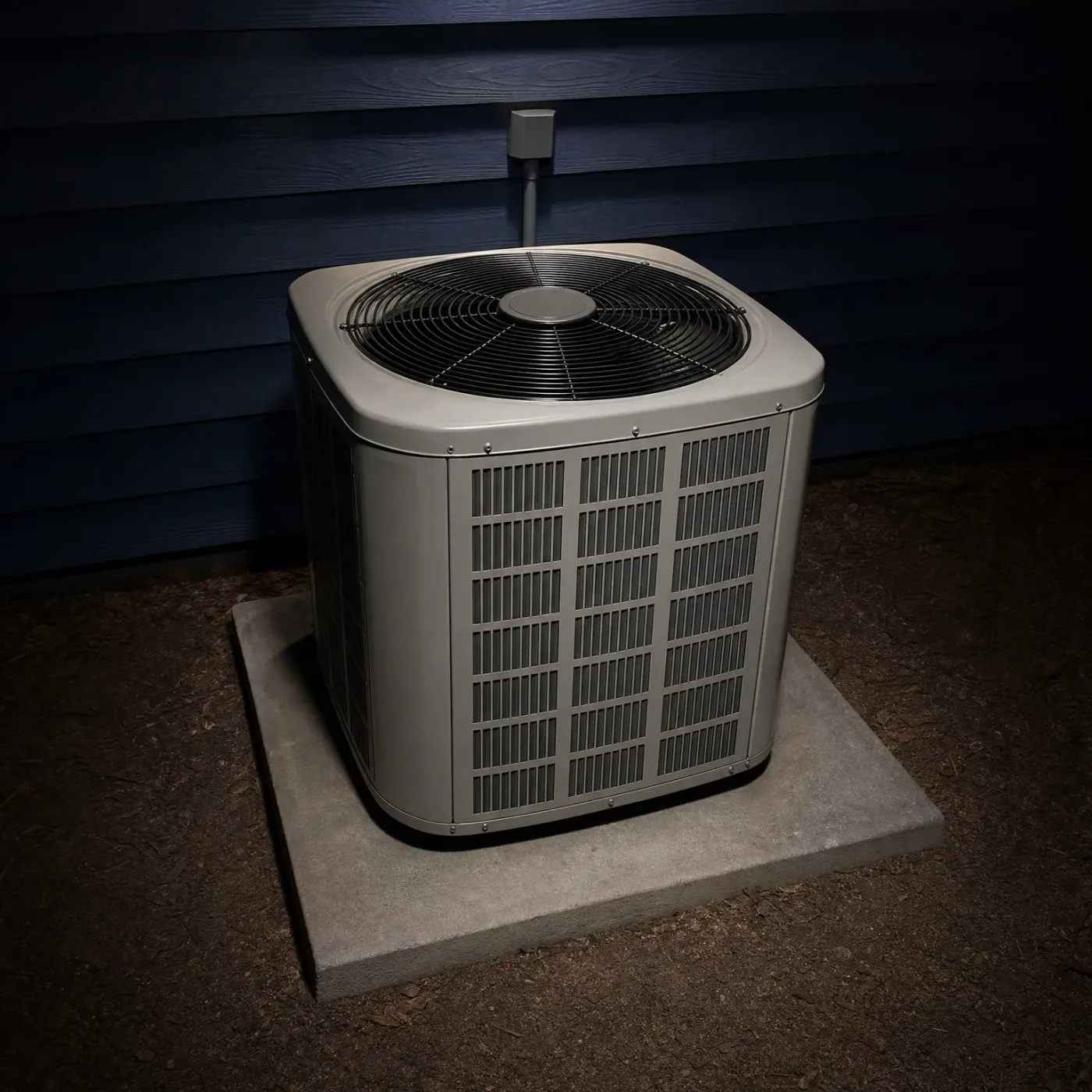
A cold climate heat pump changes this math. To earn that label, a unit has to deliver at least 1.75 units of heat per unit of electricity at 5°F and hold onto 70 percent of its 47°F capacity at that same temperature, with testing to back it up. In field tests of prototype cold climate units, backup heat covered only a small share of the output between 0°F and 35°F, and the units almost never ran on backup alone above 0°F. That's a different machine than the federal-minimum heat pump priced in the running-cost comparison above, and it closes most of the gap this county's winter opens up.