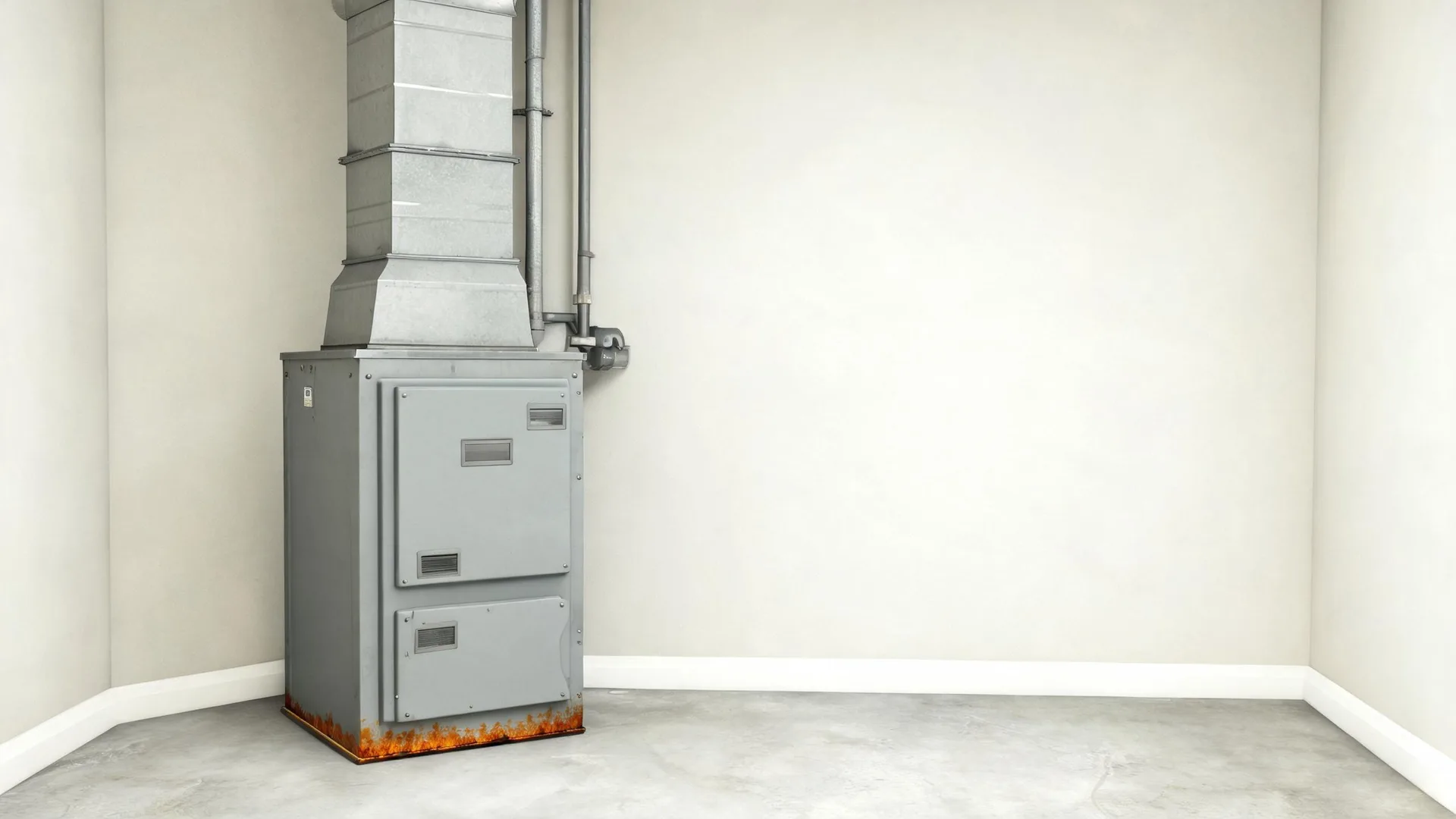
September is the month to catch problems early
Furnaces in Harrison County start up in October after sitting idle since spring. A weak igniter or a failing blower motor often won't show itself until the system is asked to run again.
Takes about a minute. No obligation.
Furnaces in Harrison County start up in October after sitting idle since spring. A weak igniter or a failing blower motor often won't show itself until the system is asked to run again.
Once heat runs steady from October through April, any part that was already marginal gets put under load right away. A furnace that struggled last season and wasn't fixed is the most likely one to fail first this time.
NOAA nClimDiv, 1991–2020 normals
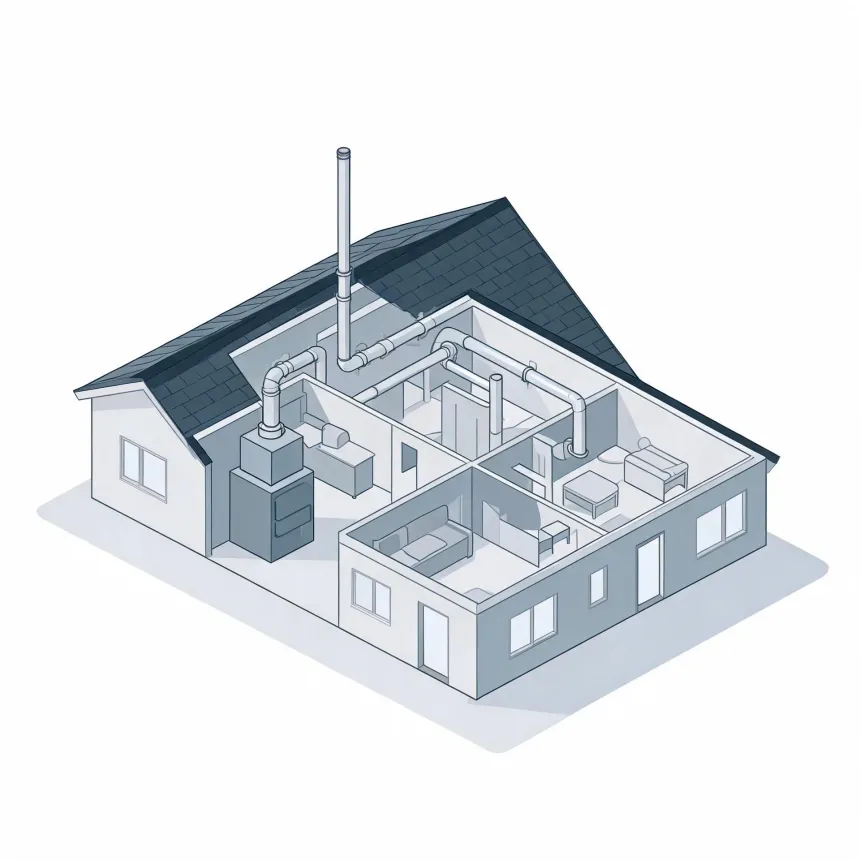
Corydon furnaces run about seven months straight once they start, October through April.
A furnace that's basically sound can make it through that. One with a worn part already in it usually can't.




A diagnostic visit starts with a question. The tech asks what the furnace was doing before it quit, short cycling, no heat at all, a smell, a strange sound. Then the panel comes off and the furnace gets run through a full cycle, start to finish, since some faults only show up partway through. The igniter gets checked for a steady, even glow instead of a weak or broken one. The flame sensor gets checked on its own too. A dirty sensor will shut the burners off right after they light, and that looks like an ignition problem even though it isn't one. The blower gets watched for weak or noisy airflow, and the inducer motor gets listened to for the draw it needs before the burners are allowed to fire. Once the tech has seen which part fails, and at what point in the cycle, there's something real to talk about fixing.
Electricity in Indiana runs $43.28 per million Btu, and a furnace with a bad igniter or a weak blower motor doesn't get cheaper to run while it waits. Once it's back on for the season, a part that's already struggling means paying more for the same heat, month after month. Get the real cause found before it has to carry the whole winter.
Find a contractorIf your furnace came with the house, odds are the house itself is newer, and the furnace is too. A newer furnace with one bad part, an igniter or a blower motor, is still worth fixing. That's a repair, not a reason to replace the whole system.
Metal expands when it heats up. A hairline crack that's sealed tight when the furnace is cold can open into a real gap once the burners run, and that's when exhaust gas finds its way into the air the blower is pushing through the house. Shutting it down stops that. Leaving it running doesn't.
A flame sensor coated with a thin layer of residue reads a weaker signal every time it fires. Early on, the furnace just hesitates before it catches. Run it like that long enough and the sensor stops reading a flame at all, so the furnace shuts itself off instead of lighting.
Before any of that, there's a few things worth looking at. Check the thermostat is set to heat and the temperature is actually above room temperature, since a setting bumped by accident looks exactly like a dead furnace. Go to the breaker panel and look for one that's tripped or sitting halfway between on and off. If the furnace has a standing pilot, check whether it's lit. If it's gas, make sure the gas valve is turned to on, not off. Check the air filter too. One that's packed with dust chokes the airflow enough that some furnaces will shut themselves down rather than keep running. None of this takes tools or know-how, and it rules out the causes that have nothing wrong with the furnace at all.
A furnace fails one part at a time. The igniter quits, or the blower motor does, or the control board does. Replacing that one part brings the whole furnace back, same as a car running fine again after a new alternator instead of a new engine. What matters more than the failure itself is whether it's alone. A furnace that's old and failing in more than one place is worn out everywhere at once, not just at the part that happened to go first. A young furnace with one bad igniter is a different situation entirely. The honest question isn't whether something broke. Furnaces break. It's whether what's left is still sound enough to be worth fixing.