A row of illuminated two-story brick houses with front porches and mature trees photographed at twilight.

Heat Pump Repair in Corydon, IN

Tell us about the job

Takes about a minute. No obligation.

RepairHeat PumpHarrison County, IN
Step 1 of 2

What ZIP code is the job in?

A heat pump here isn't fighting extreme heat

Zone 4A asks a heat pump to work in both directions, but the summers here aren't the brutal kind that run a compressor into the ground. The air sits heavy, with a dew point near 66°F across June, July and August, but that's humidity load, not punishing heat. A heat pump in Corydon logs real hours without the hardest conditions some places put it through.

What that means for a repair call

A heat pump that hasn't been run hard usually has less wear on the compressor and coils than its age alone would suggest. When something goes wrong, it's more often a part that failed or a system that got skipped on maintenance, not a machine worn out from years of strain. That makes repair the right call more often than replacement.

7 months
October through April, your system heats
5 months
May through September, it cools
26°F
the average winter night it heats against
86°F
the average summer afternoon it cools against
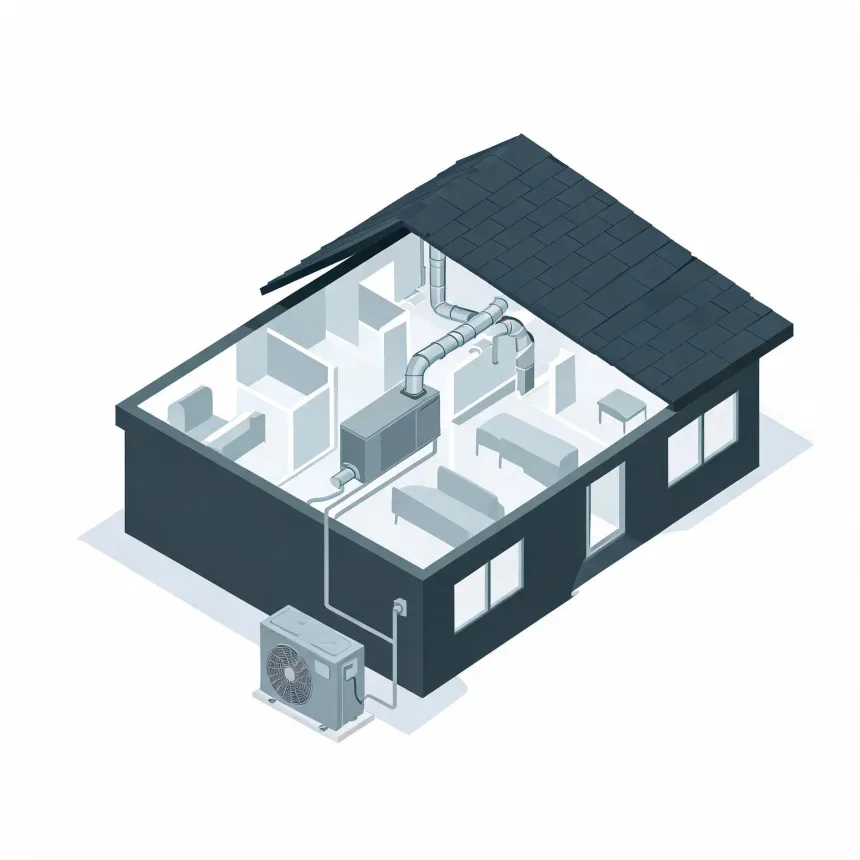
Isometric cutaway illustration of a single-story house showing interior rooms, ceiling ductwork connected to an air handler, and an outdoor condenser unit linked by a line set.
Your system heats October through April and cools May through September.

NOAA nClimDiv, 1991–2020 normals

A heat pump has a reversing valve that a straight air conditioner doesn't, since it has to switch direction to heat the house instead of just cooling it.

That valve can stick or fail on its own, apart from anything to do with wear, and it's a common reason a heat pump blows warm air in winter or won't switch over.

Half the homes here are newer than that, and so is what's inside them

Half the homes here were built by 1990
69 damaging wind events from 2015 to 2024
33 hail events from 2015 to 2024

Heat stays on here from October through April, about seven months out of the year. Cooling takes over in May and runs through September. That's two change points a year, not one, and a heat pump that was limping along tends to show it right when the load shifts. September is worth watching, since that's the last easy month before heat takes over, and a weak part that got through summer on milder days can give out once the system has to work through cold mornings. Overnight lows average 26°F across December, January and February, and that's when a struggling heat pump has the least room to coast.

A heat pump in decent shape is a heat pump worth fixing

A heat pump that hasn't been run hard still needs the failed part found and replaced. Wind and hail come through this county often enough to knock a unit out of balance or chip a fan blade without the owner ever seeing it happen. Get it looked at before the next cold snap or the next muggy stretch asks more of it than a damaged part can give.

Find a contractor
A man in a cap, gray long-sleeve shirt and brown work pants walks up porch steps toward a dark blue front door, carrying a canvas tool bag with tools in its side pockets, beside a potted shrub.
A gray heat pump outdoor unit mounted on a concrete pad next to the stone-accented exterior wall of a house.

How long this one has been running matters less than what broke

If your heat pump came with the house, check when that was. A system installed when the house was built is still within reach of a normal repair rather than a replacement. That's worth knowing before you agree to anything. A contractor should be able to look at the unit, tell you what part failed, and fix that part, not steer you toward a new system because the old one has logged a lot of hours. Years on the job and years left in it are different things here.

A refrigerant leak doesn't hold still

A heat pump low on charge will keep running, but the compressor ends up moving refrigerant that isn't carrying enough oil back with it. Keep it running low and the compressor can score its cylinder walls or seize outright. What started as a leak you could patch turns into a compressor swap.

A failing part drags down the ones around it

A weak capacitor makes the compressor or fan motor pull harder to start and run. Run it that way long enough and the motor windings take the damage, not just the capacitor. The same goes for a dirty coil that makes the compressor work against higher pressure than it was built for. Catch it early and it's one part. Wait, and it's two.

A heat pump usually tells you something is wrong before it quits outright. It might blow air that isn't as warm or as cool as it used to be, or run for long stretches without reaching the temperature on the thermostat. Short cycling, where it kicks on and off every few minutes instead of running a steady stretch, points to a sensor or control board issue, or sometimes just a dirty filter making the system think it's done its job. Ice on the outdoor unit in the middle of winter is normal for short periods, but a coil that stays frosted over usually means the defrost cycle isn't working or refrigerant is low. A hissing or bubbling sound near the lines usually means a leak. Grinding, squealing, or a hard metallic clunk when the system starts up is a motor or bearing telling you it's close to done. Any of these is worth a call before the part that's struggling takes another one down with it.

Deciding between repair and replacement comes down to whether the system's problem is one failed part or a pattern of them. A single failed capacitor, a bad contactor, a control board that's gone haywire, those are isolated problems with isolated fixes. A unit that's needed three service calls in two years for three different reasons is telling you something else, that parts are failing because the system as a whole is wearing out, not because it had bad luck. Age matters less than people think. What matters more is whether the compressor itself is sound. A compressor swap is a major repair, and on an older unit it's often the point where a contractor will tell you straight that putting a new compressor in an old system doesn't make sense. Everything short of that, the fan motors, the valves, the sensors, the boards, is just a part doing a part's job and then needing to be replaced when it wears out. Ask what failed before you ask how old the unit is.