





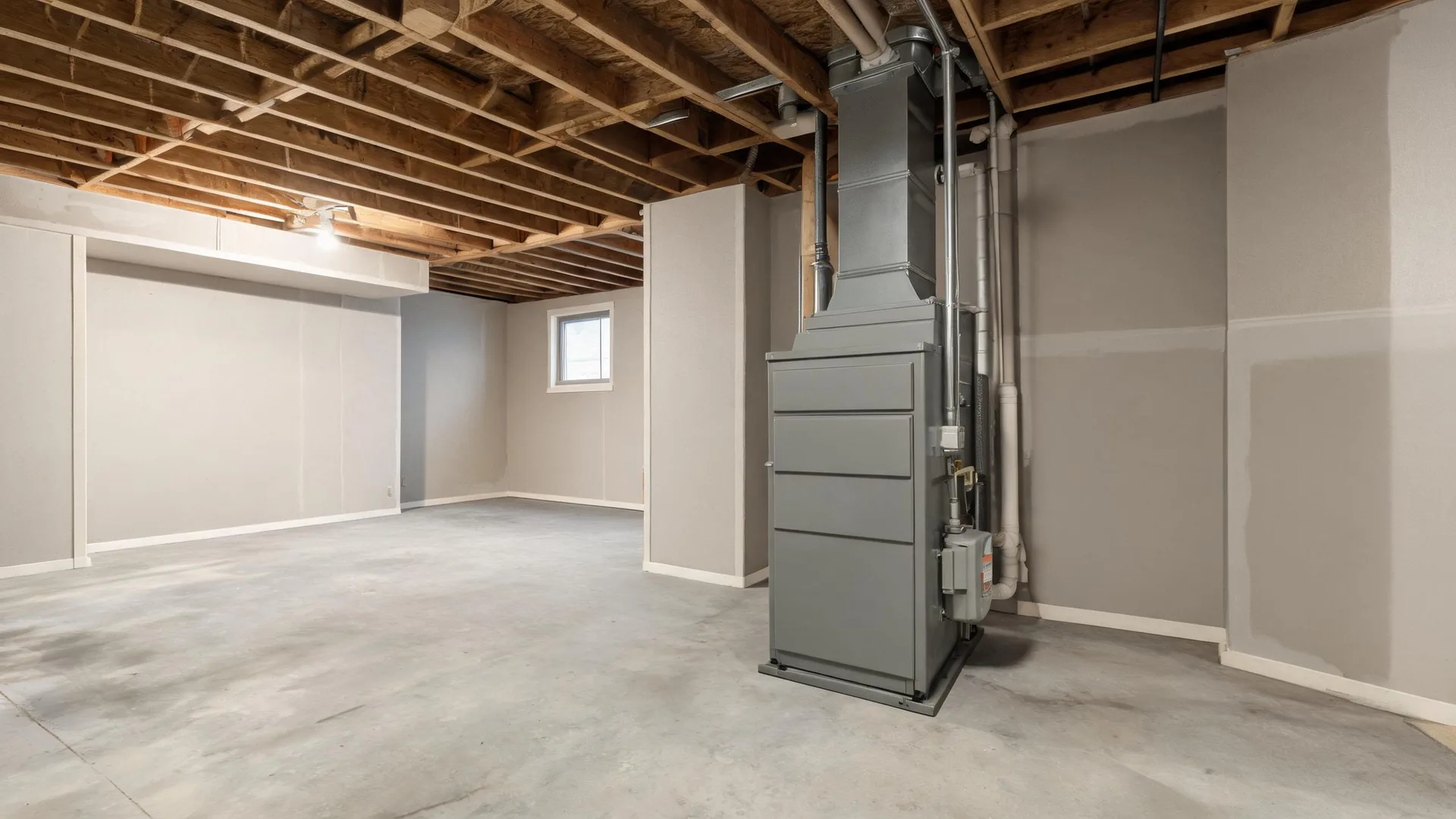
An unfinished basement featuring concrete block walls, exposed floor joists, a bare concrete floor, and a forced-air furnace with a large metal exhaust duct in the corner.

Furnace Installation in Corydon, IN

Tell us about the job

Takes about a minute. No obligation.

New system or replacementFurnace or heatingHarrison County, IN
Step 1 of 2

What ZIP code is the job in?

Electricity in Indiana runs $43.28 per million Btu, and most homes in Harrison County heat with it. That cost is fixed before anyone picks a furnace. What changes bill to bill is how much of that electricity turns into heat in the house and how much gets wasted. A furnace that runs harder than it needs to is pulling more of that $43.28 every time it kicks on through a cold winter. The equipment and the install both decide which side of that you end up on.

7 months
October through April, your furnace is on duty
26°F
the average winter night it heats against
80% AFUE
the federal minimum any new unit must meet
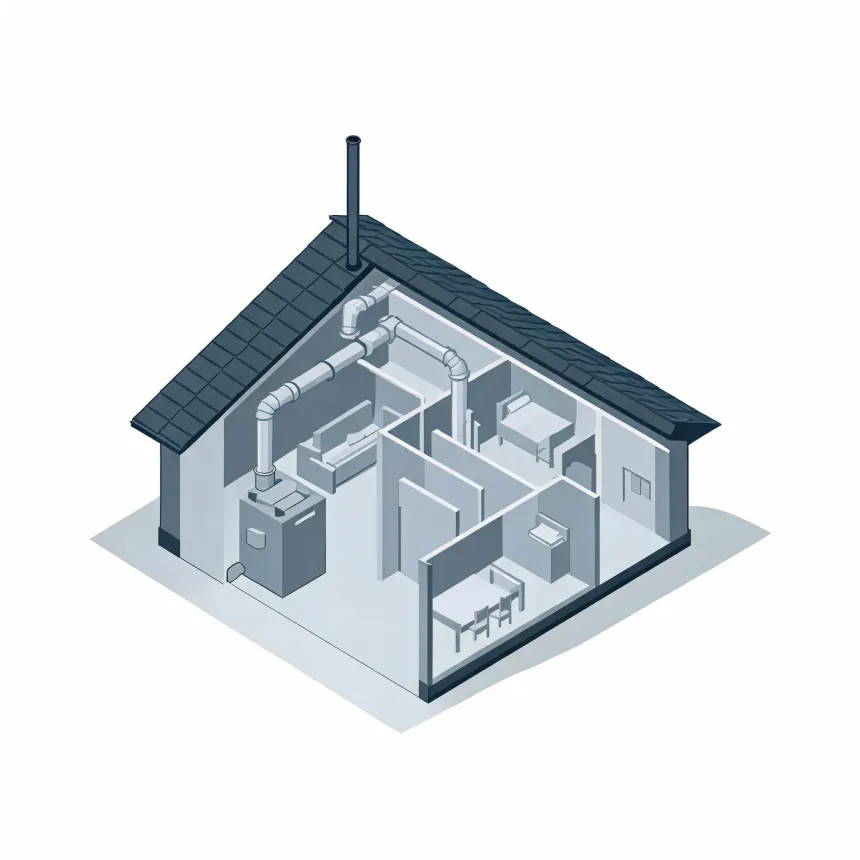
Isometric cutaway illustration of a small single-story house showing interior rooms with furniture, a furnace unit with attached ductwork running to a roof flue, and a dark shingled roof.
Your furnace works hardest from November through March.

NOAA nClimDiv, 1991–2020 normals

The size of the furnace has to match the house, not round up for safety.

An oversized furnace short cycles and wastes electricity doing it, so correct sizing is part of what the install decides.

Most furnaces here already run on electricity, and a new one should too

52.1% of homes heat with electricity
Climate zone 4A
Heat runs October through April
Get it done before OctoberFurnaces here run seven months a year, October through April.

Harrison County falls under zone 4A, a mixed climate that asks real work of both the furnace in winter and the AC in summer. Any gas furnace installed here has to hit at least 80 percent efficiency, turning most of the gas it burns into heat instead of losing it. That floor rises to 95 percent for units built on or after December 18, 2028, so what counts as the minimum is about to change. A homeowner buying now still only has to meet the 80 percent mark, but it narrows which furnaces belong in this house regardless. There's also a federal tax credit available for qualifying high-efficiency equipment, worth asking about before deciding what goes in.

Get the sizing right and the install right, and it pays you back every month

Sizing and installation decide how much of that $43.28 per million Btu turns into heat you actually get and how much gets wasted. That's settled when the furnace goes in, not after.

Find a contractor
A gray gas furnace with attached ductwork and piping installed in an unfinished concrete basement.

Ask what it does on day one thousand, not just day one

A furnace runs for years, so ask questions that matter over years, not just at the register when it's new. Ask what the duty cycle looks like once a system is sized right: longer, steady runs that keep the house even, instead of short blasts that start and stop all day. Short cycling wears the ignition system and the blower motor faster than steady operation does, because the hardest part of any run is the start. Ask what the warranty covers on the heat exchanger specifically, since that part is the one that's expensive to replace and dangerous to ignore if it cracks. Ask whether the blower motor is the kind that runs at a fixed speed or one that adjusts to how much heat the house actually calls for, since the second kind tends to hold up better over a long run. Ask what maintenance the system expects, filter changes, a yearly check of the burner and the flame sensor, and whether skipping that voids anything. A system that's installed right and sized right should run quietly for a long stretch most days once it reaches temperature, not cycle on and off every few minutes. That's one of the simplest things to ask a contractor to explain before you decide.

The old furnace has to come out whole

A furnace isn't just unbolted and carried off. The gas line gets capped or disconnected properly, the flue or vent connection gets sealed off or reused for the new unit, and the old ductwork gets checked for a fit before the new furnace ever goes in its place. Skipping any of that step leaves a gas or venting problem behind for the next person to find.
What it's worth depends on what it's made of

Most of an old furnace is sheet metal and a heat exchanger, and scrap yards pay for that by weight. Some contractors fold removal and haul-away into the install price, others charge for it separately. Either way, ask where the old unit is going and whether hauling it off is part of what you're paying for.

A furnace that's too big for the house doesn't heat it better, it just reaches the thermostat setting faster and shuts off, then starts again not long after. Each of those starts draws hard on the ignition system and the blower motor, so a bigger unit running short bursts all day can wear out sooner than a smaller one running long and steady. Too small and it never shuts off at all, straining to keep up on the coldest days and falling behind. The right size comes from a load calculation, not the size of the unit being replaced. That calculation looks at the square footage, the insulation, the windows, the ceiling height, and how much of the house faces into the wind, then works out how much heat actually gets lost on a cold day and has to be replaced. A contractor who sizes off the old furnace alone is guessing. One who runs the numbers on the house itself is the one worth hiring.

Installation day starts with the old furnace coming out, then the new one gets set in place and leveled before anything gets connected. The gas line, the venting, and the ductwork all get tied in, and the gas connection gets pressure tested before the contractor ever fires the unit up. Once it's running, there's a combustion analysis to check that the mix of gas and air burning inside is correct, since a bad mix wastes fuel and can leave carbon monoxide behind instead of venting it out. The blower gets set to match the ductwork so the house gets even airflow instead of rooms that run too hot or too cold. The thermostat gets wired and tested last, after the furnace has proven it can hold a steady temperature. A contractor who rushes past the combustion check or skips the startup testing is leaving the hardest part of the job undone, even if the furnace looks installed.