



A mowed lawn bordered by a tall trimmed hedge, with single-story houses and large leafy trees under an overcast sky.

Furnace Installation in Hammond, IN

Tell us about the job

Takes about a minute. No obligation.

New system or replacementFurnace or heatingLake County, IN
Step 1 of 2

What ZIP code is the job in?

Eight months of the year, a furnace here is running. October through May, that's heat on more often than it's off. A system sized wrong for the house, even slightly, feels that strain every one of those months, not just on the coldest nights. That's a lot of hours for an oversized or undersized unit to rack up wear it didn't need to. Getting the size right at install matters more here than somewhere that only needs heat a few months at a stretch.

8 months
October through May, your furnace is on duty
20°F
the average winter night it heats against
86%
of homes here heat with gas, so most furnaces here burn gas
80% AFUE
the federal minimum any new unit must meet
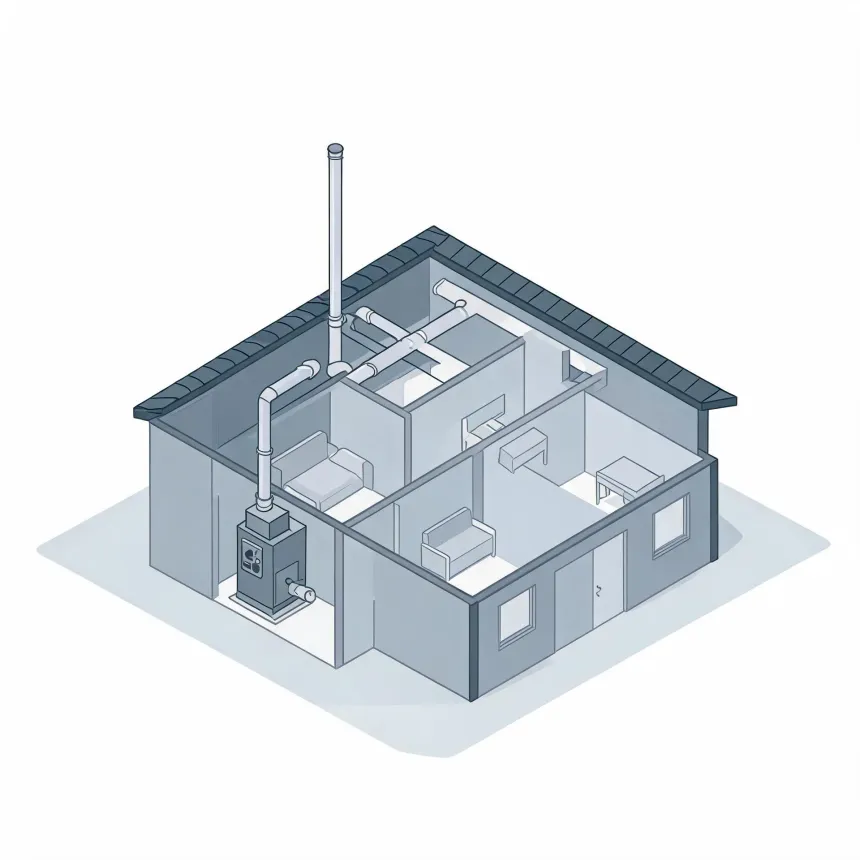
Isometric grayscale illustration of a cutaway single-story house showing interior rooms with furniture, a furnace unit connected to ductwork and a tall vertical flue pipe extending above the roof.
Your furnace works hardest from November through March.

NOAA nClimDiv, 1991–2020 normals

Half the homes in Lake County were built in 1968 or earlier.

A furnace going into a house that old has to be sized for that house, not for a guess.

Most of Lake County heats with gas, so a gas furnace is what makes sense here

86.3% of homes heat with gas
Climate zone 5A
Heat runs October through May

Heat starts going on in October here, which means September is the month to get a new furnace in. Wait until the first cold snap and you're choosing from whatever's in stock, on whatever schedule a contractor can fit you into. Do it in September and the old unit comes out on a day that works for you, not in a panic because it quit on a 20 degree night. Overnight lows average 20°F across December, January and February here, and that's not when you want to find out a furnace is on its way out.

Get the new furnace sized for the house you actually have

A furnace going into a house built in 1968 or earlier needs a load calculation for that house, not a number pulled from the unit being replaced. That's the step that gets you a furnace sized to fit, instead of one that's guessing.

Find a contractor
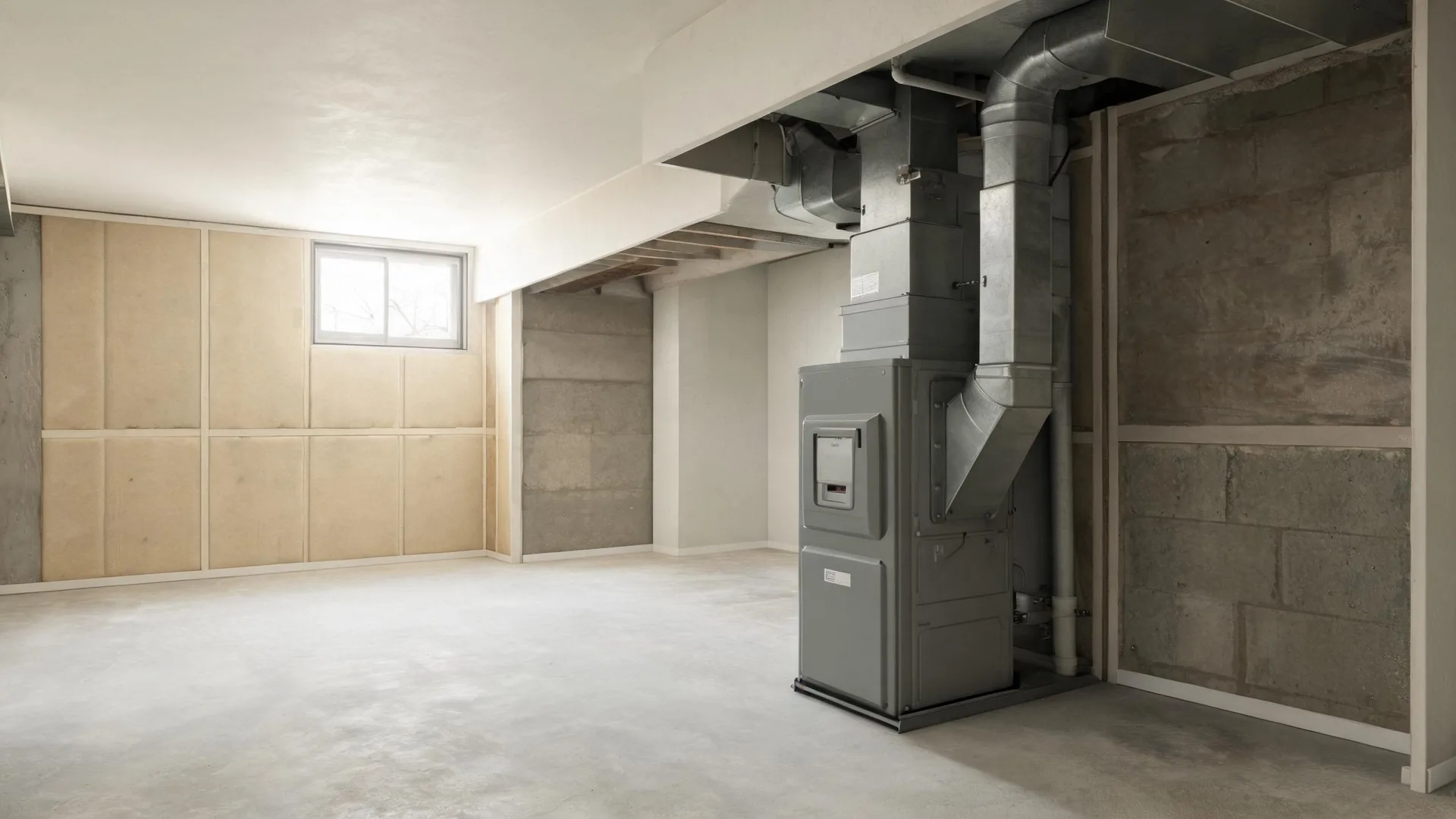
A gray gas furnace with attached ductwork and piping installed in an unfinished concrete basement.

Eight months a year is a long time to run on a guess

A correctly sized furnace earns its keep here. Eight months of run time means a unit that's the right fit spends that whole stretch working the way it's supposed to, instead of short cycling or straining to keep up. When you're comparing bids, ask what load calculation the number is based on, not just what size the old unit was.

The AFUE number is a fuel rating, not a comfort rating

AFUE tells you how much of the fuel burned turns into heat for the house, and how much goes out the flue. It says nothing about whether the furnace is the right size for the house or how evenly it heats the rooms. A high-efficiency furnace that's the wrong size for the house still runs too long or too short, and still leaves rooms uneven. The rating only grades the burn, not the fit.

A higher rating changes what the installer has to run

A high-efficiency furnace condenses exhaust gas into water, so it vents through PVC pipe instead of a metal flue, and that water needs a drain line nearby. A lower-efficiency furnace vents differently and skips that drain. Either way, the rating on the label tells the installer what venting the job needs before the furnace ever gets set in place.

An unfinished basement interior showing a gray furnace unit beneath a bare incandescent bulb, surrounded by exposed joists, concrete walls, cardboard boxes, and utility pipes.

A high-efficiency gas furnace would save about $100 a year to run in Lake County compared with a gas furnace.

  • A high-efficiency gas furnace$470 a year
  • A gas furnace$570 a year

Estimates for a typical Lake County home, from EIA household energy data, Indiana fuel prices and NOAA climate normals. Your home will differ.

Installation day starts with the old furnace coming out, and that's not a quick swap. The gas line gets shut off and tested, the old vent or flue gets disconnected, and if the new unit changes the venting, that gets run fresh rather than reusing what's there. Ductwork gets checked where it meets the furnace, since a new unit sometimes needs a transition piece the old one didn't. Once the furnace is set and leveled, the gas line, vent and ductwork all get connected and sealed before anything gets powered on. Then it's a combustion test and a check of airflow at the registers, because a furnace that fires correctly but moves air wrong isn't finished yet. The last step is the walk-through, where the thermostat and any new controls get explained before anyone leaves.