






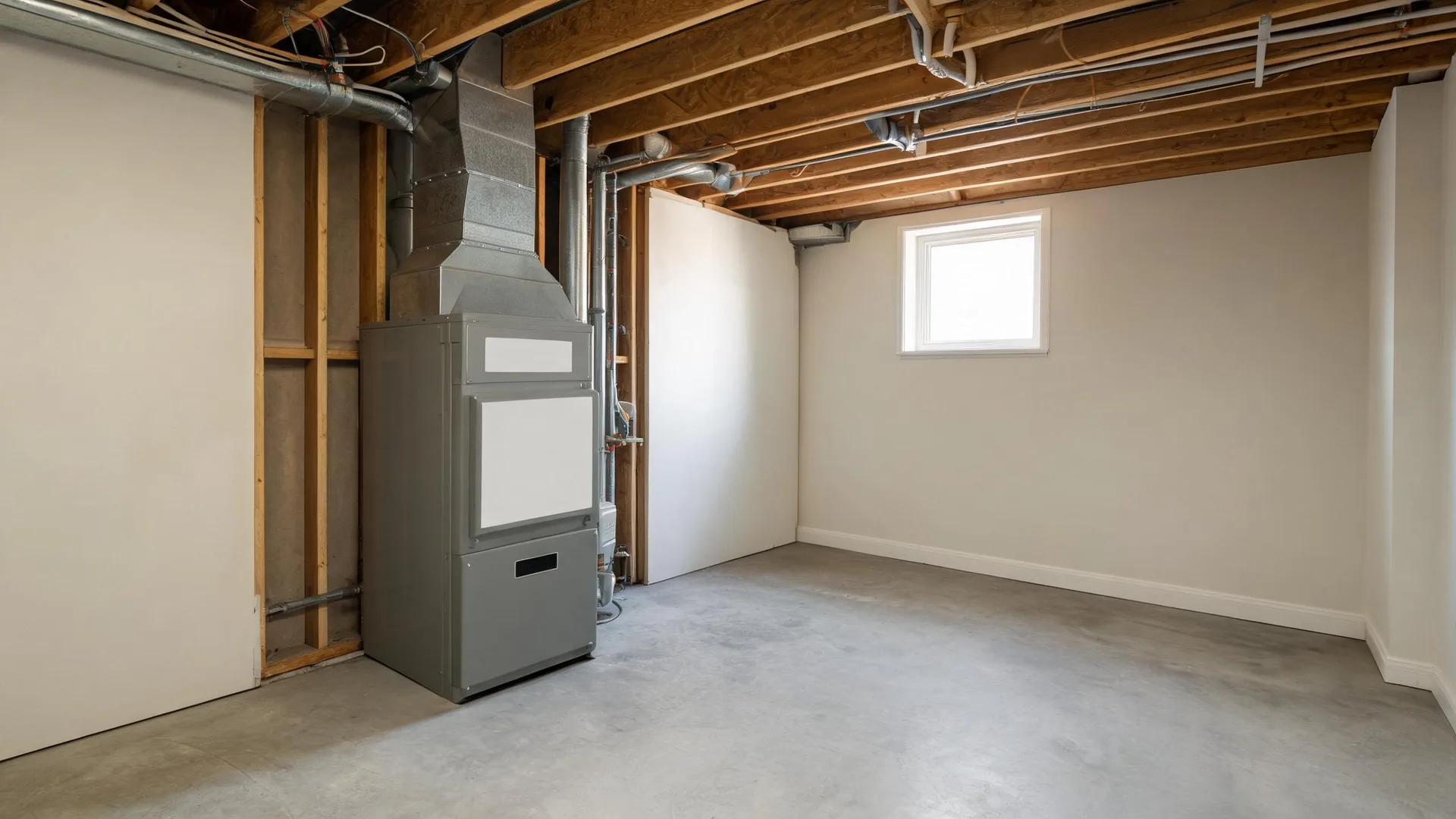
An unfinished basement featuring concrete block walls, exposed floor joists, a bare concrete floor, and a forced-air furnace with a large metal exhaust duct in the corner.

Furnace Installation in Huntington, IN

Tell us about the job

Takes about a minute. No obligation.

New system or replacementFurnace or heatingHuntington County, IN
Step 1 of 2

What ZIP code is the job in?

Utility gas heats 46.5% of homes in Huntington County, more than any other fuel. If your old furnace ran on gas, the gas line, the flue venting and the layout around it are already built for it. Electricity heats another 34.1% of homes, and those houses are more likely running a heat pump or electric furnace, which call for different wiring and no flue at all. A smaller share, 13.2%, run on bottled or LP gas, usually because no gas main reaches that property. Matching your old fuel on the replacement is almost always the simpler job, and a contractor can tell you quickly whether your home could take anything else.

8 months
October through May, your furnace is on duty
21°F
the average winter night it heats against
80% AFUE
the federal minimum any new unit must meet
Isometric line illustration of a cutaway house showing interior rooms with furniture and a furnace with ducting and a flue pipe extending through the roof.
Your furnace works hardest from November through March.

NOAA nClimDiv, 1991–2020 normals

Furnaces can carry the same rating and still heat a house differently.

Ask what load calculation was run on your house, not just what size the old furnace was.

Half the homes here were built before your furnace's ductwork had a name

Half the homes here were built by 1966
Heat runs October through May
Winter nights average 21°F
Eight months of heatOvernight lows average 21°F through December, January and February in Huntington County.

Heat goes on in October here and stays on through May, eight months straight. That is most of the year asking a furnace to work, which is exactly why September matters. Have it replaced before the first cold snap and the job happens on a normal schedule, with time to size it right and test it before anyone needs it. Wait until the first cold morning and you are choosing from whatever is in stock, on whatever day a crew is free. Same furnace either way, but one path gives you a say in it.

What your new furnace has to meet is already decided. What model gets you there is not.

Furnaces sold here now have to hit 80 percent AFUE at minimum. That floor moves to 95 percent for units built on or after December 2028. Huntington County sits in climate zone 5A, a cold-winter zone where heating carries the bigger load, so this isn't a market where a furnace can skate by on a low rating. A federal tax credit is available on qualifying high-efficiency equipment, worth asking about when you're comparing systems.

Find a contractor
A gray gas furnace with attached ductwork and piping installed in an unfinished concrete basement.

Size it to the house, not the old furnace

The duct sizing and layout in an older home weren't done with a modern furnace in mind. Before installing, a contractor needs to check what's already there against what the new unit actually needs to move. That's a different conversation than just swapping in a same-size box.

The math behind the size

A contractor works out furnace size with a load calculation, weighing floor area against window count, insulation, ceiling height and how the place is laid out. Houses that look about the same from outside can need different furnaces once that math is done. Going on floor area alone, or just matching the old unit, skips the part that actually tells you what the house needs.

Oversized causes its own problems

A furnace that's too big heats the house fast, shuts off, then starts again soon after. That on-off pattern is called short cycling, and it wears the ignition system and blower harder than a steady run would. Rooms end up with uneven heat, warm near the vents and cooler at the far end of the house. Sized right, the furnace runs longer stretches at a steadier pace, and that's easier on the equipment and the comfort both.

An unfinished concrete basement containing a gas furnace with sheet-metal ductwork, utility shelving, and exposed overhead joists.

A high-efficiency gas furnace would save about $100 a year to run in Huntington County compared with a gas furnace.

  • A high-efficiency gas furnace$450 a year
  • A gas furnace$550 a year

Estimates for a typical Huntington County home, from EIA household energy data, Indiana fuel prices and NOAA climate normals. Your home will differ.

Install day starts with the old furnace coming out, along with anything about the venting or ductwork that doesn't match the new unit. Expect some cutting and fitting around the plenum, since the new furnace rarely lines up exactly with what was there before. The gas line gets connected and pressure tested before anyone fires it up. The flue gets checked too, since a new furnace can call for different venting than the old one used, especially if the efficiency rating changed. Once it's running, a contractor checks the temperature rise against what the furnace is rated for and makes sure airflow across the coil is where it should be. That last check matters as much as the install itself. A furnace connected correctly but never tested under load is the one that shows problems on the first cold morning instead of on install day.