






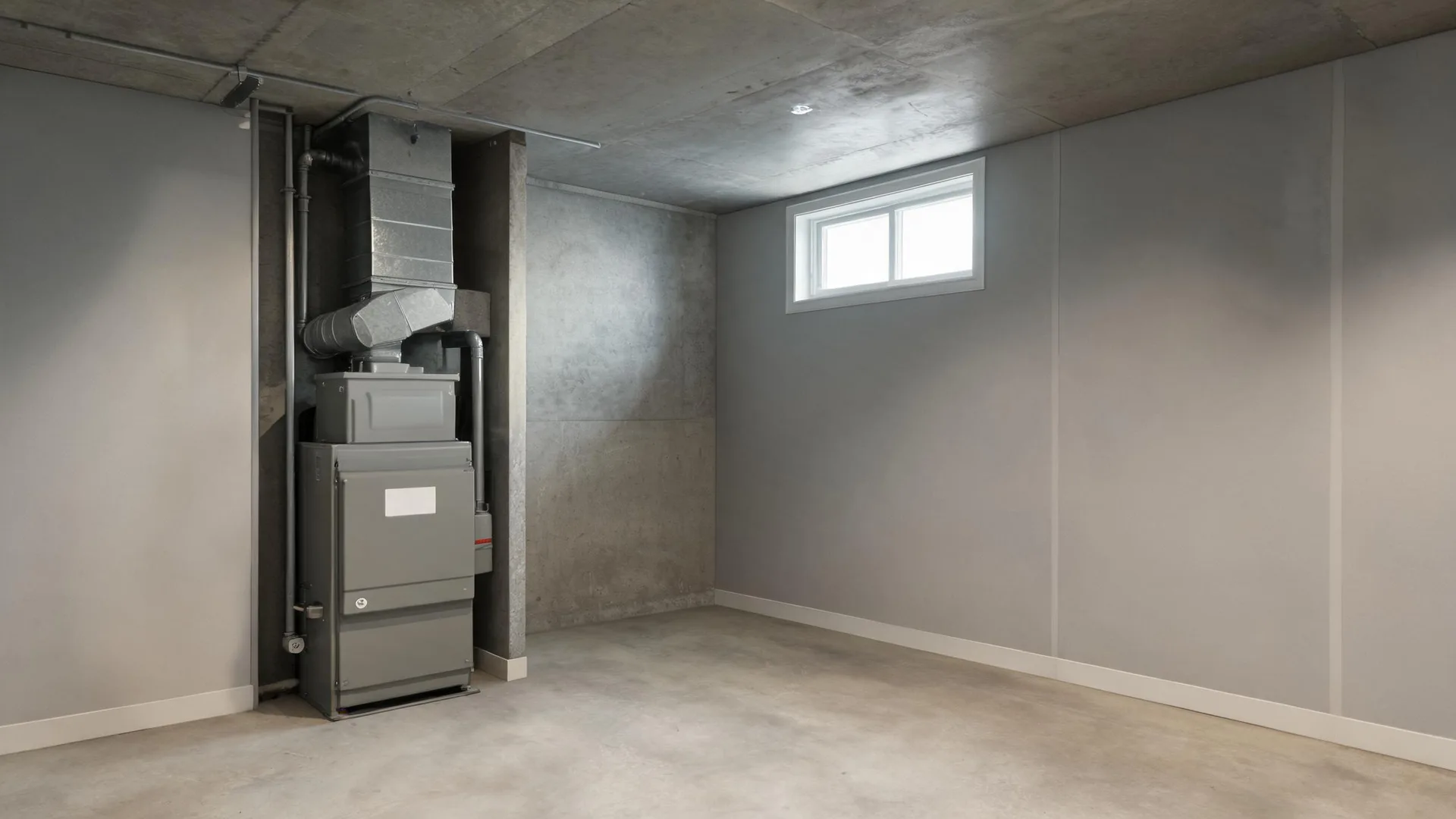
An empty unfinished basement containing a forced-air furnace with overhead ductwork, exposed ceiling joists, and a single hanging light bulb.

Furnace Installation in Kendallville, IN

Tell us about the job

Takes about a minute. No obligation.

New system or replacementFurnace or heatingNoble County, IN
Step 1 of 2

What ZIP code is the job in?

Utility gas heats 41.8% of occupied homes in Noble County, more than any other fuel. Another 26.2% run on bottled or LP gas, and 25.4% use electricity. If your home already has a gas line and venting in place, putting in a new gas furnace is usually the straightforward path. Switching fuel types for a furnace installation means new venting, a new gas line, or new electrical circuits, so it helps to know which setup your home has before comparing systems.

8 months
October through May, your furnace is on duty
20°F
the average winter night it heats against
80% AFUE
the federal minimum any new unit must meet
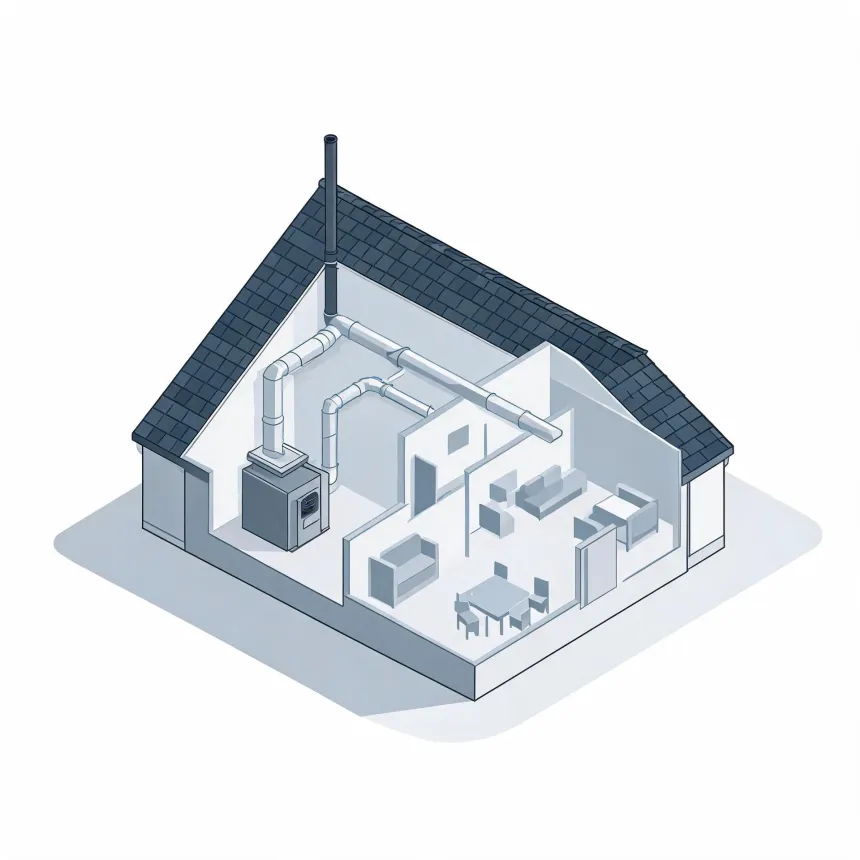
Isometric cutaway illustration of a house with a shingled gable roof, showing a gray furnace unit connected to overhead ductwork and a chimney flue, with simplified furniture in the rooms below.
Your furnace works hardest from November through March.

NOAA nClimDiv, 1991–2020 normals

Half the homes in Noble County were built in 1976 or earlier, half in 1976 or later.

A standard-size, standard-efficiency furnace heats either one fine.

Cheap gas here means the high-efficiency furnace isn't the easy call it is elsewhere

Heat runs October through May
Winter nights average 20°F
Climate zone 5A
Eight months of heat, every yearFurnace here runs eight months a year, October through May.

Gas here runs $8.99 per million Btu, so a high-efficiency furnace takes longer to earn back its extra cost than it would somewhere gas costs more. That doesn't rule it out. It just means the payback shouldn't be the reason you pick one. Look instead at the warranty, whether the installer sizes it correctly for your home, and whether parts and service for that brand are easy to get nearby. Ask what each option costs installed, then weigh the gas savings against that number, not the other way around.

Get it installed before October, not after

Heat here runs October through May. September is the month before that starts, and it's the better time to put in a new furnace. Do it then and the old one is still working while the new one goes in, so there's no gap if anything runs long. Wait for the first cold week and you're choosing a system while the house is already cold.

Find a contractor
A man in a cap, gray long-sleeve shirt and tan work pants carries a worn canvas tool bag up wooden porch steps toward a blue front door, with a potted shrub to the left.
A gas furnace with attached ductwork, gas piping, and condensate lines installed in a concrete-block basement.

This furnace earns its keep here

Twenty below some nights, eight months of furnace, that's a lot of hours on a system. Get the size wrong and it runs even more of them. A furnace too small for the house runs long hours all winter trying to keep up. One too big short cycles, switching on and off instead of running steady, which wears the parts that start it up. Either way the furnace earns its keep here, so ask the installer to size it off a load calculation for your house, not off the unit you're replacing.

The AFUE number is a fuel number, not a comfort number

AFUE tells you how much of the gas burned turns into heat in the house versus what goes out the flue. A furnace rated higher wastes less gas doing the same job. It says nothing about how evenly the house heats or how quiet the furnace runs. Furnaces with the same rating can still feel different to live with, depending on how the installer sizes the unit and sets up the ductwork.

A higher rating usually means more parts to maintain

The jump in AFUE mostly comes from a second heat exchanger that pulls more heat out of the exhaust before it leaves the house. That adds a condensate drain, a trap, and sometimes a pump that a lower-rated furnace doesn't have. Those parts need periodic checks so the drain doesn't clog or freeze. A lower-rated furnace vents the old way, through a simple flue, with less to maintain but more heat going out with the exhaust.

An unfinished basement interior featuring a large metal furnace unit, exposed ceiling joists, concrete walls, and scattered boxes and cables on the floor.

A high-efficiency gas furnace would save about $100 a year to run in Noble County compared with a gas furnace.

  • A high-efficiency gas furnace$480 a year
  • A gas furnace$580 a year

Estimates for a typical Noble County home, from EIA household energy data, Indiana fuel prices and NOAA climate normals. Your home will differ.

Installation day starts with the old furnace coming out, along with the old venting if the new one uses a different type. The installer sets the new unit, connects the gas line, and runs new venting to the right spot on the wall or roof. Ductwork gets connected to the furnace's supply and return, and any transition pieces get sealed so air isn't leaking out before it reaches the rooms. Once it's wired in, the installer fires it up and checks the gas pressure, the temperature rise across the heat exchanger, and the airflow, adjusting as needed rather than just leaving it on factory settings. Last comes testing the thermostat and walking through what the furnace needs going forward, like filter changes and when to schedule a checkup. A furnace put in carefully at each of these steps runs quieter and lasts longer than one that was just set in place and switched on.