






A tall trimmed hedge runs along a mown lawn in front of a row of dark-sided townhouses with brown shingled roofs, framed by leafy tree branches under an overcast sky.

Furnace Installation in Marion, IN

Tell us about the job

Takes about a minute. No obligation.

New system or replacementFurnace or heatingGrant County, IN
Step 1 of 2

What ZIP code is the job in?

Most homes in Grant County heat with gas, 55.7 percent of them. Electric heat covers another 36.2 percent, with the rest on bottled or LP gas. If gas already runs to your house, a new gas furnace is usually the straightforward swap, matching the venting and gas line already in place. An electric furnace or heat pump means different wiring and sometimes a different spot for the unit. Whichever fuel your home runs on now, replacing with the same keeps the job simpler.

8 months
October through May, your furnace is on duty
22°F
the average winter night it heats against
56%
of homes here heat with gas, so most furnaces here burn gas
80% AFUE
the federal minimum any new unit must meet
Isometric cutaway illustration of a small house showing a furnace unit connected to ductwork running through the interior and attic, with a chimney on the shingled roof and simple furniture in the rooms.
Your furnace works hardest from November through March.

NOAA nClimDiv, 1991–2020 normals

Furnaces in Grant County run from October through May, about eight months of the year.

A standard-size, standard-efficiency furnace handles eight months of heating fine, no need to size up.

Gas runs $8.99 per million Btu here, so a high-efficiency furnace takes longer to earn back the difference

Heat runs October through May
Winter nights average 22°F
Climate zone 5A
Built for an older houseHalf the homes in Grant County were built in 1963 or earlier.

Grant County is in climate zone 5A, a cool zone where heating carries most of the load. Any furnace installed here now has to hit at least 80.0 percent AFUE, the federal minimum. That floor rises to 95.0 percent, but not until furnaces built in December 2028, so a standard-efficiency furnace installed today still meets the rule. A federal tax credit is available for qualifying high-efficiency equipment, worth checking against whatever system you're considering.

Replace your furnace in September, before it has to work

Furnaces here start running in October. September is the month before that, and it's the easier time to replace one, before the cold sets in and you're waiting on a working system. Doing it now means you pick the unit and the schedule.

Find a contractor
A man in a cap, dark shirt and tan work pants, seen from behind, carries a canvas tool bag up steps toward a blue front door beside a potted shrub.
A gas furnace with attached ductwork, gas piping, and condensate lines installed in a concrete-block basement.

Size it to the house, not the other way around

Whoever installs it needs to size the furnace and run the venting to match the house, not a generic one. If your ductwork or gas line dates back to whenever the house was built, that's worth a look too, before the new unit goes in.

The old furnace comes out

Whoever installs the new furnace disconnects the gas line, the vent pipe and the return and supply ducts from the old unit, then takes it out whole or in pieces, whichever the space allows. The venting and gas line get checked and matched to the new unit rather than just reconnected as they were.

Where it ends up

A furnace is mostly steel, and scrap haulers take it for the metal. Some installers fold removal and haul away into the job, others charge separately for it. Either way, it's worth asking before the work starts so it's not a surprise on the invoice.

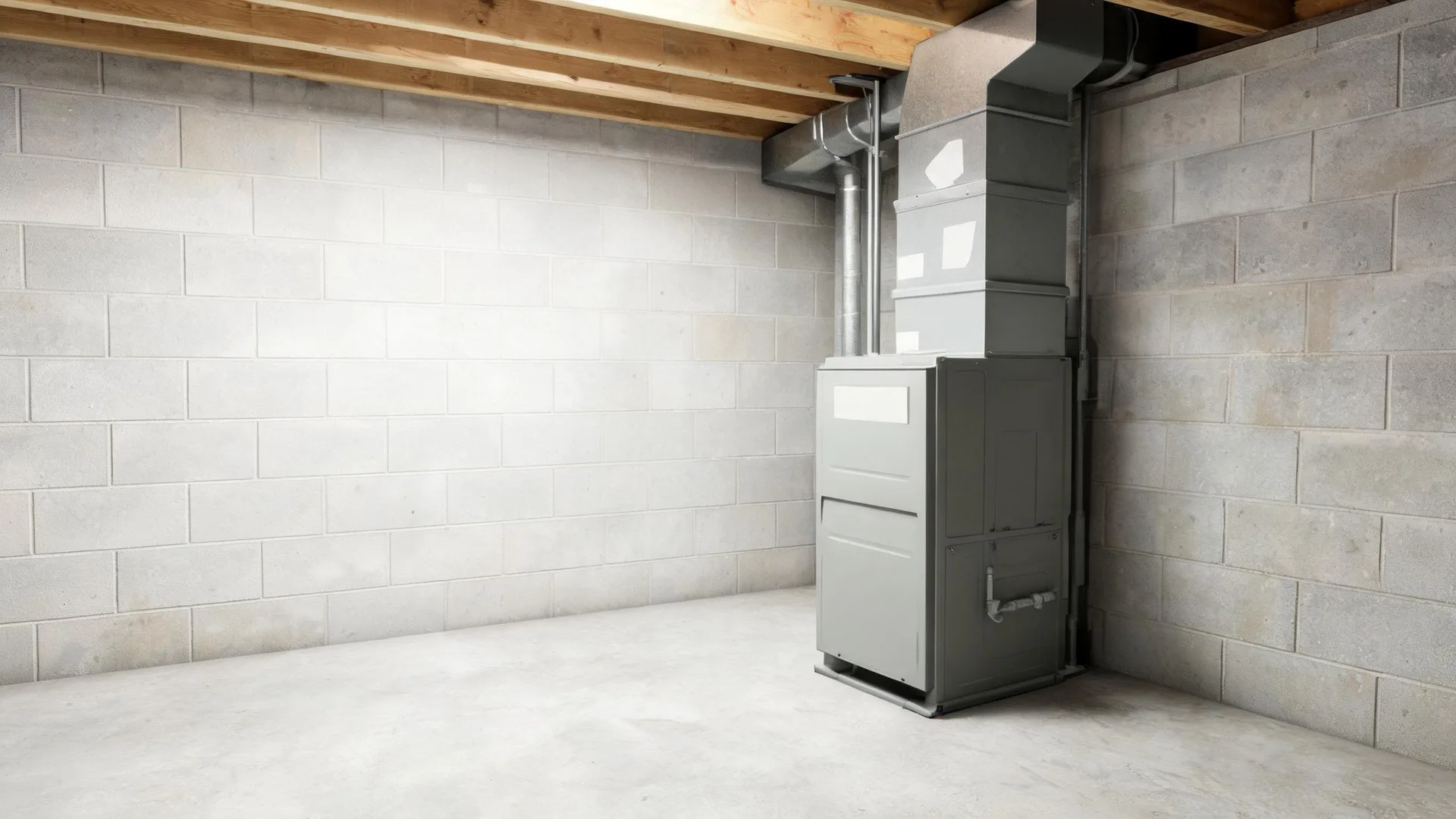
A gray forced-air furnace with metal ductwork stands in an unfinished basement with exposed wooden joists, concrete walls, and a single hanging light bulb.

A high-efficiency gas furnace would save about $100 a year to run in Grant County compared with a gas furnace.

  • A high-efficiency gas furnace$440 a year
  • A gas furnace$540 a year

Estimates for a typical Grant County home, from EIA household energy data, Indiana fuel prices and NOAA climate normals. Your home will differ.

Installation day starts with the space, not the furnace. Whoever's doing the work checks the clearances around where the unit sits, looks at the condition of the flue or vent pipe, and confirms the gas line and electrical hookup land where the new furnace needs them. Once the old unit is out, the new one gets set in place. Gas line, venting, and ductwork connect to it, then it gets wired to the thermostat. After that comes startup. Gas pressure gets checked, the flame gets looked at, every joint gets checked for leaks, and the system runs through a full cycle before anyone calls the job done. A combustion analyzer confirms the furnace is burning clean. It gets tested running, not just switched on and left.