





A lit brick residential street at dusk showing a row of two-story homes with covered porches and mature trees.

Furnace Installation in Muncie, IN

Tell us about the job

Takes about a minute. No obligation.

New system or replacementFurnace or heatingDelaware County, IN
Step 1 of 2

What ZIP code is the job in?

Utility gas heats 59.6% of occupied homes in Delaware County, meaning most furnaces going in here are replacing another gas furnace. That matters for the install itself. The gas line and the venting are usually already in place, so the new furnace can often use what's there instead of needing new runs. Electricity heats 31.9% of homes in the county, the next most common setup, and some of those run electric furnaces or heat pumps. If your home already has a gas line to the furnace, staying with gas is typically the simpler path than switching fuels.

8 months
October through May, your furnace is on duty
22°F
the average winter night it heats against
60%
of homes here heat with gas, so most furnaces here burn gas
80% AFUE
the federal minimum any new unit must meet
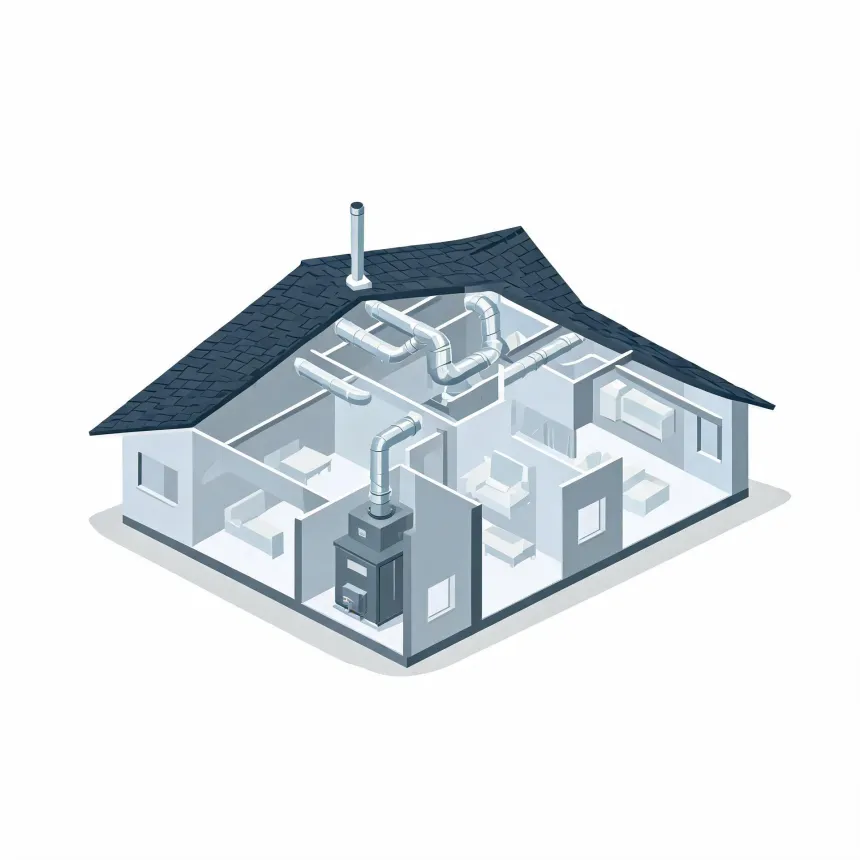
Isometric cutaway illustration of a single-story house showing interior rooms with furniture, a metal ductwork network, and a furnace unit connected to a vertical flue through the dark shingled roof.
Your furnace works hardest from November through March.

NOAA nClimDiv, 1991–2020 normals

Natural gas in Indiana ran $8.99 per million Btu in 2024, cheap compared to most of the country.

A high-efficiency furnace here takes longer to pay back in lower bills, so pick based on which one holds up in your house, not the fuel savings alone.

Half the homes here were built by 1967. The furnace going in has to work with that house, not a new one.

Half the homes here were built by 1967
Heat runs October through May
Winter nights average 22°F

A contractor can walk you through efficiency ratings, but here that number matters less than it would somewhere with expensive power. Ask instead about the warranty, how long the model has been on the market, and whether parts are easy to get locally. A mid-efficiency furnace that a Muncie tech knows well and can service fast beats a high-efficiency one that sits waiting on a part. If your ductwork and venting are already set up for a certain type, that fit is worth more than a fraction of a percent on the efficiency sticker.

A standard furnace handles Muncie winters fine

Heat runs eight months a year here, October through May, with overnight lows averaging 22°F through December, January and February. That's a normal Midwest winter load. A standard-size furnace at standard efficiency is built for exactly this, so there's no reason to size up or pay for a higher efficiency tier than your house needs.

Find a contractor
A man seen from behind in a gray shirt and tan work pants climbs porch steps toward a blue front door, carrying a worn leather tool bag in his right hand, with a potted shrub in a blue planter beside the door.
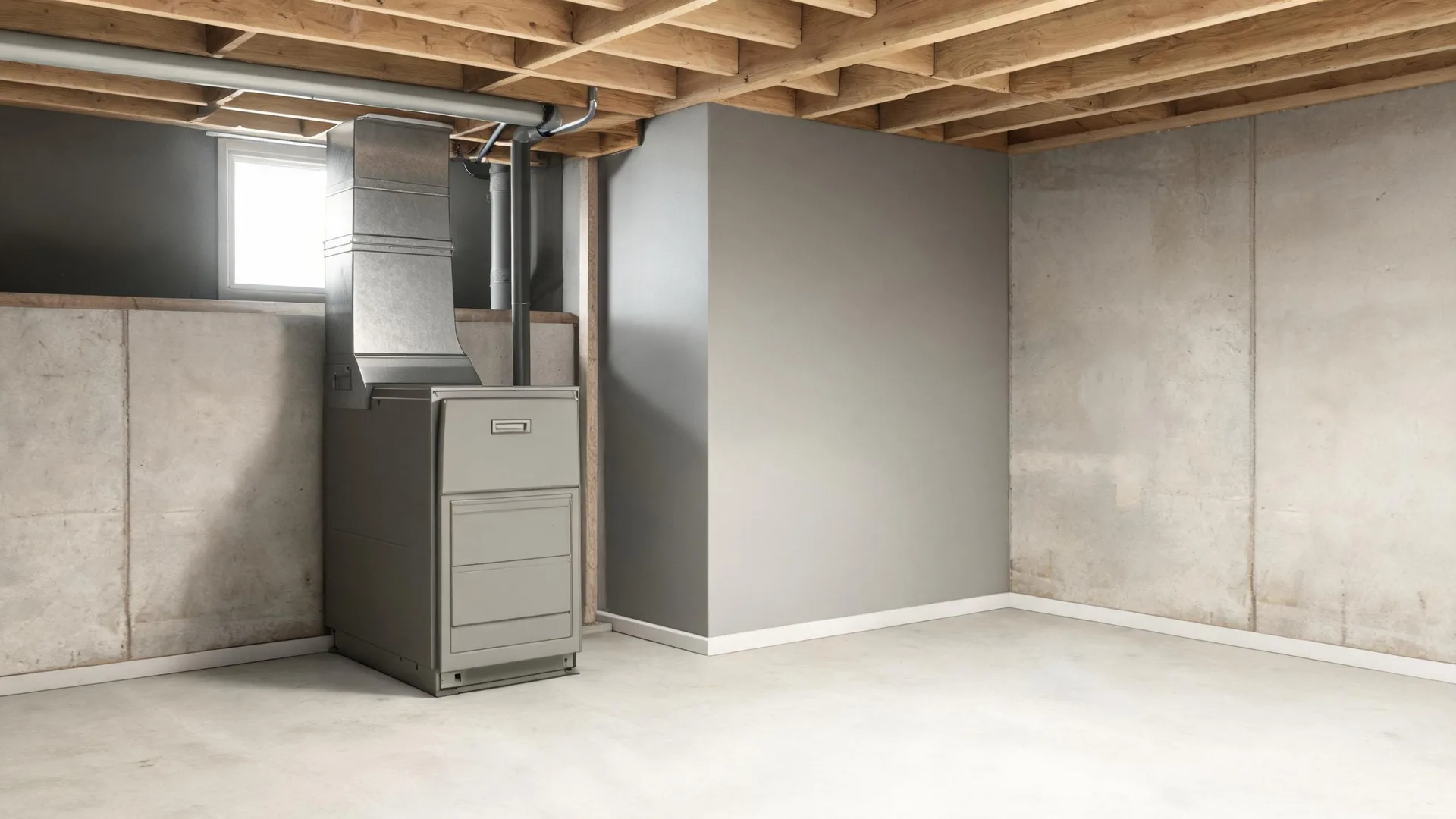
A gray residential gas furnace installed in an unfinished basement, connected to sheet-metal ductwork and PVC pipes.

September is the month before the furnace has to work

Heat runs here from October through May, eight months straight. September is the one month before that starts, which makes it the natural time to put in a new furnace. Replace it then and the old one is still there as backup if the install runs into a snag. Wait until the first cold morning and you're choosing from whatever unit is in stock, on whatever day a crew has an opening. A furnace put in during September gets to run before it has to work.

The rating measures waste, not warmth

The efficiency number tells you how much of the fuel burned turns into heat in your house versus how much goes out the flue. A higher-rated furnace wastes less gas doing the same job. It says nothing about how big a house it can heat or how evenly. A furnace sized wrong or installed poorly can carry a good rating and still heat a house unevenly.

The rating only pays off if the venting matches it

A high-efficiency furnace pulls so much heat out of the exhaust that what's left can't rise up a standard metal flue anymore. It needs plastic pipe run through a wall or the roof, along with a line to drain off the moisture left behind. A mid-efficiency furnace vents the old way, through the existing flue. Moving up a tier isn't just swapping the unit. It can mean new venting, which is its own job on top of the install.

An unfinished basement featuring a forced-air furnace, exposed wooden ceiling joists, bare concrete walls, and miscellaneous items including cardboard boxes and coiled cables on the floor.

A high-efficiency gas furnace would save about $100 a year to run in Delaware County compared with a gas furnace.

  • A high-efficiency gas furnace$430 a year
  • A gas furnace$530 a year

Estimates for a typical Delaware County home, from EIA household energy data, Indiana fuel prices and NOAA climate normals. Your home will differ.

Installation day starts with the old furnace coming out, not the new one going in. The tech checks the gas line, the vent, and the ductwork before anything gets set in place, because the new furnace has to connect to all of it. If the cabinet is a different size or shape than the old one, the ducts right at the furnace may need new transitions to fit. Once it's set and leveled, the gas line gets connected and pressure tested before anything is lit. The vent gets checked too, since the new furnace has to draw and exhaust correctly through whatever venting is already there. Only after that does the tech fire it up, run it through a full cycle, and check the airflow and temperature rise against what that model calls for.