






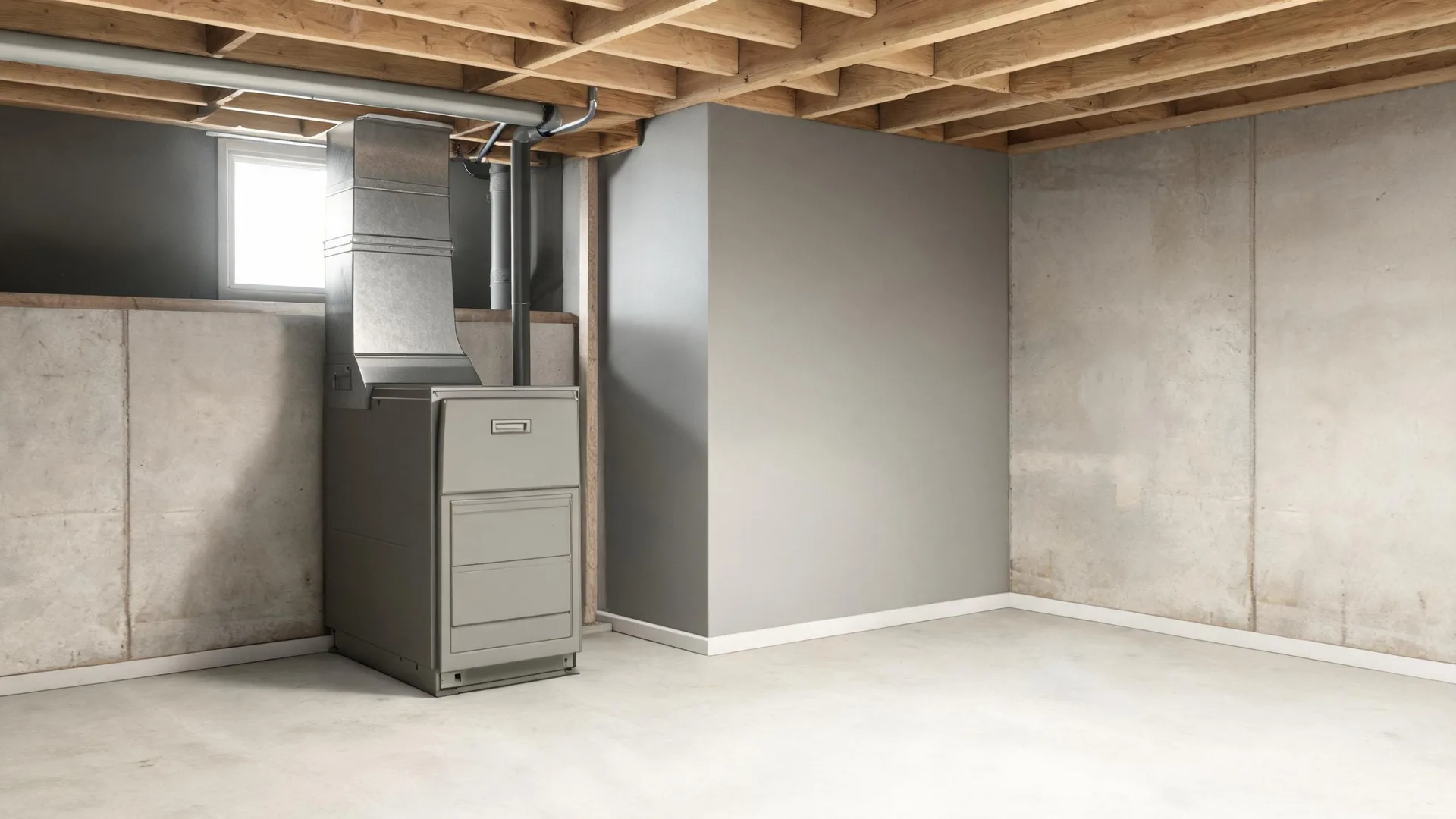
A gas furnace and sheet-metal air handler unit installed in an unfinished concrete basement.

Furnace Installation in Plainfield, IN

Tell us about the job

Takes about a minute. No obligation.

New system or replacementFurnace or heatingHendricks County, IN
Step 1 of 2

What ZIP code is the job in?

Just over 55 percent of homes in Hendricks County heat with gas. If your house already has a gas line run to a furnace, putting in another gas furnace is usually the straightforward option. The venting, the gas line and the electrical are already in place for it. Switching to something else means adding what isn't currently there, which is a bigger job. Worth checking what you have before you decide what you want.

8 months
October through May, your furnace is on duty
22°F
the average winter night it heats against
55%
of homes here heat with gas, so most furnaces here burn gas
80% AFUE
the federal minimum any new unit must meet
Isometric line illustration of a cutaway single-story house showing interior rooms with furniture, ceiling ductwork, a chimney flue, and a furnace unit outside the exterior wall.
Your furnace works hardest from November through March.

NOAA nClimDiv, 1991–2020 normals

Furnaces in Hendricks County start running in October.

Get it installed in September and it's ready before the first cold morning, not during one.

A standard furnace holds up fine here

115 severe weather events from 2015 to 2024
17% of homes statewide lost power a day or more in 2024
71 damaging wind events from 2015 to 2024
Cheap gas means fit matters more than efficiencyGas cost $8.99 per million Btu in Indiana in 2024

Ask what size furnace the contractor is putting in, and ask them to show the math, not just a number. A furnace that's too big cycles on and off fast, which wears out parts sooner and leaves rooms uneven. Too small and it runs constantly without catching up. Ask what efficiency rating the unit carries and what venting that requires, since a high efficiency furnace vents through PVC pipe rather than a metal flue, and that changes where it can go. Ask about the warranty on the heat exchanger specifically, since that's the part that's expensive to replace and the one most worth protecting. And ask who's doing the ductwork inspection, because a new furnace pushing air through old, leaky ducts won't heat the house the way the rating on the box suggests it will.

A standard furnace is the right call here

Eight months of heat a year and nights down near 22°F is normal furnace duty, nothing that calls for an oversized unit or a special setup. A properly sized standard furnace handles it. Get the sizing right and the install done, and you're set for the season.

Find a contractor
A gray residential gas furnace installed in an unfinished basement, connected to sheet-metal ductwork and PVC pipes.

The number on the label is a ceiling, not a guarantee

The AFUE number on the label tells you how much of the fuel it burns turns into heat in the house. The rest goes out the flue. That's a rating from the factory, measured under set conditions, not a promise of what you'll feel at the thermostat. A furnace holds that rating for years if it's maintained. Filter changed, burners clean, airflow right. Skip that upkeep and the furnace drifts away from its rating slowly, burning more to do the same job. Ductwork matters just as much as the unit itself. A supply leak or a return that's too small wastes heat before it reaches the room, no matter what's printed on the furnace. The rating tells you what the equipment is capable of. Whether the house actually gets that heat depends on everything the furnace is hooked up to.

The unit is the smaller part of the bill

The furnace itself is one line item. The labor to size it right, set the venting, and tie it into the ductwork is often the larger share of the job. A straightforward swap into an existing setup costs less work than one where the venting or gas line needs changing.

Ductwork problems surface during install, not before

A contractor sizing a furnace has to look at the ducts it's feeding. If they find a return that's undersized or runs that need sealing, fixing that becomes part of the job. It's work worth doing, since a new furnace tied to bad ductwork won't heat the house right, but it's easy to underestimate before the walls are opened up.

An unfinished basement featuring a forced-air furnace, exposed wooden ceiling joists, bare concrete walls, and miscellaneous items including cardboard boxes and coiled cables on the floor.

A high-efficiency gas furnace would save about $90 a year to run in Hendricks County compared with a gas furnace.

  • A high-efficiency gas furnace$430 a year
  • A gas furnace$520 a year

Estimates for a typical Hendricks County home, from EIA household energy data, Indiana fuel prices and NOAA climate normals. Your home will differ.

Installation day starts with the old furnace coming out, not the new one going in. The contractor disconnects the gas line, the vent, the ductwork and the wiring, then pulls the unit out of the closet or basement space. That's when problems hiding behind the old furnace show up. A corroded fitting. A vent that was never sized right to begin with. Ductwork held together with tape instead of mastic. Setting the new furnace means leveling it, connecting the gas line and pressure testing it for leaks. The vent pipe has to run at the right slope so condensation drains the way it should. Then it gets wired into the thermostat. Once it's hooked up, a contractor runs it through a full cycle and checks gas pressure, temperature rise across the heat exchanger, and airflow at the vents. Those numbers tell you whether the install was done right, not just whether the furnace turns on. A furnace that fires up but was never checked against its own specs can run for a while before anything seems wrong.