Furnace keeps shutting off in South Bend, IN

RepairFurnace or heatingSt. Joseph County, IN
Step 1 of 2

What ZIP code is the job in?

A furnace that shuts off before the house warms up is usually tripping a safety switch on purpose, not failing at random. The flame sensor may be coated enough that it can't confirm a flame, so the control board cuts the burners to stop gas from building up. A clogged filter can do the same thing from the other direction, blocking airflow until the heat exchanger overheats and a limit switch kills the cycle. In a lot of South Bend homes a weak draft from a blocked or frozen vent pipe triggers the same shutdown, especially on the coldest nights of the year, when the furnace is working its hardest and has the least room for error. Short cycling like this during a hard Indiana winter means the house loses ground every time it happens, and it tends to get worse, not better, until whatever is tripping the switch gets fixed.

Why does a furnace shutting off matter so much here

  • Winter nights average 20°F

    Overnight lows average 20°F here in December, January and February. A furnace that quits for even an hour lets a house go cold fast at that temperature.

  • Heat runs October through May

    Heat runs here from October through May, about eight months. A furnace that shuts off on its own is a problem you'll live with most of the year, not a one-time inconvenience.

  • 81% of homes heat with gas

    81% of homes in St. Joseph County heat with gas. A furnace cycling off on its own is almost always a gas furnace tripping one of its own safety switches.

NOAA nClimDiv 1991-2020 · ACS 2020-2024

Why Your Furnace Won't Stay Running

  • A dirty flame sensor is the most common reason a gas furnace fires, runs a short while, then shuts off on its own.
  • The limit switch trips when a furnace overheats, usually because a clogged filter is blocking airflow across the heat exchanger.
  • A furnace that shuts off before it even gets to the burners often has a bad igniter or a draft inducer motor that isn't proving airflow to the control board.
  • Short cycling, where the furnace turns on and off every few minutes, often points to a thermostat problem or a furnace that's oversized for the house.
  • The control board reads a sequence of switches in order, and if any one of them doesn't close the way it should, the board shuts the furnace down rather than let it run unsafely.
  • A cracked heat exchanger will trip the limit switch repeatedly and is not something to keep resetting without a technician looking at it first.

A furnace shutting off mid cycle is following a sequence, and that sequence usually points to one part. Start with the flame sensor, a thin metal rod sitting in the burner flame. Its job is to confirm fire is actually present. Once it's coated with a film of carbon, it can't send that signal reliably, so the control board assumes no flame and cuts the gas, even though the burners lit fine seconds earlier. That's the most common version of this problem.

Airflow causes a different kind of shutdown. A clogged filter chokes the air moving across the heat exchanger, heat builds up with nowhere to go, and the limit switch trips to keep the exchanger from overheating. This can happen several times a day if the filter is bad enough.

Before the burners even reach that point, the draft inducer motor has to run and prove it's pulling exhaust properly. If that motor is weak or the pressure switch it talks to isn't closing, the board stops the sequence before ignition and the furnace never gets past its first few seconds.

Short cycling, several short runs an hour rather than one long one, is usually the thermostat or a furnace sized too large for the house, not a safety switch at all.

If the limit switch keeps tripping and a technician finds no airflow problem, a cracked heat exchanger is worth ruling out before the furnace runs again.
A beige high-efficiency furnace with white PVC vent pipes stands beside galvanized sheet-metal ductwork in a basement with a concrete floor, exposed wood studs, and metal piping along the wall.
A furnace that fires, heats evenly and stays running is moving enough air across the heat exchanger to satisfy its own limit switch.
An older beige furnace with a louvered vent panel stands on a concrete basement floor beside galvanized sheet-metal ductwork, a metal flue pipe and vertical pipes along a concrete wall.
A furnace short-cycling like this one is losing that battle, tripping a safety switch and shutting down before the thermostat is satisfied.
A woman with long blonde hair in a light blue shirt leans back on a beige sofa with her eyes closed, in a softly lit living room with cushions and a blurred plant and shelf in the background.
A woman with long dark hair in a gray knit sweater sits on a gray sofa with a cushion, looking toward a window in a living room with framed pictures and a lamp in the background.
A woman with long dark hair in a light grey knit sweater sits on a sofa indoors, looking to her right, with a framed landscape picture, a potted plant and a curtained window behind her.
A woman with long dark hair leans back against a gray sofa with her eyes closed, in a living room with a curtained window, a potted plant, and a dark screen in the background.

Is your furnace shutting off every few minutes?

You turn the thermostat up and the burners light, but a few minutes later they go quiet, the blower keeps blowing cool air, and the house never gets warm. Then it tries again. You might hear a click from the furnace closet each time it cuts out, or notice the air coming from the vents is only lukewarm before it stops altogether. Some households catch a faint burning smell near the unit, which usually means dust on a hot surface rather than anything worse. Left alone through a St. Joseph County winter, a furnace that won't stay running means rooms cool off between cycles and never fully catch up, and the part causing the shutoff tends to get worse, not better, the longer it keeps tripping.

  1. Thermostat calls for heat, so the control board starts the cycle.

  2. Inducer motor spins up to clear the heat exchanger before ignition.

  3. Igniter heats or sparks, and the flame sensor confirms the flame.

  4. Blower pushes air across the heat exchanger and out through the ducts.

Why does my furnace shut off right after the flame sensor fires up?

You watch the burners light, and for a second it looks like the furnace is finally going to run. Then the flame disappears and the whole thing shuts down, sometimes right as you'd expect the flame sensor to be doing its job. It feels backward, like the part that's supposed to confirm the flame is the reason the furnace won't stay on.

The flame sensor is shutting off gas because it can't see a strong enough flame, not because it malfunctioned

The flame sensor's only job is to prove a flame is burning once the igniter lights the gas. It sends a small signal back to the control board, and if that signal is too weak, the board reads it as no flame and cuts the gas right away. A sensor coated in soot or oxidation can't pass a strong enough signal even with a real flame in front of it, so the furnace fires, the sensor fails to confirm it fast enough, and the board shuts the burners down. This happens on purpose. It's the furnace refusing to keep sending gas to a flame it can't verify, which is exactly what that part is supposed to do.

An older woman with short gray hair in a cream cable-knit turtleneck sweater smiles while looking to the side in a wooden kitchen, with a round loaf of bread on a board in the foreground and a lit candle by a dark window.
A woman with dark hair in a bun sits wrapped in a chunky knit blanket on a couch with a child resting his head on her shoulder, eyes closed, beside a lit lamp and bookshelf indoors.
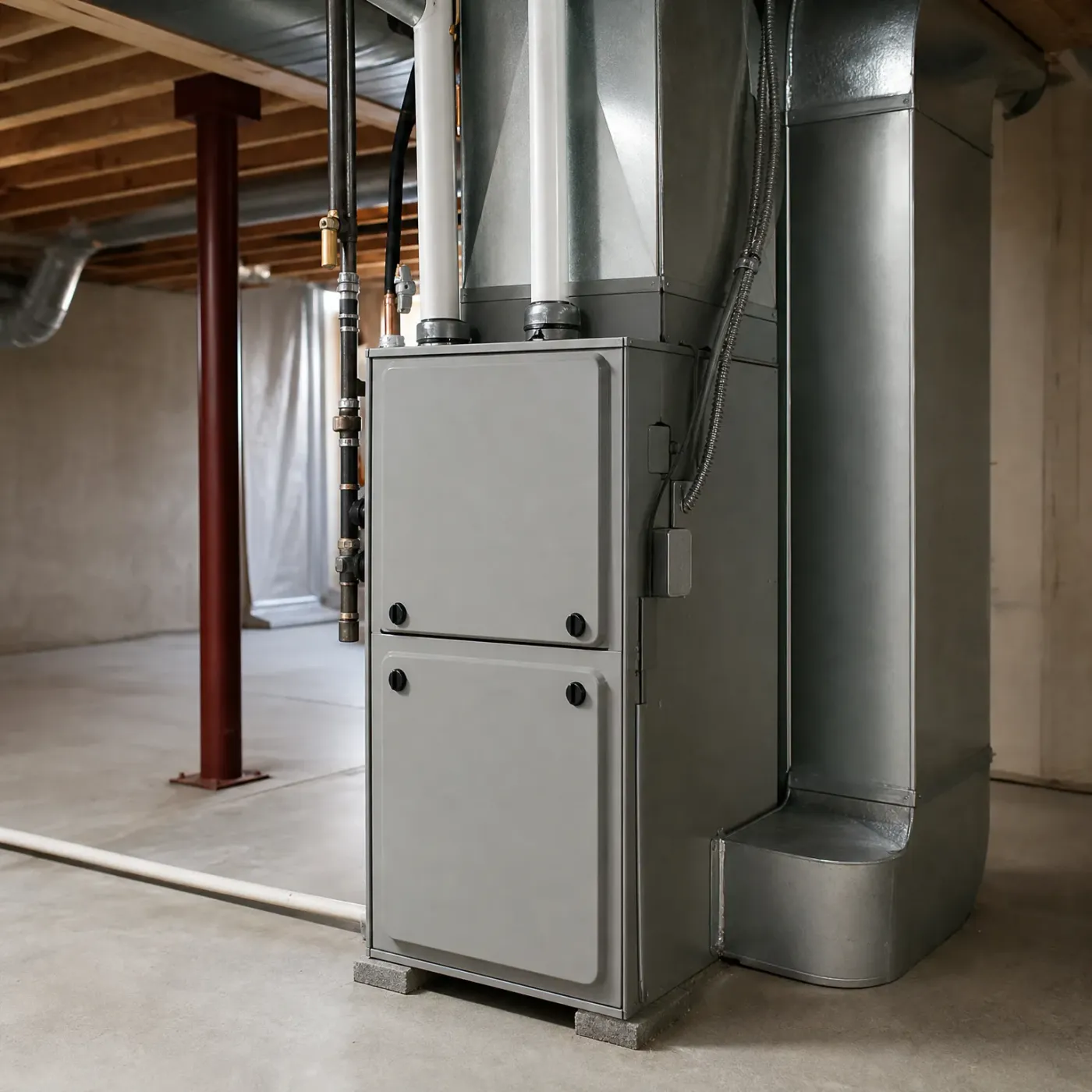
A gray high-efficiency furnace with two access panels stands on blocks in a basement, connected to sheet-metal ductwork, PVC vent pipes, flexible conduit, and gas and water piping, beside a red support column and exposed wood joists.

Get matched with a furnace pro in St. Joseph County

Send the request today and let a furnace pro reach out to you.

A St. Joseph County pro who repairs furnaces gets your request.

Hand off my repair

There's no charge for the request.

Fix It Now or Try This First

Call for repair

  • A furnace shutting off every few minutes is tripping a safety switch on every cycle, and that switch will keep tripping until the part causing it is fixed.
  • A cracked heat exchanger is a safety issue, and a furnace that shuts off from overheating needs to be checked before it's run again.
  • Waiting through a few more cold nights risks the blower motor or control board if the short cycling is pulling them through repeated start up stress.
  • A technician can test the flame sensor, the limit switch and the pressure switch in one visit and find which one is cutting the cycle short.
  • If the furnace is original to the house, a repair now can tell you whether it's worth fixing again or close to the end of its run.
  • St. Joseph County sees overnight lows near 20°F in January, and a furnace that won't stay lit isn't one to leave for later.

Try it yourself first

  • Swap the air filter if it hasn't been changed recently. A clogged filter restricts airflow and is a common reason the limit switch trips.
  • Check that no supply or return vents in the house are blocked by furniture or rugs, since that also starves the furnace of airflow.
  • Look at the furnace's flame through the viewing window. A flame that's mostly yellow instead of blue points to the sensor or burner, not something a homeowner can fix safely.
  • Reset the system by switching it off at the thermostat for a minute, then back on, to see if it completes one full cycle.
  • If the furnace shuts off again within minutes of the reset, the problem is mechanical and a filter change or reset won't hold.
A gray high-efficiency furnace with white PVC vent pipes stands on a concrete pad in a basement, beside sheet-metal ductwork, copper piping and a poured concrete wall with wood framing at left.

Running the way it should

This furnace fires, the burners stay lit and the blower keeps pushing warm air through the ducts until the thermostat is satisfied. No clicking off partway through. The gas line, the condensate pipe and the vents all do their job quietly while the house actually warms up.

A beige gas furnace in a basement with a metal flue pipe, galvanized sheet-metal ductwork to its left, and gas and water pipes along the concrete wall to its right.

Shutting off early

This one fires, runs a few minutes, then goes quiet while the blower keeps moving air that never gets warm. The flue still draws and the shutoff valves sit untouched. Something inside is telling the furnace to stop before the house gets the heat it called for.

A beige metal furnace with a louvered front panel stands on a concrete floor against a concrete wall, connected to galvanized sheet-metal ductwork and a metal pipe.
Before you get your furnace repair
A gray high-efficiency furnace stands on a concrete basement floor beside sheet-metal ductwork, with white PVC vent pipes and a black flexible line running up to exposed wood floor joists, next to a wood-framed post against a concrete wall.
After you get your furnace repair

Winter nights average 20°F

At 20°F, a furnace that shuts off partway through a cycle isn't just annoying, it's a house losing heat faster than it can recover. A few short cycles in a row on a night that cold is enough to feel in every room by morning.

NOAA nClimDiv 1991-2020

A gray high-efficiency furnace in a basement with PVC vent pipes, sheet-metal ductwork, copper and insulated pipes, a water heater at left, and an unfinished wood-stud wall at right.

The furnace holding steady

This furnace sits on a clean pad, PVC flue pipes running to the wall and ductwork carrying air without a fight. It fires once, the burners stay lit, and the system runs its full cycle before shutting down on its own.

An older beige furnace with louvered front panels stands on a concrete basement floor beside galvanized ductwork, metal and plastic pipes, exposed wood framing, and a cylindrical water heater at right.

The furnace cutting out early

This one sits next to older galvanized ductwork and exhaust flues showing their age. It fires, runs a few minutes, then quits before the house warms up, tripping a safety switch that will keep tripping until a contractor finds what's causing it.

A woman stands in the open black front door of a white-sided house with a dark shingled roof while a man in a navy jacket approaches along the walkway, with lantern wall lights, a potted shrub, and flowering garden beds nearby.

A furnace that shuts off on its own needs a cause found, not a thermostat reset

A furnace shutting off every few minutes is doing exactly what it was built to do when something is wrong. A dirty flame sensor, a clogged filter choking airflow, a cracked heat exchanger tripping the limit switch. Whatever the cause, the fix is the same: someone has to find which part is forcing the shutdown and replace or clean it. That's not something to guess at from the living room at 20°F outside.

A licensed contractor near South Bend can look at your furnace, find the part causing the trips, and get it running a full cycle again. Once you send the request, you're done hunting for someone to call. A contractor who covers St. Joseph County gets in touch with you from there, and the house gets warm again on its own schedule, not yours.

A wooden table holding a stone vase with a bare branch, two stacked books and a small dark bowl, beside a window with green foliage outside and a sofa in the dim background.
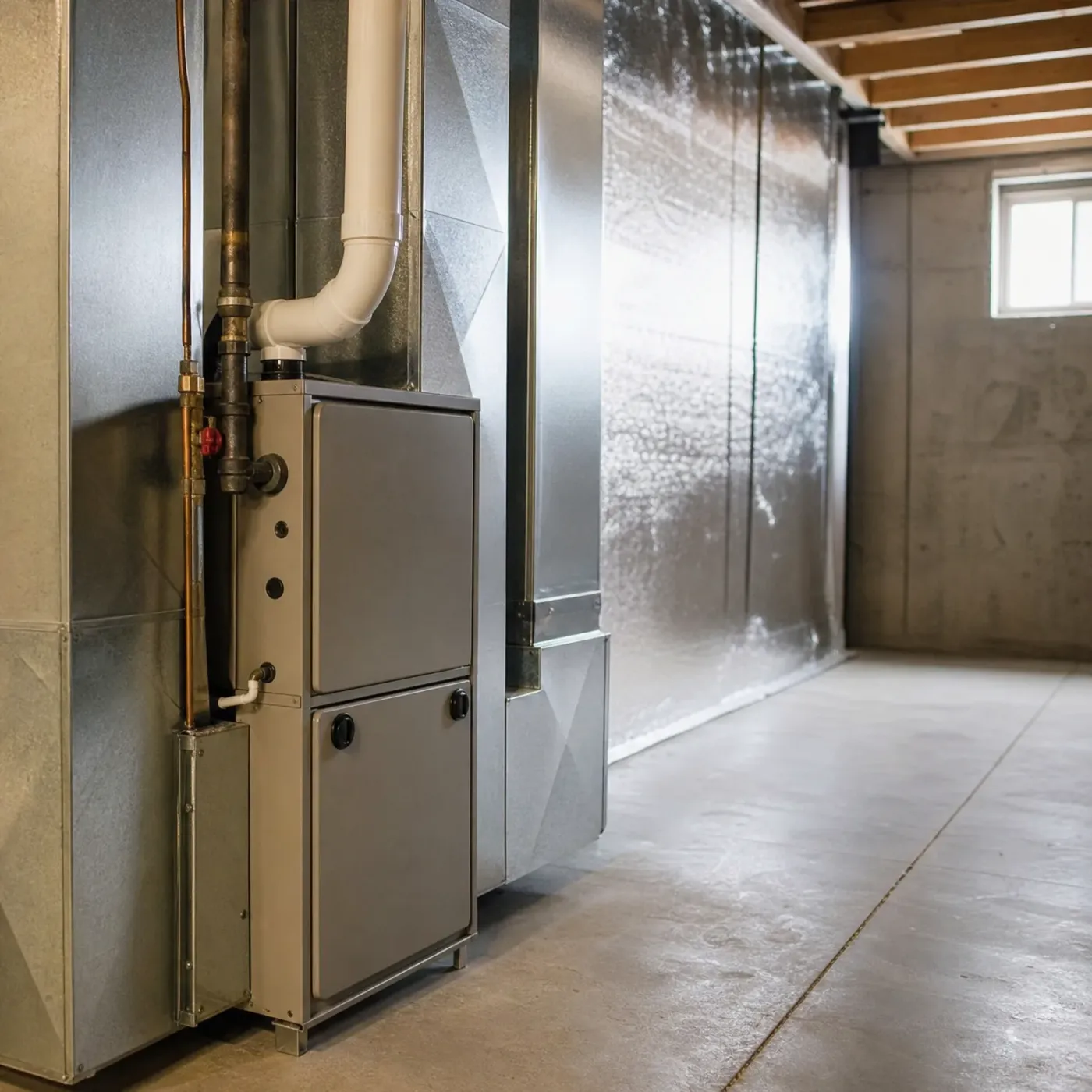
A gray furnace with a white PVC vent pipe and copper piping stands beside large galvanized sheet-metal ducts in an unfinished basement with concrete floor, concrete walls, foil-faced insulation, and a small window.

Find a furnace repair pro in St. Joseph County

Send it today

After you send the request, you're done searching.

You only hire the pro if you want to.