
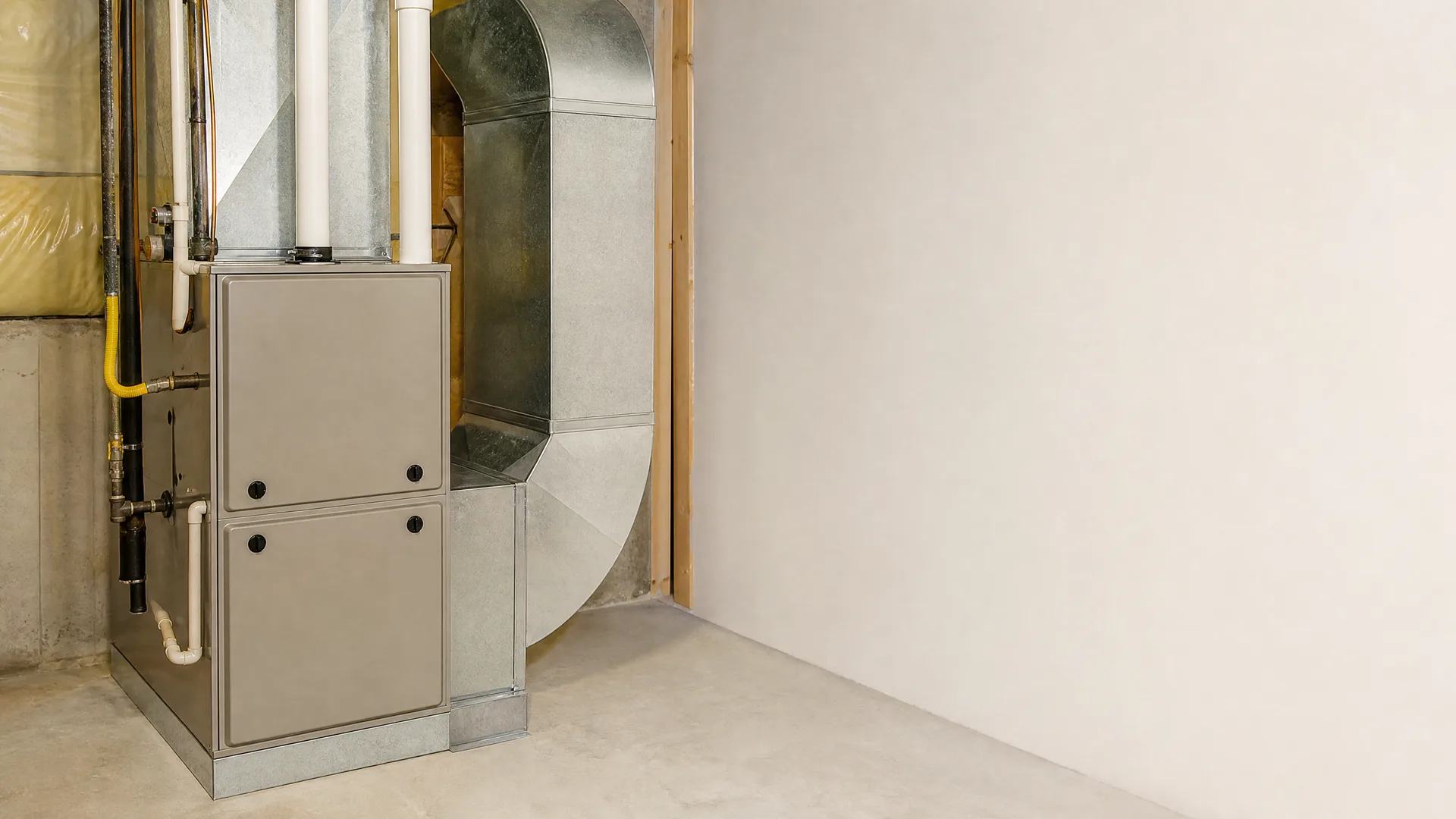
A gray high-efficiency furnace with two white PVC vent pipes stands beside galvanized sheet-metal ductwork in a dim basement with exposed joists and a concrete floor.

The right pro for this job

Why your furnace won't shut off in Indiana

A furnace that keeps running, fan or burner, usually points to one of a few things: a stuck relay, a dirty filter choking airflow, or a thermostat that's lost track of the temperature. This page walks through what tends to cause it and what it means for your system. If you want a local contractor who works on Indiana furnaces all winter to take a look, you can get matched with one below.

Match me with a pro

A furnace that won't shut off usually has a thermostat telling it to keep going, or a safety switch keeping it running instead. Most of the time it's the thermostat: if it's set wrong, in the wrong spot, or its wiring has gone bad, it never gets the signal that the house is warm enough and the burner or fan just stays on. Sometimes it's the limit switch, the part that watches the furnace's internal temperature. If airflow is blocked, from a dirty filter or closed vents, the furnace can overheat inside, and that switch keeps the blower running to cool things down even after the heat itself shuts off. A relay stuck closed does the same thing by keeping power flowing when it should have cut it. None of these fix themselves, and a furnace that runs nonstop through a cold Indiana stretch is working harder than it should, which shows up on your gas and power bills before long.

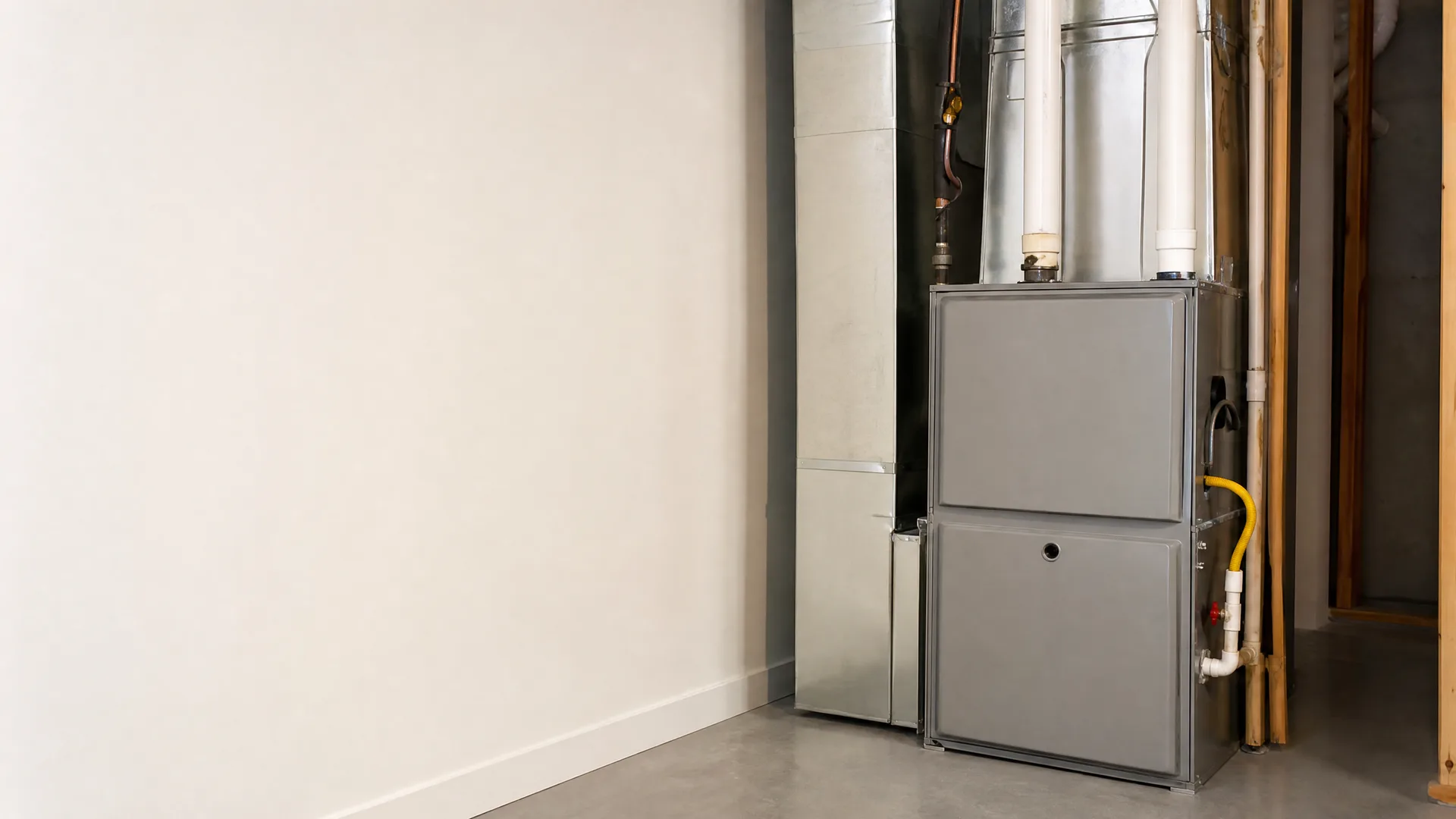
A gas furnace with sheet-metal ductwork, PVC vent pipes and copper and black piping stands against a wall in a basement with a bare light-colored wall and concrete floor.

The limit switch and the blower

Every gas furnace has a limit switch that watches the temperature inside the cabinet. If the blower can't move enough air, heat builds up past what the switch allows, and it keeps the blower running to cool things down even after the burner shuts off. A clogged filter is the usual reason air can't move. A filter that hasn't been changed since last winter is often enough to cause it.

A gray furnace with attached sheet-metal ductwork, white PVC vent pipes, copper and yellow gas lines stands against a wall in a room with a plain white wall and concrete floor.

What a bad thermostat sensor does

Thermostats read the air near them, not the whole house. If the sensor inside has drifted or the thermostat sits near a supply vent or a sunny window, it can read a temperature that isn't the real one in the room. It calls for heat long after the house is warm enough, and the furnace has no way to know otherwise. It just keeps doing what it's told.

Why does my furnace blower keep running after the house is warm?

You set the thermostat, the house reaches temperature, and the furnace shuts off, but the blower keeps blowing. It can run for several minutes after the burner stops, or it never seems to stop at all until you cut power at the breaker. You want to know if that's the fan finishing its job or something stuck that needs a repair.

It depends on how long the blower keeps running

A few minutes of blower time after the burner shuts off is normal. The fan clears leftover heat out of the cabinet and off the heat exchanger before it shuts down on its own. That's controlled by a fan limit switch or a timer on the control board, not something wrong with your system. The problem is a blower that runs well past that, ten minutes, twenty minutes, or straight through until the next heating cycle starts. That points to the switch or control board itself misreading the temperature, a relay stuck closed, or wiring that's keeping the fan circuit powered after it should have dropped out. A furnace repair technician can test the switch and the board directly rather than guessing from the thermostat.

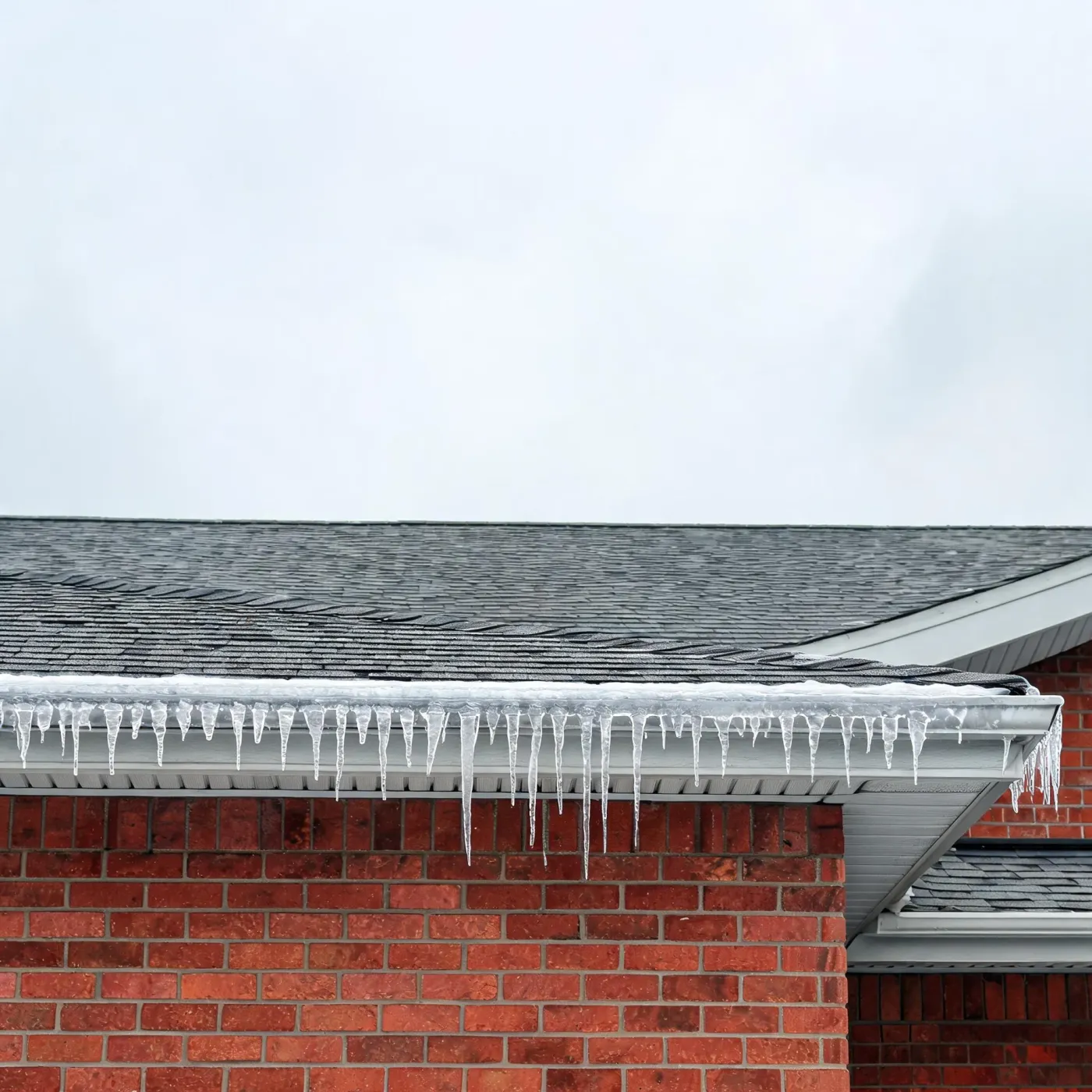
Icicles hanging from a white gutter along the edge of a gray shingled roof on a red brick house, under an overcast sky.

Indiana winter nights average 22°F, according to NOAA climate data. That kind of cold keeps a furnace cycling on and off most of the night just to hold the house steady, and it means the limit switch and the blower are under more strain than they'd see on a milder night. A furnace that already has a stuck relay or a dirty filter is more likely to show the problem now, when it's working hardest, than it would in October. If yours is running long or not shutting off at all on nights like this, a local contractor who works on furnaces through an Indiana winter can look at the actual unit and tell you which part is behind it. Getting matched with one means someone familiar with how this weather pushes these systems, not a string of companies calling about the same job.

NOAA nClimDiv 1991-2020 county normals weighted by homes

Matched to your furnace job

Your request goes to one pro, not a list of companies.

It costs nothing to send, and you don't have to hire anyone.

The furnace runs a little long

A furnace that keeps going for several extra minutes after the house is warm isn't usually a problem. Ductwork and the air inside it hold heat, and the blower is built to clear that heat out before it shuts off. If the burner stops on schedule and only the fan keeps turning, and it settles down within ten or fifteen minutes, that's the furnace doing what it was built to do. Nothing is stuck and nothing is wearing out faster for it. The thing to watch is whether it stops at all, not whether it takes a few extra minutes.


The furnace never stops

A furnace that runs straight through, burner and blower both, without ever cutting off is different. The house passes the temperature on the thermostat and the furnace keeps feeding it heat anyway. Left alone through an Indiana winter night, that means a cabinet and a blower working harder than they're built for, hour after hour, with no break. It also means a thermostat or a limit switch isn't doing its job. A furnace in this state needs someone to look at it rather than wait it out, since it won't correct itself by morning.

A gray-haired man in a dark sweater sits on a light gray sofa in a living room, looking toward a sunlit window with trees outside.
A gray-haired man in a dark blue sweater sits on a light gray sofa in a sunlit living room, looking off to the side, with a potted plant, shelving unit, and large glass doors behind him.
A bearded man with graying hair in a dark green sweater sits on a sofa in a living room, looking off to the side, with a sliding glass door and a dim kitchen doorway behind him.
A gray-haired man in a dark knit sweater sits on a light gray sofa in a living room, looking toward a sunlit window, with houseplants, a lamp, and framed art in the background.

A furnace that won't shut off doesn't just run loud. It runs up your gas bill, hour after hour, for heat your house stopped needing a while ago. The blower motor takes the same hit, working longer than it should and pulling more power the whole time. If a dirty filter or tight ductwork is behind it, the limit switch is stepping in to protect the furnace from itself, and that switch tripping again and again points to an airflow problem that won't fix itself. A bad thermostat signal is quieter trouble. The house gets too warm and stays that way for hours before anyone thinks to check. None of this is dramatic on its own, but it adds up against the heat exchanger, the part of the furnace you most want to leave alone. On a cold Indiana night, with the furnace already working to hold the temperature, there's less room for any of this before something gives.

What a stuck furnace costs you

  • A furnace stuck running pushes your gas use up for every hour it keeps firing beyond what the house actually needs.
  • A blower that never shuts off adds wear to the motor, and motors run up a higher power draw the longer they're asked to work.
  • If the limit switch is the reason it won't stop, the furnace is compensating for poor airflow, and that usually traces back to the filter or the ductwork.
  • A thermostat sending the wrong signal can leave your house overheated for hours before anyone notices, since nothing seems obviously broken.
  • Left alone, a furnace that won't cycle off puts more strain on the heat exchanger, the part you least want to replace.
  • Indiana's cold winter nights mean a furnace already working hard to hold temperature has less room to run flat out without tripping a safety switch or burning through more gas than it should.
An older gas furnace with louvered panels sits on a concrete pad in a basement, connected to sheet-metal ductwork and PVC and metal pipes, with a water heater and wooden stair framing in the background.
Before you get your furnace repair
A gray high-efficiency furnace with white PVC vent pipes stands beside galvanized sheet-metal ductwork in a basement with a concrete floor, with a wooden staircase and railing at left.
After you get your furnace repair

You keep an eye on it yourself, turning the thermostat down or flipping the breaker when the furnace won't quit, and hope it sorts itself out before something burns up.

A licensed contractor who works on furnaces all winter in Indiana checks the limit switch, the thermostat wiring and the blower, and tells you which one is actually keeping yours running.

A middle-aged woman with shoulder-length dark hair, wearing a gray cardigan over a cream top, sits in an upholstered armchair and looks toward a sunlit window, with a shelf holding framed pictures and a plant behind her.
A woman and a child wrapped together in a knitted gray blanket on a couch, with the child's head resting on her shoulder and a lit table lamp and houseplant in the background.

A furnace that runs long but shuts off on its own

If it eventually stops on its own and the air coming out is warm, the furnace is clearing heat from the ducts, not stuck. No repair call needed yet.

Find a local pro

A furnace that never shuts off at all

If the blower or burner keeps going no matter where the thermostat is set, a contractor who works on these every winter in Indiana can find which part is failing.

Find a local pro

Winter nights average 22°F statewide

At 22°F, your thermostat is asking the furnace to fire almost all night long, every night, for weeks at a time. That much run time is exactly when a stuck relay or a worn switch finally shows itself, instead of waiting for a milder night to fail.

NOAA nClimDiv 1991-2020 county normals weighted by homes

A woman in a cream sweater and jeans stands in the open doorway of a white stucco house, holding the dark door, while a man in a dark quilted jacket seen from behind walks toward the entry past potted plants.

A furnace that won't shut off has a reason, and it's one a technician can find

A stuck relay, a dirty filter, a thermostat out of calibration, a limit switch doing its job because the blower can't keep up. Whatever it turns out to be, it has a cause, and the cause has a fix. Running the furnace flat out all night in weak cold doesn't make the problem better. It just means more hours of gas and more wear on a motor that was already working too hard.

Getting this looked at means a licensed contractor in Indiana who works on furnaces all winter comes to your house, not a call center reading from a script. You'll be matched with one contractor who knows this equipment and what tends to fail in it, and that person will reach out to you directly. No guessing which company is calling or why. Just someone qualified, looking at your furnace, telling you what's actually wrong.

Interior corner with a beige sofa holding a dark green and a light cushion and a textured throw, a potted small-leaved tree beside a white-framed window, and a dark shallow bowl on a wooden coffee table in the foreground.
At dusk, a dark board-and-batten house with a standing-seam metal roof and lit entry walkway of stone pavers, with two large outdoor heat pump units on a stone-walled pad at right and trees and hills in the background.

Furnace Repair

A local pro for your furnace repair

RepairFurnace or heatingIndiana
Step 1 of 2

What ZIP code is the job in?

  • A beige upholstered armchair with an olive cushion sits in a sunlit corner beside a wooden side table holding a ceramic vase with leafy branches, under a framed abstract artwork, on a woven rug over a wood floor.
    • A local pro who knows furnaces gets your details and gets in touch.
  • A gray outdoor condenser unit on a concrete pad surrounded by dark gravel, beside a dark wood-sided wall with an electrical disconnect box and a stone veneer wall with a small evergreen shrub.
    • Once you send the form, finding a pro is off your list.
    • After you send the request, you're done searching.
  • A beige upholstered oversized armchair with a matching cushion and a knit throw draped over one arm, beside a round wooden side table holding a vase of greenery near a curtained window, with a framed landscape print on the wall and a woven rug on a wood floor.
    • Answer a few questions instead of calling shop after shop.
    • Fill out one short form instead of calling around.
  • Sunlit living room corner with a beige upholstered sofa, cushion and knitted throw, a round wooden side table holding a white ceramic vase of leafy branches and a small wooden bowl, a framed landscape painting on the wall, and a window at right.
    • Your request stays with one local pro.












