Eight months of work
A furnace in Elkhart County runs from October through May. That is most of the year asking the igniter, the blower motor and the heat exchanger to do their job without a break.
Takes about a minute. No obligation.
A furnace in Elkhart County runs from October through May. That is most of the year asking the igniter, the blower motor and the heat exchanger to do their job without a break.
A furnace with a long season behind it is more likely to show a cracked igniter or a dirty flame sensor before the next one starts. A tune-up now catches those while they're still cheap, simple fixes.
A cracked heat exchanger doesn't announce itself with noise or smoke.
A tech checks for it with a camera and a combustion analyzer, because that's the only way anyone finds it before it lets exhaust into the house.



October is the first cold month here, not a warm-up. Book the tune-up in September, while the furnace is still off and a tech can work on it cold. Wait until it's already running every day and a weak igniter or a cracked flame sensor has less room to show up before it fails outright. Overnight lows in Elkhart County average 20°F in January, and that's not a night to find out the furnace can't keep up.
Eight months of heating puts more hours on the igniter and the blower motor here than in most places. A tune-up checked before October finds the worn part while the furnace is still off, not after it's already running every day.
Find a contractorSkip a season of maintenance and nothing fails right away. Dust builds up on the blower wheel, the flame sensor picks up a film it can't burn off, the burners start lighting unevenly. None of that stops the furnace from running, so none of it gets noticed. What changes is how hard everything works to do the same job. A dirty flame sensor will eventually tell the control board it doesn't sense a flame when it does, and the furnace shuts itself down mid-cycle. A clogged filter starves the blower motor, and that motor runs hotter and wears out its bearings sooner than it should. A burner that's lighting unevenly is putting more carbon monoxide into the heat exchanger than it was built for, and that's the part that eventually cracks. The failures people notice, no heat on a cold morning, a furnace that short cycles, a bill that climbs, usually trace back to something small that went unchecked a year or two before.
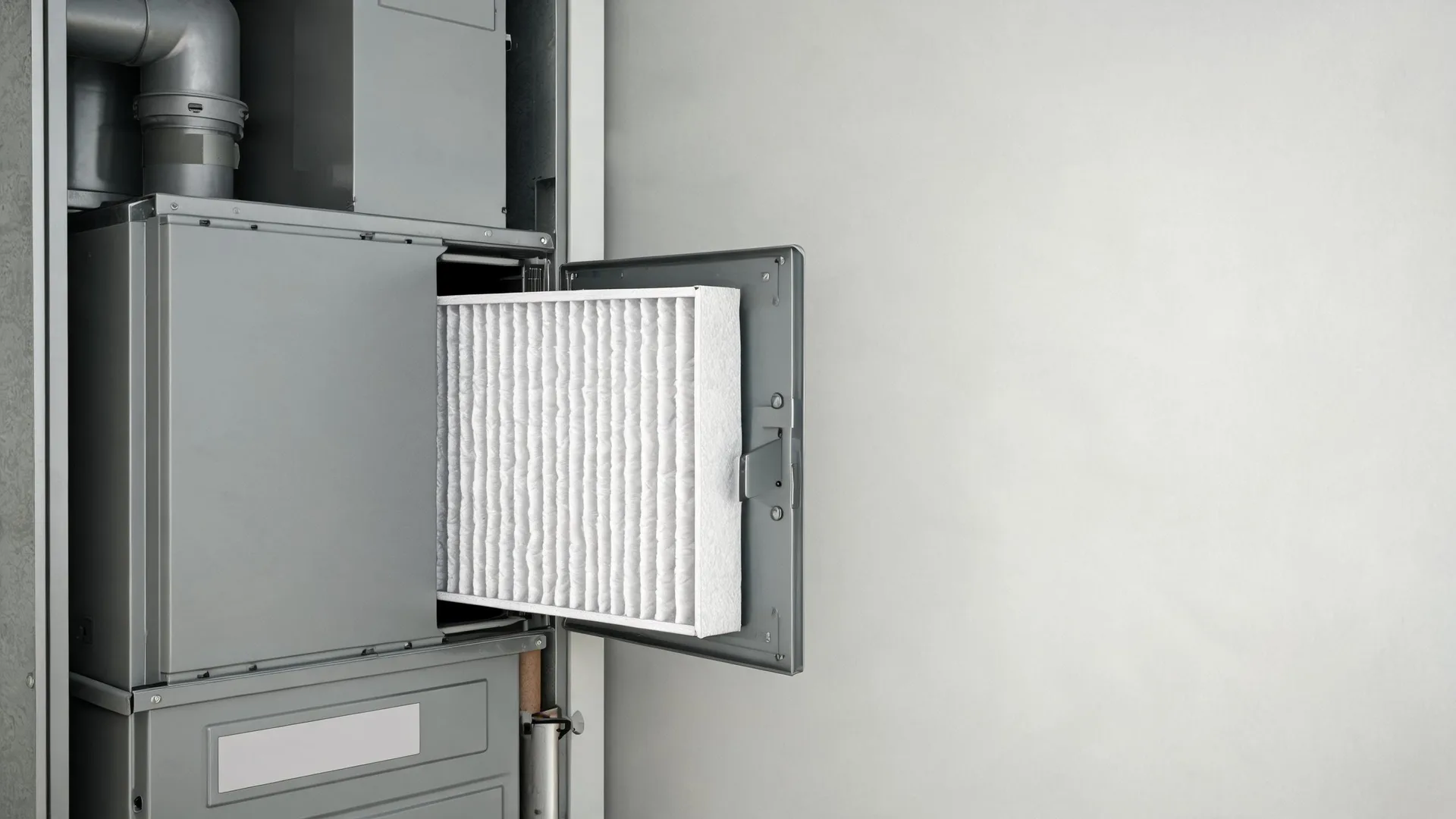
A furnace filter keeps dust off the blower wheel and out of the heat exchanger. Once it loads up with dust, the blower has to pull harder to move the same air, and a motor working against that resistance runs hotter than it should. A clogged filter also starves the burners of the airflow they need to heat evenly, so the heat exchanger takes more stress than it was built for.
A high-efficiency furnace produces condensation as it runs, and that water has to clear through a drain line and trap. If that line clogs with sludge or algae, the water backs up into the unit instead of draining away, and the furnace shuts itself down rather than let it spill into the cabinet. A tech checks that line and clears it before it becomes a furnace that won't start on a cold morning.
Between visits, the filter is the one thing worth checking yourself. Pull it out, hold it up to a light, and if you can't see through it, swap it. A furnace that gets used every day loads a filter faster than most people expect. Keep the area around the unit clear too, nothing stacked against the cabinet, nothing blocking the return grille. Past that, leave it alone. The blower wheel, the flame sensor, the burners, those need a tech with the furnace apart and the panels off, not a homeowner with a screwdriver. If you smell gas, hear a new noise, or the flame looks yellow instead of blue, that's not a wait and see. That's a call now.
A tune-up means the furnace comes apart, not just a quick look. The burners come out and get cleaned, because soot and corrosion change how they light and how clean they burn. The flame sensor gets polished, since that film it picks up over a season is exactly what makes it misread a flame that's there. The igniter gets checked for hairline cracks, the kind that don't show until it fails to light one cold morning. A tech checks the blower wheel for dust buildup and tests the motor's amp draw against what it should be. The gas pressure gets measured and adjusted at the valve, because too high or too low both put stress on the heat exchanger. The whole system gets tested through a full cycle, start to shutdown, to see that everything is actually doing what it's supposed to, not just that it turns on.