October starts the work
Furnaces in Clark County switch on in October and stay on through April. That is seven straight months with no break for the system to idle.
Takes about a minute. No obligation.
Furnaces in Clark County switch on in October and stay on through April. That is seven straight months with no break for the system to idle.
A furnace sitting unused since spring should get checked before it has to run hard. September gives a contractor time to catch a bad igniter or a worn part before the first cold morning asks the system to prove itself.
A dirty filter chokes the airflow a furnace needs to run safely.
A clean filter and a clear flame sensor are most of what keep a furnace out of trouble all winter.



Just under half the homes in Clark County heat with utility gas. That means a burner, a flame sensor and a venting system that has to carry exhaust out of the house safely, not just a blower and a filter. A gas furnace left unchecked can develop a cracked heat exchanger or a clogged vent, and neither announces itself the way a dead blower motor does. Maintenance on a gas system means the technician checks the burner flame, tests the draft, and confirms the gas pressure, on top of the filter and sensor work any furnace needs. Electric furnaces, which heat about 43% of homes here, skip the combustion and venting checks but still need the coils and electrical connections looked at. Worth telling the contractor up front which fuel your furnace runs on, so they bring the right gauges.
Half the homes in Clark County were built in 1982 or later. If yours is one of them, your furnace is likely newer too, and a newer furnace responds to maintenance. A yearly check catches small problems while the parts are still in good working order, instead of finding them after years of running unchecked.
Find a contractorPick a date and keep it yearly. A furnace still well within its working life is exactly the one worth catching problems early on, before a small issue has years to turn into a bigger one.
A furnace about to fail usually says so first. The burner flame burns yellow or flickers instead of staying steady and blue. The blower cycles on and off faster than it used to. The air coming out of the vents feels cooler than it should, or one room never gets as warm as the rest. A burning smell that lingers past the first few minutes of a heating cycle, rattling or screeching from the cabinet, or a pilot light that keeps going out are all reasons to have it looked at, not waited out.
Some failures give no warning at all. A cracked heat exchanger can leak exhaust into the house without any smell or sound to mark it. A flame sensor coated in residue will shut the burner down and leave the house cold with no obvious cause. A clogged vent can trap exhaust that should be leaving the house. None of these show themselves the way a dead blower motor does. A technician checks for them directly, with the furnace apart, instead of waiting for a symptom that may never come.
Between visits, the filter is the one job that's really yours. Pull it and hold it up to the light. If you can't see light coming through, swap it, and check again monthly once the furnace is running every day. A thermostat battery is worth a glance too, since a dead one can shut a system down in a way that looks like a bigger problem. Keep furniture and boxes away from the return air vent and the supply vents so the furnace isn't fighting to breathe. Past that, leave the cabinet closed. The burner, the flame sensor and the heat exchanger are not something to inspect yourself, and opening the furnace up without the training to put it back together correctly causes more problems than it finds.
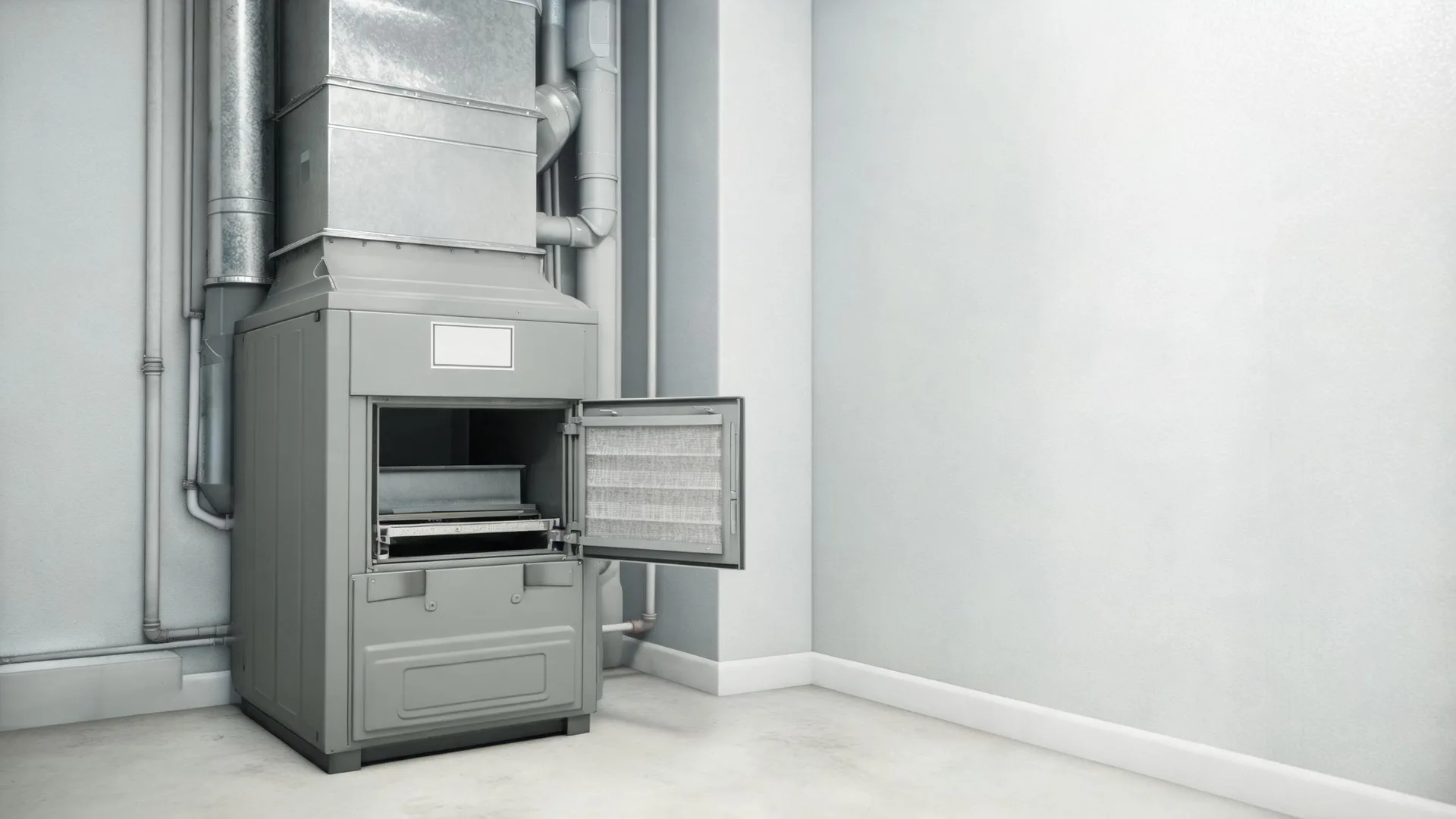
A tune-up starts with the furnace shut down and the cabinet open, not running. The technician pulls the burner assembly and cleans it, because dust and lint collect there over the months the furnace sat idle and will make the flame burn uneven if left alone. The flame sensor gets cleaned or tested regardless of whether it looks dirty, since a thin film on it is enough to shut the burner down. The heat exchanger gets inspected for cracks, which is not something you can check from outside the cabinet. On a gas furnace, the technician checks the gas pressure and watches the draft to confirm the venting is actually pulling exhaust out of the house. The blower motor and its wheel get checked for wear and cleaned if they're coated in dust, since a dirty blower wheel throws a system off balance and makes the motor work harder than it should. Electrical connections get tightened, because a loose connection is what causes a furnace to cycle oddly months later. None of this takes long when a furnace has been looked after every year. It takes considerably longer, and finds considerably more, on one that hasn't.