

What winter here does to a heat pump
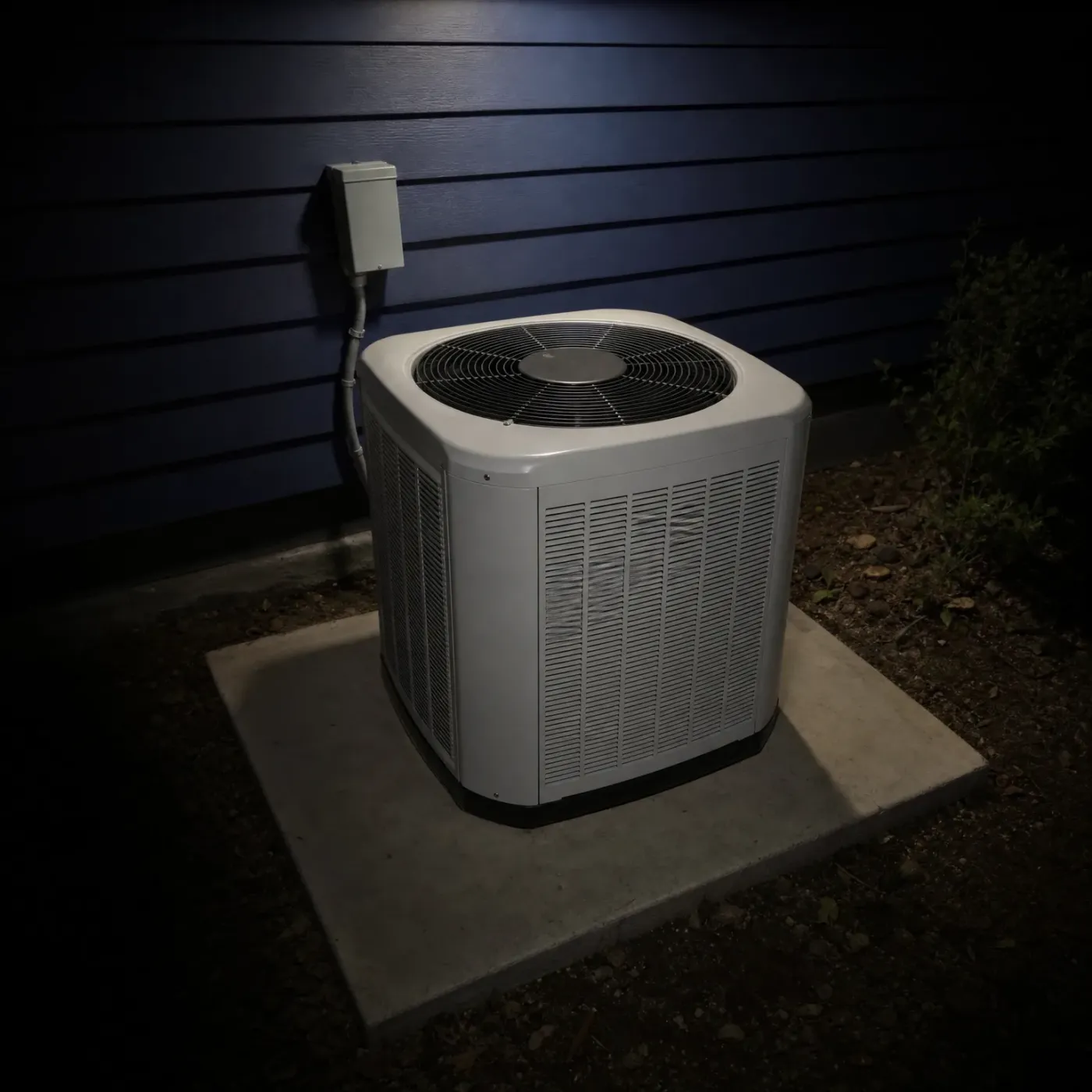
Your furnace question here really comes down to how cold it gets on the nights you need heat most. The average overnight low across December, January and February is 26°F. That is below both of the marks that matter for a heat pump. A standard heat pump's output falls short of its rating once it drops below 40°F outside, and somewhere below about 35°F it typically needs backup heat to keep up. At 26°F, you are past both lines most winter nights.
About 80 nights a year here fall at or below freezing, close to half of the roughly 210 nights the heat runs. Every one of those nights is below the 40°F and 35°F marks. That does not mean a heat pump quits. It means that on close to half the nights of your heating season, a standard one is leaning on backup heat or putting out less than its rated capacity.
The cold snaps are rare. Only about one night a year here drops to 0°F or below, a small slice of the 80 freezing nights. Field tests of newer cold-climate heat pumps in occupied homes found backup heat carried only a small share of the load between 0°F and 35°F, and running on backup alone was rare above 0°F. So if you are looking at a heat pump, the gap between a standard model and an ENERGY STAR Cold Climate one matters here. A Cold Climate unit has to prove it still makes 1.75 units of heat per unit of electricity at 5°F and holds onto 70 percent of its 47°F capacity at that temperature. A standard heat pump was never tested to that mark.