





An unfinished basement featuring a grey forced-air furnace with metal ductwork, concrete block walls, exposed wooden joists, and a single hanging bare bulb.

Furnace Repair in Jeffersonville, IN

Tell us about the job

Takes about a minute. No obligation.

RepairFurnace or heatingClark County, IN
Step 1 of 2

What ZIP code is the job in?

Furnaces in Jeffersonville run from October through April, about seven months straight. Overnight lows average 26°F in December and January, so the furnace is working hardest when you need it least able to quit. None of that is unusual for this area, and it doesn't mean your system needs anything special. It means a normal furnace problem, an igniter, a flame sensor, a failed limit switch, whatever it turns out to be, shows up and gets noticed fast. The fix is finding the actual cause, not guessing at it.

7 months
October through April, your furnace is on duty
26°F
the average winter night it heats against
9 winter storms
in ten years, the nights a failure hurts most
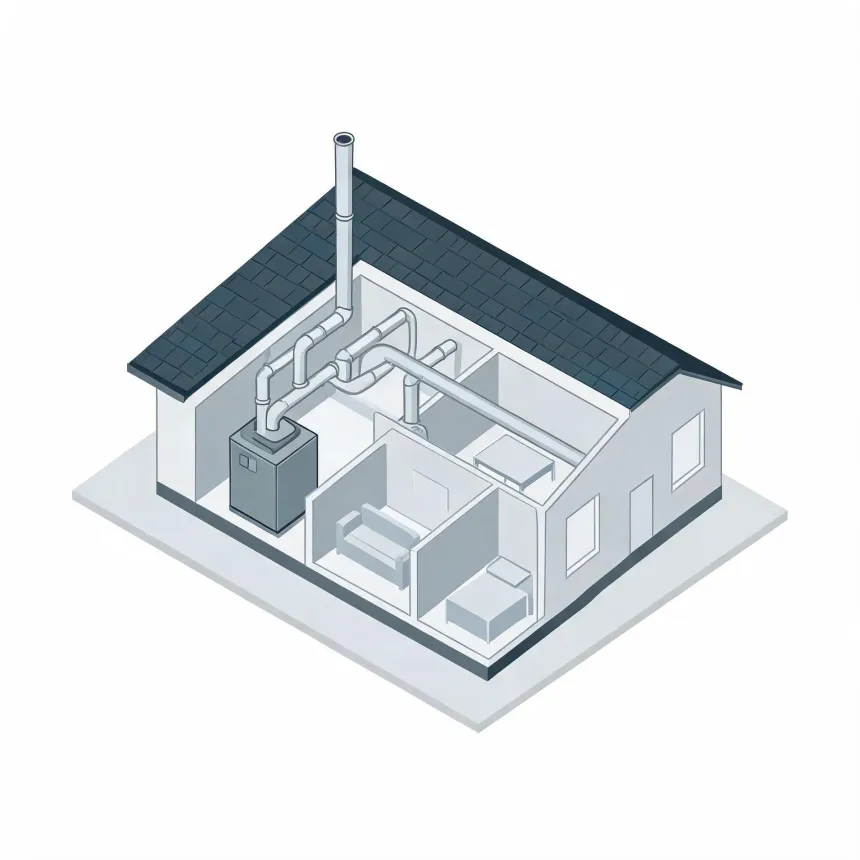
Isometric cutaway illustration of a single-story house showing a gray furnace connected to white ductwork and a flue pipe extending through the shingled roof, with simplified furniture in the interior rooms.
Your furnace works hardest from November through March.

NOAA nClimDiv, 1991–2020 normals

Furnaces in Clark County start running in October.

A weak part that made it through last winter is the one that quits in the first cold week.

Clark County weather is ordinary. Your furnace problem is too

132 severe weather events from 2015 to 2024
17% of homes statewide lost power a day or more in 2024
79 damaging wind events from 2015 to 2024

Half the homes in Clark County were built in 1982 or later. If yours is one of them, the furnace inside it has probably not been run into the ground. A furnace that's a few years old with one failed part is a repair, not a replacement. Worth finding out what actually broke before anyone talks about a new system.

Find out what broke before you plan on a new furnace

Get the actual part named. If your furnace is one of the newer ones in the county, a failed igniter or switch is a repair call, not a reason to replace anything.

Find a contractor
A man in a beanie, dark jacket and tan work pants climbs porch steps toward a blue front door, carrying a canvas tool bag, with a potted shrub in a blue planter beside him.
A gray gas furnace with attached ductwork and piping installed in an unfinished concrete basement.

What a furnace tells you before it fails

A furnace rarely quits without warning you first. It short cycles, running for a few minutes and stopping before the house warms up, because a flame sensor coated in residue can't prove the flame is still there. It blows cold air between cycles while the igniter struggles to catch. The blower runs but no heat follows, which points to the gas valve or the igniter itself rather than anything in the ductwork. A burner that should glow blue and steady instead flickers yellow, telling you it's not getting the air it needs to burn clean. Banging or popping from the ducts as they heat up is normal expansion, but a boom at startup is delayed ignition, gas building up before it finally lights. None of these mean the furnace is done. Most of them are one part, found and replaced.

Most failures are one part, not the furnace

A furnace has a short list of parts that actually wear out. The igniter, the flame sensor, the inducer motor, the gas valve, the limit switch. Each one fails on its own. Heat exchangers can crack and blower motors can seize, but that's rarer, and it still means replacing a part, not necessarily the whole unit.

Dirty parts fail before broken ones do

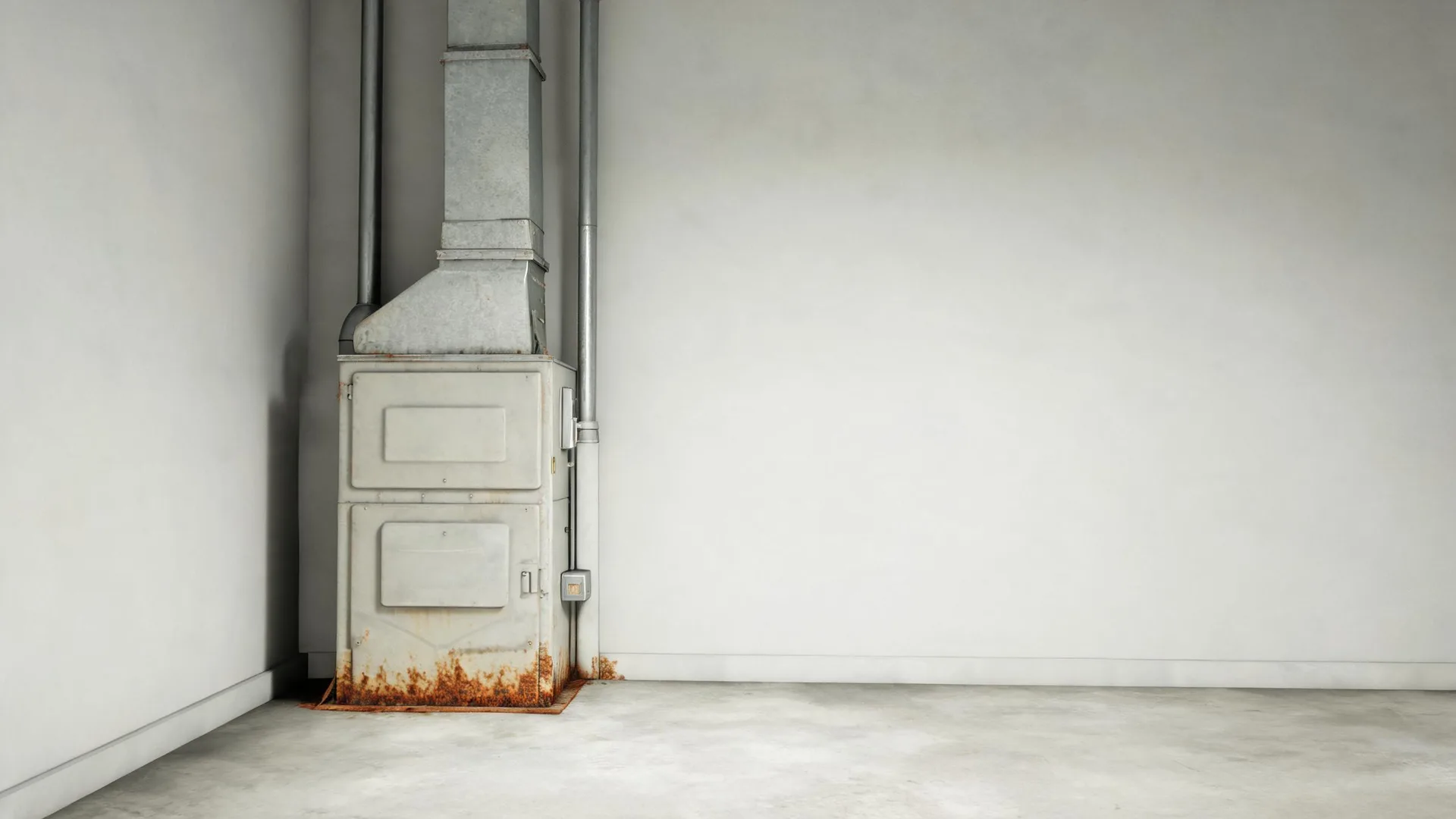
A flame sensor coated in residue or a burner starved of air causes most no-heat calls, and neither means something is broken. Dust and soot build up over time and stop a part from doing its job even though the part itself is fine. Cleaning it can be the whole repair.

An unfinished basement featuring concrete block walls, exposed floor joists, and a metal forced-air furnace with ductwork near a central pillar.

A new furnace would cut about $90 a year off heating for a typical Clark County home.

  • A new high-efficiency furnace$350 a year
  • An older furnace$440 a year

Estimates for a typical Clark County home, compared with an older unit built to the previous federal minimum, from EIA household energy data, Indiana fuel prices and NOAA climate normals. Your home will differ.

Repair makes sense when one part has failed and the heat exchanger is sound.

Replacement makes sense when the heat exchanger is cracked or the furnace keeps needing parts.

Age is one way to think about this, but it is not the only one. A furnace that has run fine for years and suddenly fails on one part is almost always worth fixing. The question that matters more is whether this is the first repair or the third one this year. A part that fails once gets replaced and the furnace goes back to normal. A furnace that keeps needing new parts, one after another, is telling you the whole system is wearing down at once, not that any single piece is bad luck. That pattern is worth a straight answer from whoever is looking at it, not just another part swapped in.