A row of dark-sided single-story houses with gray shingled roofs behind trimmed hedges and a mown lawn, framed by overhanging tree branches under an overcast sky.

Furnace Repair in Greenwood, IN

Tell us about the job

Takes about a minute. No obligation.

RepairFurnace or heatingJohnson County, IN
Step 1 of 2

What ZIP code is the job in?

Eight months of work a year

Furnaces in Greenwood run from October through May. That's most of the year, not just a few cold snaps. A part that gives out after that many hours of work is just worn. It doesn't mean anything unusual happened to your furnace.

The cause is what matters

A furnace that's short cycling or blowing cold air almost always traces back to one part. Maybe the igniter, maybe the flame sensor, maybe a blower motor that's failing. Find the one that's actually causing it and the repair is straightforward. Guess at it and you're paying for a callback.

8 months
October through May, your furnace is on duty
23°F
the average winter night it heats against
64%
of homes here heat with gas, so most furnaces here burn gas
11 winter storms
in ten years, the nights a failure hurts most
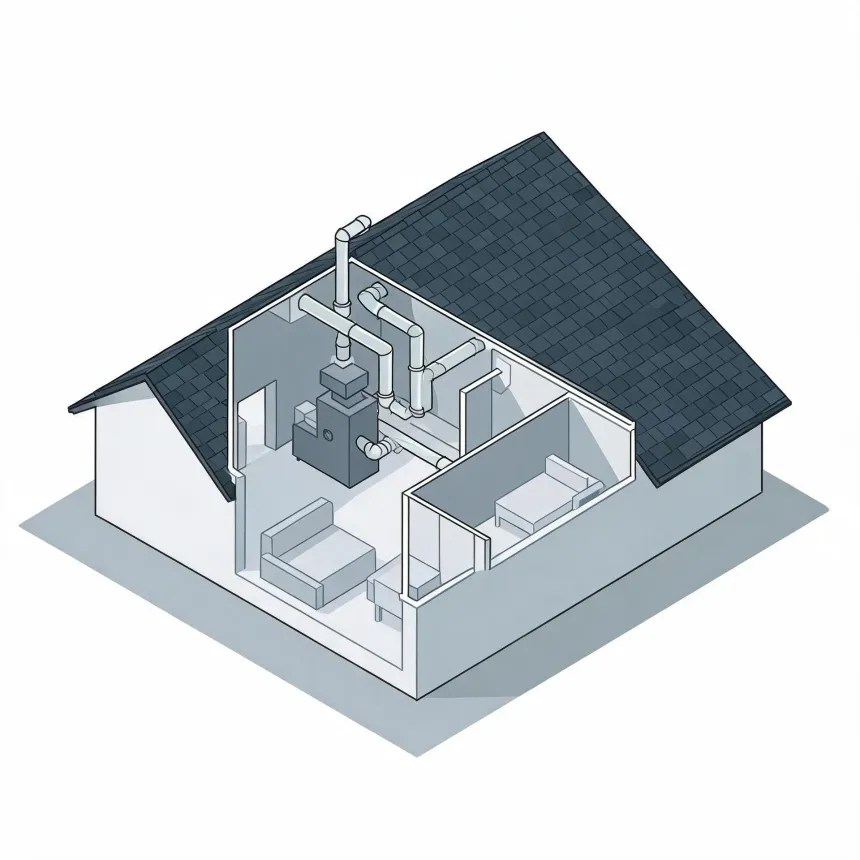
Isometric cutaway illustration of a single-story house with a dark shingled roof, showing interior rooms with furniture and a furnace connected to ductwork.
Your furnace works hardest from November through March.

NOAA nClimDiv, 1991–2020 normals

A furnace that short cycles is shutting off before the house warms up, usually because a flame sensor can't read the flame or the unit is overheating and tripping a limit switch.

Either way the furnace is telling you something specific is wrong, not just asking for patience.

Half the homes in Greenwood were built in 1993 or later

Half the homes here were built by 1993
Heat runs October through May
Winter nights average 23°F
Furnace season starts in OctoberFurnaces in Johnson County run October through May, about eight months a year.

Before calling anyone, flip the breaker off and back on and see if the furnace resets and runs a full cycle. Check the air filter while you're at it. One so clogged that air can't move through it will make a furnace overheat and shut itself off on purpose, and that's not a repair, that's a filter swap. Look at the thermostat too, make sure it's set to heat and not just fan, and check the batteries if it uses them. If the furnace has a window or sight glass, a steady blue flame is normal and a flickering yellow one is not, and that's worth telling whoever comes out. What you shouldn't do is keep resetting the breaker over and over hoping it sticks. If it trips again after a real cycle, something tripped it for a reason, and that's the part a tech needs to find.

Get the usual fix

Nothing about this area is especially hard on it. It's most likely the usual problem with the usual fix.

Find a contractor
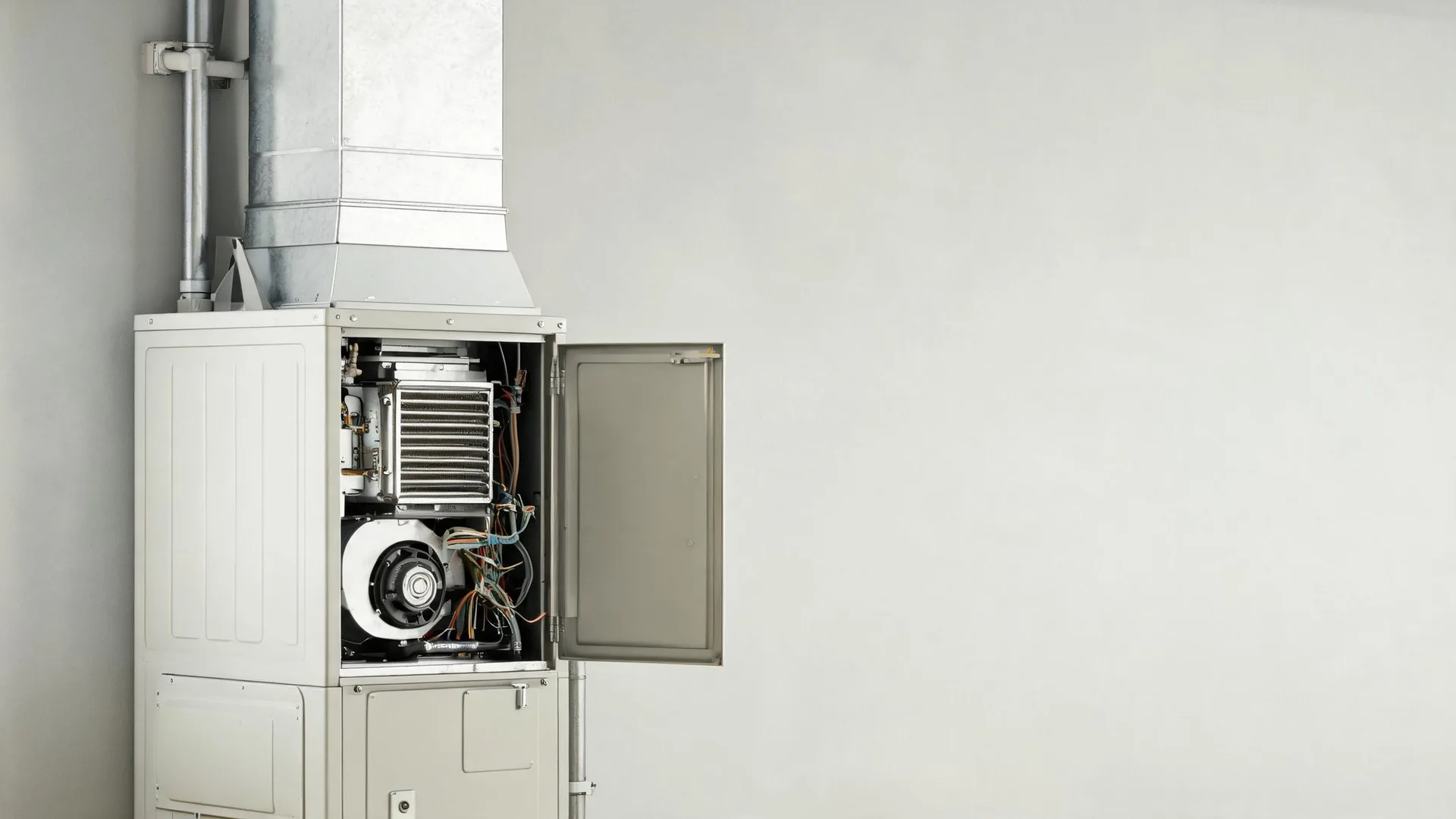
A gray residential gas furnace installed in an unfinished basement, connected to sheet-metal ductwork and PVC pipes.

What actually wears out

Most furnace failures come down to a handful of parts that wear out from doing their job over and over. The igniter heats up and cools down every single cycle, and that repeated stress is eventually what cracks it. The flame sensor sits in the flame every time the burner fires, and over time it builds up a coating that keeps it from doing its one task, which is confirming the flame is lit. Blower motors run for hours at a stretch pushing air through the house, and the bearings inside them wear the same way any motor's would. None of these fail because something went wrong. They fail because they were used for exactly what they're built for, cycle after cycle, season after season.

A cracked igniter can take the board with it

An igniter that's starting to go will still fire, just not every time. Each failed attempt still draws power and still asks the control board to try again. Keep running it in that state and you're putting repeated strain on a board that was never the problem to begin with.

A dirty flame sensor turns into a bigger shutdown

A flame sensor coated with buildup still works, just barely, so the furnace keeps limping along instead of stopping clean. Left alone, the coating only gets thicker, and what was a quick cleaning job turns into a sensor that won't read the flame at all.

An unfinished basement interior showing a gray furnace unit beneath a bare incandescent bulb, surrounded by exposed joists, concrete walls, cardboard boxes, and utility pipes.

A new furnace would cut about $100 a year off heating for a typical Johnson County home.

  • A new high-efficiency furnace$410 a year
  • An older furnace$510 a year

Estimates for a typical Johnson County home, compared with an older unit built to the previous federal minimum, from EIA household energy data, Indiana fuel prices and NOAA climate normals. Your home will differ.

Repair makes sense when one part has failed and the heat exchanger is sound.

Replacement makes sense when the heat exchanger is cracked or the furnace keeps needing parts.

Age by itself doesn't tell you much. What matters is which part failed and whether the rest of the furnace is sound. A cracked heat exchanger is a straight replacement, no debate, because that's the part that keeps carbon monoxide out of the air you breathe. A bad igniter or flame sensor is a straight repair, because the rest of the furnace around it is unaffected. The harder calls are the ones in between, where a part failed because it's old and the parts around it are the same age. There the question isn't what broke, it's whether you want to keep paying to find out what breaks next.