






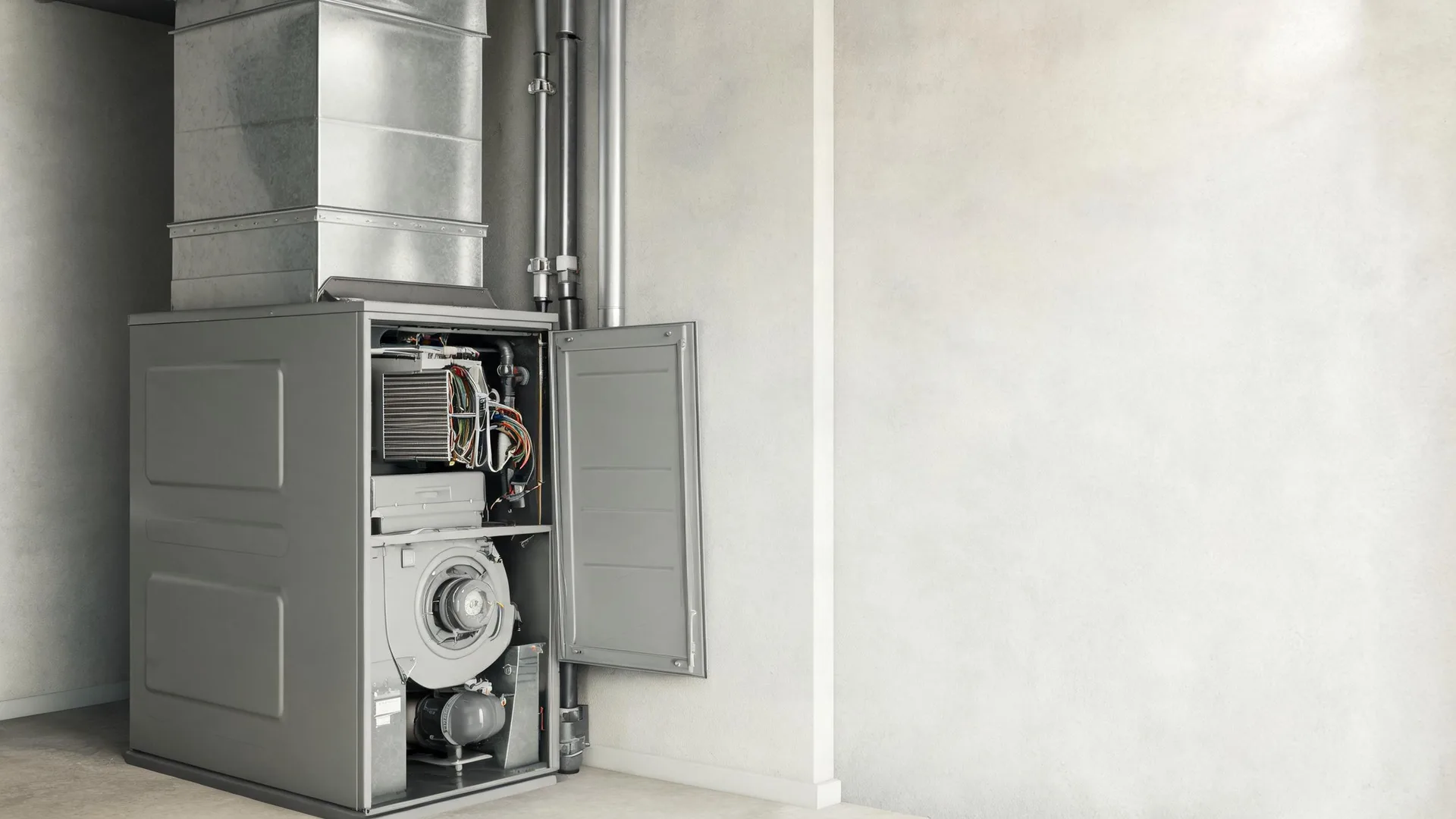
A gray forced-air furnace with sheet-metal ductwork stands in an unfinished basement with exposed wooden joists, concrete walls, and a hanging incandescent bulb.

Furnace Repair in Huntington, IN

Tell us about the job

Takes about a minute. No obligation.

RepairFurnace or heatingHuntington County, IN
Step 1 of 2

What ZIP code is the job in?

Furnaces here start running in October and keep going through May. The first weeks of that stretch are when a weak part tends to fail, once the system finally gets pushed hard after sitting all summer. An igniter or blower motor that was already going can hold on fine until that first real cold snap asks more of it. If yours struggled last season or you noticed something off toward the end of it, September is the month to get it checked, before it has to run every day.

8 months
October through May, your furnace is on duty
21°F
the average winter night it heats against
7 winter storms
in ten years, the nights a failure hurts most
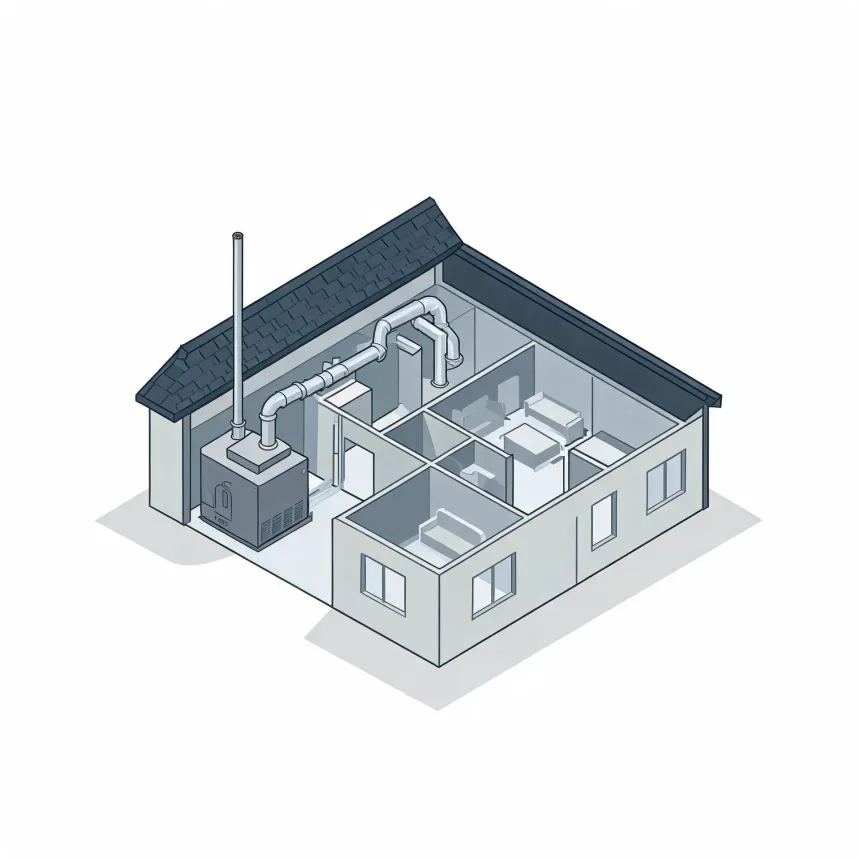
Isometric grayscale illustration of a cutaway single-story house showing interior rooms with furniture, plus an exterior furnace unit with a tall flue pipe and ducting running into the attic space.
Your furnace works hardest from November through March.

NOAA nClimDiv, 1991–2020 normals

Furnaces in Huntington County run about eight months of the year, October through May.

A furnace with a bad part doesn't get a break here. It just waits for the next cold morning to fail again.

Half the homes here were built by 1966, and the furnace may be original

Half the homes here were built by 1966
Heat runs October through May
Winter nights average 21°F
Huntington County doesn't push furnaces any harder144 severe weather events between 2015 and 2024, nothing unusual for a furnace

A diagnostic visit starts with the complaint. What the furnace was doing, or not doing, before it got shut off or stopped working. From there it's a sequence, not a guess. Power and thermostat call confirmed first, since a furnace that never gets the signal looks the same as one that got the signal and failed. Then the gas valve and igniter, checking for the spark or glow and whether flame actually catches and holds. If it lights but then shuts off, that points somewhere else entirely, often a flame sensor that's coated enough to stop reading the flame. A technician will also pull the blower compartment to look at the motor and check static pressure in the ducts, because a furnace that overheats and trips its limit switch is sometimes a restricted airflow problem, not a bad part. Each step either clears a system or narrows down to the one that's actually failing.

Get it looked at early

Problems tend to show up in the first weeks of the season, when the load hits a part that was already weak.

Find a contractor
A man in a dark jacket, tan work pants and a cap, seen from behind, climbs stone steps toward a blue front door while carrying a canvas tool bag, with a blue planter of greenery at left.
A gas furnace with attached ductwork, gas piping, and condensate lines installed in a concrete-block basement.

What actually gives out, and why

Most furnace failures start with one part that wears out on its own schedule. The igniter glows hot every time the burners light, and that cycle of heating and cooling eventually cracks it, so it stops glowing enough to catch gas. A flame sensor sits right in the burner flame every run, and over time it builds up a coating that stops it from sensing fire at all, so the furnace shuts itself down as a safety measure. The blower motor runs the longest of any part in the system, and its bearings wear until the motor strains, runs hot, or seizes. None of these failures come from one hard winter. They come from the part reaching the end of what it had, and the cold morning that follows just happens to be when it runs out.

What you notice first

A failing furnace usually gives some warning before it quits. It runs longer than it used to. The air coming out of the vents feels cooler than normal. It cycles on and off more than it should. Sometimes you hear it before you feel it, a rattle when it starts up, a scrape from the blower, a boom when the burners light late instead of right away. None of that is normal, and none of it goes away on its own.

What needs a call now

A furnace that won't light, trips its limit switch, or blows cold air needs a technician out, not a wait and see. The same goes for short-cycling or any burning smell. A furnace that's just louder or slower than usual can often hold until a scheduled visit. Once it stops heating reliably, it can fail for good on any morning that follows.

An unfinished basement interior showing a gray furnace unit beneath a bare incandescent bulb, surrounded by exposed joists, concrete walls, cardboard boxes, and utility pipes.

A new furnace would cut about $110 a year off heating for a typical Huntington County home.

  • A new high-efficiency furnace$450 a year
  • An older furnace$560 a year

Estimates for a typical Huntington County home, compared with an older unit built to the previous federal minimum, from EIA household energy data, Indiana fuel prices and NOAA climate normals. Your home will differ.

Repair makes sense when one part has failed and the heat exchanger is sound.

Replacement makes sense when the heat exchanger is cracked or the furnace keeps needing parts.

Age isn't the test. A furnace that starts right up, holds a steady flame, and heats evenly can be worth repairing even if it's old, as long as the part that failed is a normal wear item like an igniter or a flame sensor. Those are quick to replace and don't say anything bad about the rest of the system. What changes the math is the heat exchanger. That's the part that can't be patched, and if it's cracked, the furnace gets replaced, not repaired, because that's the part that keeps combustion gas out of the air you breathe. A technician checks it anytime there's scorching, a strange smell, or a furnace that trips its limit switch for no clear reason. The other thing worth weighing is how often you've had someone out for the same furnace. One failed part is a repair. A string of different parts failing over a couple of years is usually the system telling you it's done, even if each visit on its own looked small.