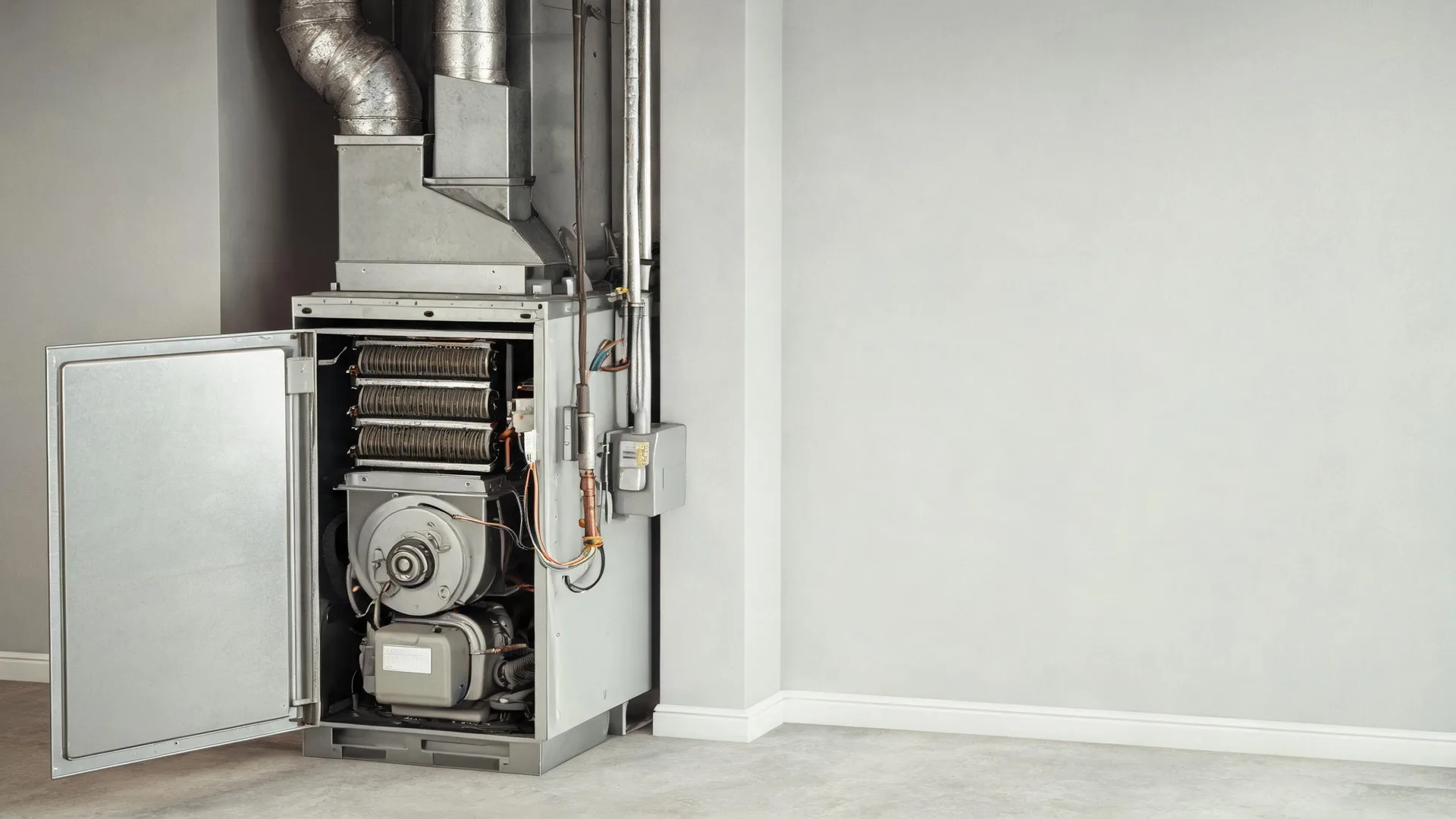
Eight months of work
Furnaces in Noble County run from October through May. That's most of the year asking the igniter, the blower and the heat exchanger to perform, with overnight lows averaging 20°F in December, January and February.
Takes about a minute. No obligation.
Furnaces in Noble County run from October through May. That's most of the year asking the igniter, the blower and the heat exchanger to perform, with overnight lows averaging 20°F in December, January and February.
A furnace running eight months a year against lows like that shows its weak points early. Whatever's acting up in your house now is worth having a contractor actually diagnose, not just patch, so the repair holds through the next cold stretch.
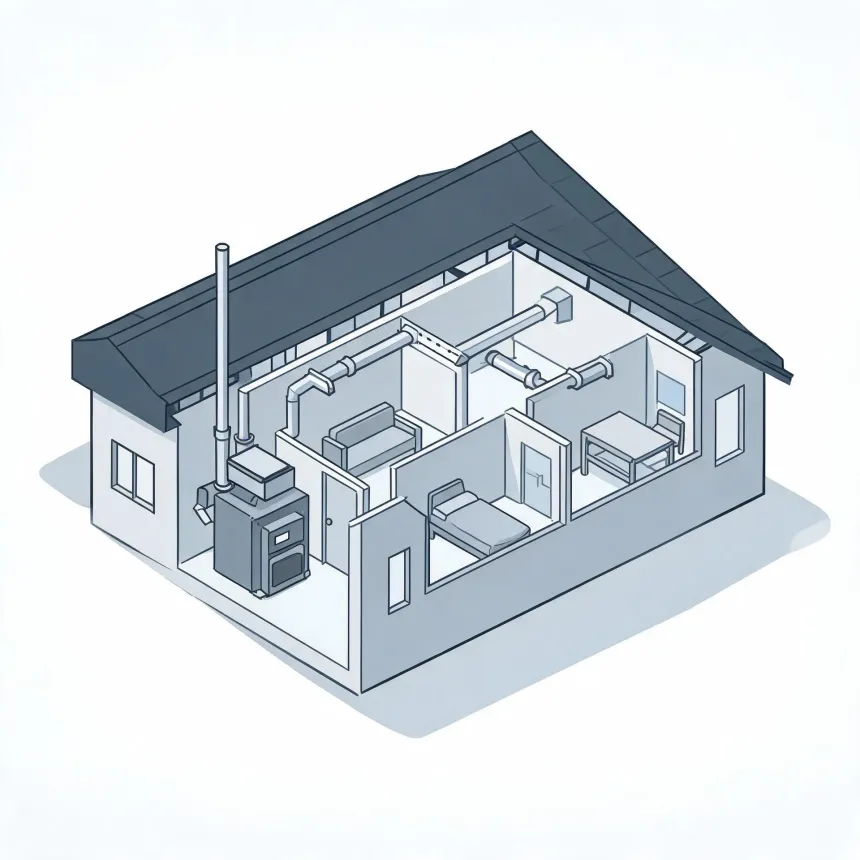
NOAA nClimDiv, 1991–2020 normals
A furnace fails at the part that works hardest, the igniter, the flame sensor, the blower motor.
Tell the contractor what it's doing, short cycling, no heat, a burning smell, and the diagnosis goes faster.



Your furnace works hard here, and that's usually what's behind the problem. Have it diagnosed properly so the fix lasts.
Find a contractor
Before anyone comes out, check the thermostat first. Make sure it's set to heat, not cool, and the set temperature is actually above room temperature. If it runs on batteries, swap them. Next, go to the furnace itself and check the switch on the side of it that looks like a light switch, sometimes it gets bumped off. Check the breaker too. Then look at the filter. A filter clogged with dust will choke the airflow and can shut the whole system down as a safety measure. If it's gray and packed solid, pull it and see if the furnace responds. Last, check that nothing is blocking the vents or the return air grille in the house, and if your furnace has a visible flame, note its color. A steady blue flame is normal. Yellow or flickering is not, and that one's worth mentioning to the contractor.
A cracked heat exchanger stays a crack if the furnace shuts down. Keep running it and the metal keeps flexing with every heat cycle, and a crack can open wider. A blower motor dragging on a worn bearing will keep drawing current until it seizes. Problems that start as a noise or a smell tend to end as a no-heat call if nothing's done.
A furnace that fires, runs briefly, then shuts off is cycling on a limit switch or a flame sensor that's reacting to something wrong. Each start puts a load on the igniter and the inducer motor. Let it short cycle for days and you're asking the parts that already have a problem to repeat the same stress over and over, right up until one of them gives out.
Estimates for a typical Noble County home, compared with an older unit built to the previous federal minimum, from EIA household energy data, Indiana fuel prices and NOAA climate normals. Your home will differ.
Repair makes sense when one part has failed and the heat exchanger is sound.
Replacement makes sense when the heat exchanger is cracked or the furnace keeps needing parts.
Age is part of the decision, but how the furnace has behaved matters more than the number of years on it. A furnace that's needed a few small repairs over its life and otherwise runs fine is usually still worth fixing. One that keeps coming back for new problems every season is telling you the cabinet is wearing out even if no single part has failed yet. The heat exchanger is the part that matters most, because a crack there isn't a repair, it's a replacement, and a contractor should check it before doing anything else. If the repair being quoted costs a large share of what a new furnace would run, that's the point to ask about replacement instead of patching it again. A furnace near the end of its expected life that needs a major part, the blower motor or the heat exchanger, is usually better replaced than repaired piecemeal.