




A gas furnace and sheet-metal air handler unit installed in an unfinished concrete basement.

Furnace Repair in Kokomo, IN

Tell us about the job

Takes about a minute. No obligation.

RepairFurnace or heatingHoward County, IN
Step 1 of 2

What ZIP code is the job in?

Furnace sits quiet all summer, then October asks it to run hard right away. That first stretch of cold is when a weak part usually gives out, not before. An igniter that was already cracked, a flame sensor coated in residue, a blower motor on its way out, the first real call for heat is what finds it. Homes here run the furnace about eight months, October through May, so a problem that shows up early is one that sticks around if it's left alone. Worth getting it checked as soon as something sounds or smells off, before the cold settles in for good.

8 months
October through May, your furnace is on duty
21°F
the average winter night it heats against
69%
of homes here heat with gas, so most furnaces here burn gas
10 winter storms
in ten years, the nights a failure hurts most
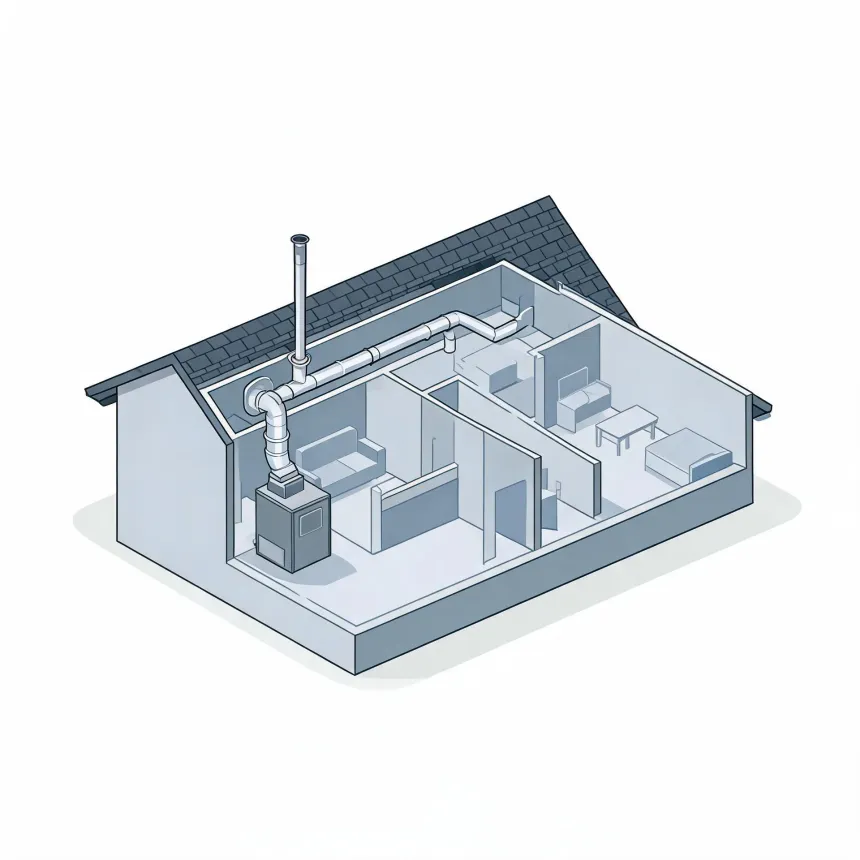
Isometric cutaway illustration of a single-story house showing interior rooms with furniture and a furnace connected to ductwork and a vertical flue pipe extending through the roof.
Your furnace works hardest from November through March.

NOAA nClimDiv, 1991–2020 normals

Eight months of heat means the furnace is working most of the year, not just a few cold snaps.

A problem that starts in October is still a problem in January, so it's worth fixing once, right.

Half the furnaces here are older too

Half the homes here were built by 1969
Heat runs October through May
Winter nights average 21°F

If your furnace came with the house and the house is one of the older ones here, ask the contractor how much life is left in it before you commit to a repair. A cracked heat exchanger or a blower motor on its last legs is a sign the furnace is near the end, not just having a bad week. The nameplate tells a contractor how old the unit actually is, which is a better guide than guessing from the house. Worth asking before the repair, not after.

Get it looked at early

Problems tend to show up in the first weeks of the season, when the load hits a part that was already weak.

Find a contractor
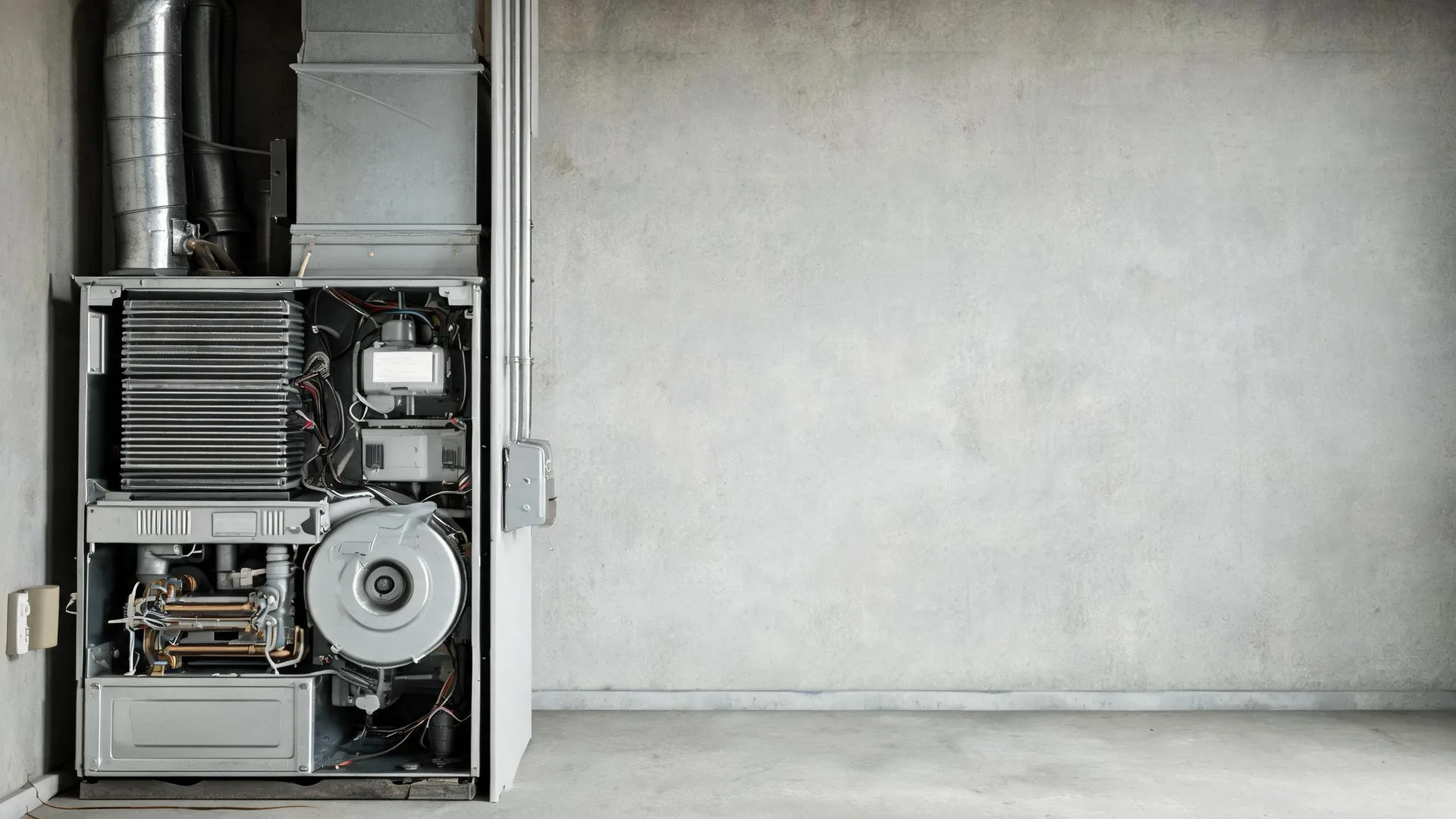
A gray high-efficiency gas furnace installed in an unfinished basement, surrounded by gas lines, a condensate drain, and sheet-metal ductwork.

What actually wears out

Most furnace failures trace back to a part that wears down slowly, then quits the moment it's asked to work hard. The igniter is a good example. It heats up and cools down every cycle, and that repeated swing is what eventually cracks it. A flame sensor fails differently. It collects a film off the burner over time until it can't sense the flame anymore, and the furnace shuts itself down as a safety measure. Blower motor bearings wear from plain use, every hour of running is an hour of wear, so the motor that has run the longest is the one most likely to start making noise or seize. None of this is rare or strange. It is the ordinary way a furnace ages, and a long stretch of cold weather is exactly what brings it to a head.

What you can check yourself

Look at the furnace filter first. A filter packed with dust chokes airflow, and that alone can make a furnace short cycle or blow cool air. Check the thermostat batteries and the setting, a thermostat set to 'auto' instead of 'on' is a common mix-up. Go down to the furnace and look for a flashing light on the control board, count the flashes, and check the switch on the side of the unit, it looks like a light switch and is easy to bump off by accident. Make sure the gas valve is turned to on.

What tells you to stop and call

A burning smell that doesn't fade after the first few minutes of running, a yellow or flickering flame instead of steady blue, or soot around the front of the furnace all mean stop and get a contractor out rather than keep troubleshooting. Same with a furnace that trips its breaker repeatedly or won't stay running no matter how many times it's reset. These point to something electrical or combustion related, and that's not something to keep testing on your own.

An unfinished basement containing a forced-air furnace with metal ductwork, exposed wooden ceiling joists, a hanging Edison bulb, and bare concrete floors.

A new furnace would cut about $110 a year off heating for a typical Howard County home.

  • A new high-efficiency furnace$450 a year
  • An older furnace$560 a year

Estimates for a typical Howard County home, compared with an older unit built to the previous federal minimum, from EIA household energy data, Indiana fuel prices and NOAA climate normals. Your home will differ.

Repair makes sense when one part has failed and the heat exchanger is sound.

Replacement makes sense when the heat exchanger is cracked or the furnace keeps needing parts.

A diagnostic call starts with questions, not tools. What does the furnace do when it fails, does it try to start and give up, or not respond at all, and how long has it been doing it. Then it's a look at the filter and the airflow before anything gets taken apart, since a choked filter can mimic other problems that have nothing to do with the burner or the board. After that a contractor pulls the panel and checks the control board for a fault code, tests the flame sensor and igniter directly instead of guessing from the symptom, and watches a full cycle start to finish if the furnace will run at all. The goal is to find the one part actually responsible, not to replace things until the problem goes away.