Three lit brick homes on a tree-lined residential street photographed at dusk.

Furnace Repair in Lawrenceburg, IN

Tell us about the job

Takes about a minute. No obligation.

RepairFurnace or heatingDearborn County, IN
Step 1 of 2

What ZIP code is the job in?

A normal winter for a furnace

Furnaces in Lawrenceburg run from October through April. Overnight lows average 25°F through December, January and February. That's a full, ordinary winter. Nothing about those numbers wears out a furnace any faster than it would anywhere else.

So look for the usual cause

When a furnace here stops heating or won't start, it's almost always a known failure point. A bad igniter. A dirty flame sensor. A clogged filter choking off airflow. A thermostat that's stopped talking to the unit. A tech checks those first, because that's where the problem usually is, not because this place does anything unusual to a furnace.

7 months
October through April, your furnace is on duty
25°F
the average winter night it heats against
14 winter storms
in ten years, the nights a failure hurts most
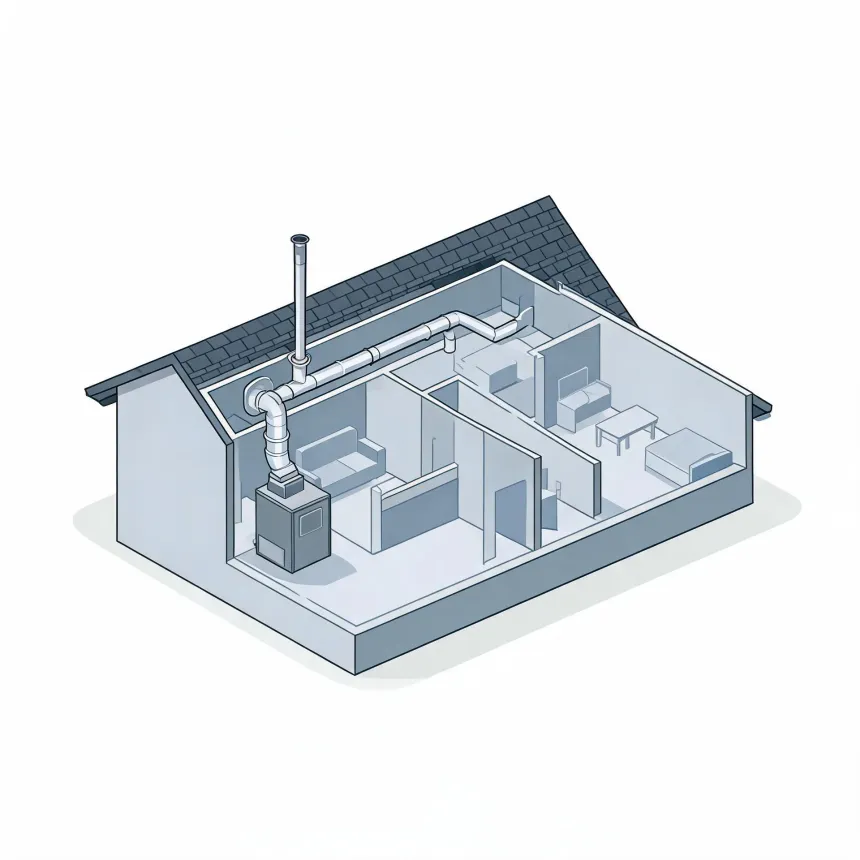
Isometric cutaway illustration of a single-story house showing interior rooms with furniture and a furnace connected to ductwork and a vertical flue pipe extending through the roof.
Your furnace works hardest from November through March.

NOAA nClimDiv, 1991–2020 normals

Furnaces in Dearborn County start working in October, first cold month after a quiet summer.

A part that was already weak often waits for that first real load to fail.

Half the homes in Dearborn County were built in 1982 or later. If yours is one of them, your furnace probably isn't that old either. Furnaces usually last a good long while, so a system that came with a newer house still has plenty of working life in it. That changes the math on a repair. A breakdown in a furnace with years left on it is almost always one part failing, not the whole unit giving out. Worth finding out which part before anyone talks about replacing it.

A newer furnace is worth repairing

If your furnace came with a newer house, get the part that failed fixed rather than guessing it's time to replace the whole thing.

Find a contractor
A man in a cap, gray T-shirt and tan work pants climbs porch steps toward a blue front door, carrying a canvas tool bag in his right hand, with a potted shrub in a blue planter beside the door.
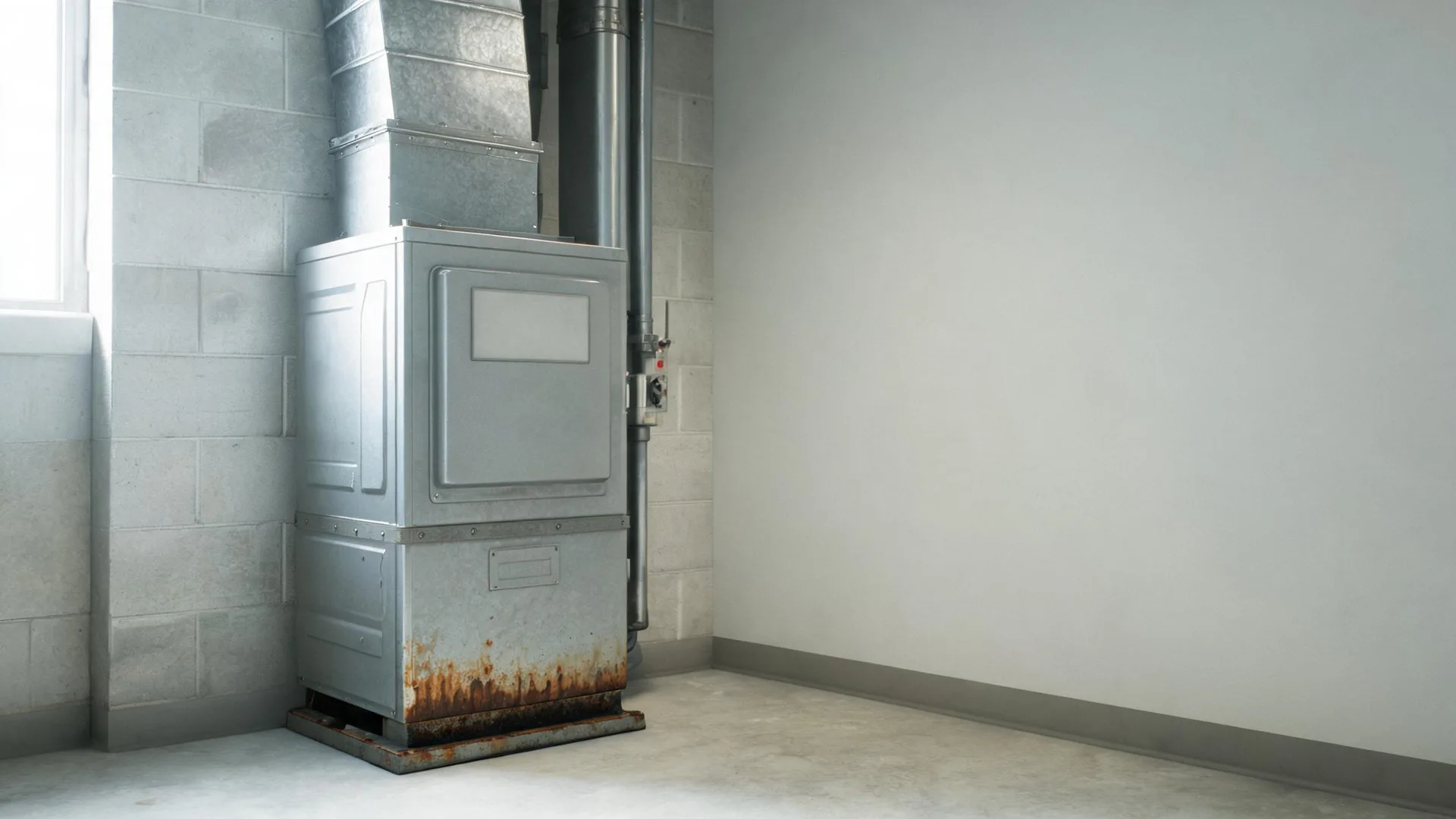
A gas furnace with attached ductwork, gas piping, and condensate lines installed in a concrete-block basement.

What to check before you call anyone

Before anyone comes out, check the thermostat is set to heat and the setting is above room temperature. Pull the filter and hold it up to the light. If you can't see through it, that's likely choking the airflow, and a starved furnace will sometimes shut itself off partway through a cycle. Check the switch on the furnace itself, the one that looks like a light switch on or near the unit. Something left leaning against it will shut the whole thing down. If yours has a standing pilot, see if the pilot light is lit. A relight sticker is usually right on the unit if it's gone out. Check the breaker for the furnace hasn't tripped. Then listen to what it's doing. A furnace that clicks a few times and quits is telling you something different than one that runs but never gets warm. Either one is worth mentioning when you call.

The igniter wears out on a schedule

A hot surface igniter goes through a heat cycle every time the furnace fires, and like any part that heats and cools over and over, it gets brittle with age. Eventually it cracks or won't glow hot enough to catch the gas. That's wear, not damage from anything done wrong.

A dirty flame sensor reads as no flame at all

The flame sensor's job is to confirm the burner lit, and it does that by reading a tiny electrical signal through the flame itself. A film of residue on the rod blocks that signal even though the burner is lit and working fine. The furnace shuts down anyway because the sensor can't tell.

An unfinished basement containing a gray HVAC furnace with ductwork, exposed wooden joists, a concrete floor, and miscellaneous clutter in one corner.

A new furnace would cut about $90 a year off heating for a typical Dearborn County home.

  • A new high-efficiency furnace$390 a year
  • An older furnace$480 a year

Estimates for a typical Dearborn County home, compared with an older unit built to the previous federal minimum, from EIA household energy data, Indiana fuel prices and NOAA climate normals. Your home will differ.

Repair makes sense when one part has failed and the heat exchanger is sound.

Replacement makes sense when the heat exchanger is cracked or the furnace keeps needing parts.

A repair call usually comes down to one part, and the furnace itself will point to it if you let it. The question worth asking isn't how old the furnace looks, it's whether this is a single component failing or the heat exchanger itself. A cracked heat exchanger is the one thing that pushes toward replacement on its own, because it's the part that isn't practical to swap out. Almost everything else, the igniter, the flame sensor, the blower motor, gets replaced without touching the rest of the unit. A furnace that's been maintained, filters changed, nothing ignored, tends to fail one part at a time rather than all at once. That's the pattern a tech is checking for before they talk about what the repair is worth doing.