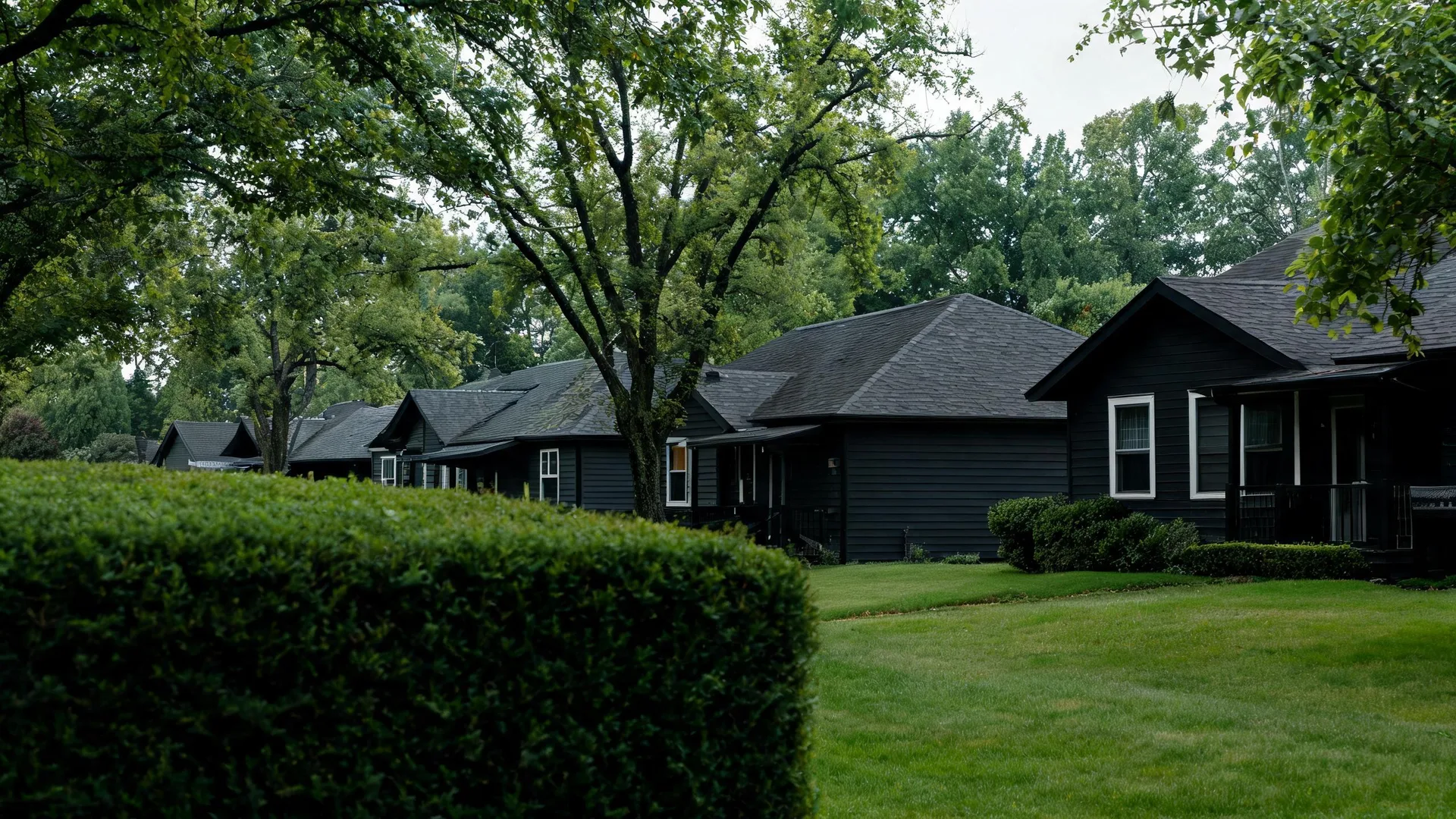





A row of dark-painted single-story houses with gabled shingle roofs behind a trimmed hedge and mown lawn, surrounded by large leafy trees under an overcast sky.

Furnace Repair in Marion, IN

Tell us about the job

Takes about a minute. No obligation.

RepairFurnace or heatingGrant County, IN
Step 1 of 2

What ZIP code is the job in?

Furnace trouble in Marion is almost always a plain mechanical failure, not something the climate did to your system. Heat runs here from October through May, about eight months of the year, so a furnace gets plenty of use and plenty of chances for an igniter or a flame sensor to wear out. Overnight lows average 22°F through December, January and February, which just means the furnace is working when you need it most, not that the cold is breaking it. If it's not keeping up or won't start, the cause is probably something a technician sees all the time. Finding that part and fixing it is the job, nothing more mysterious than that.

8 months
October through May, your furnace is on duty
22°F
the average winter night it heats against
56%
of homes here heat with gas, so most furnaces here burn gas
9 winter storms
in ten years, the nights a failure hurts most
Isometric cutaway illustration of a small house showing a furnace unit connected to ductwork and a vertical flue pipe extending through the dark shingled roof, with sparse furniture in the rooms.
Your furnace works hardest from November through March.

NOAA nClimDiv, 1991–2020 normals

A technician checks the igniter, the flame sensor and the gas valve before touching anything else.

Most furnace trouble comes down to one worn part, and finding which one is the job.

Marion furnaces get tested hardest in October, the first month they fire up

Heat runs October through May
Winter nights average 22°F
Climate zone 5A

Half the houses in Grant County were built in 1963 or earlier. If yours is one of them and the furnace has never been replaced, ask the technician straight out how much life is likely left in it before agreeing to a bigger repair. A flame sensor or an igniter is worth fixing no matter the furnace's age, since that solves the problem outright. A cracked heat exchanger or a failing blower motor is a different question on a furnace that old. Get the honest answer before you pay for the part.

Get the usual fix

Nothing about this area is especially hard on it. It's most likely the usual problem with the usual fix.

Find a contractor
A gray gas furnace with attached ductwork and piping installed in an unfinished concrete basement.

Running it longer doesn't buy you anything

A furnace that's struggling still runs when you call for heat, and that's the trap. A cracked heat exchanger gets worse under heat and cooling cycles, the metal flexing each time it fires until the crack opens wider. A dirty flame sensor makes the burner shut off early more and more often, and each failed attempt puts more strain on the igniter trying to relight it. A failing blower motor draws more current as its bearings wear, and heat that can't move past a clogged filter backs up into the furnace itself, which is hard on the heat exchanger and the limit switch both. None of this fixes itself by running longer. The part that's struggling does the same job under the same strain, over and over, until it quits outright or takes something else with it.

What you can check safely

Look at the thermostat first. Make sure it's set to heat and the set temperature is actually above room temperature. Check that the furnace switch, the one that looks like a light switch near the unit, is on. Look at the filter and replace it if it's gray or clogged. If the furnace has a standing pilot, see whether the pilot light is lit. If you've got a older unit in a basement or closet, make sure nothing is blocking the vents or the fresh air intake nearby.

What to leave alone

Don't open the burner compartment or touch the gas valve. Don't try to relight an electronic ignition system by hand, it doesn't work that way and there's no pilot to light. If you smell gas, don't flip any switches at all, just get outside and call the gas company from there. A furnace that trips its switch repeatedly or smells like burning dust after sitting idle needs a technician, not a second attempt to restart it.

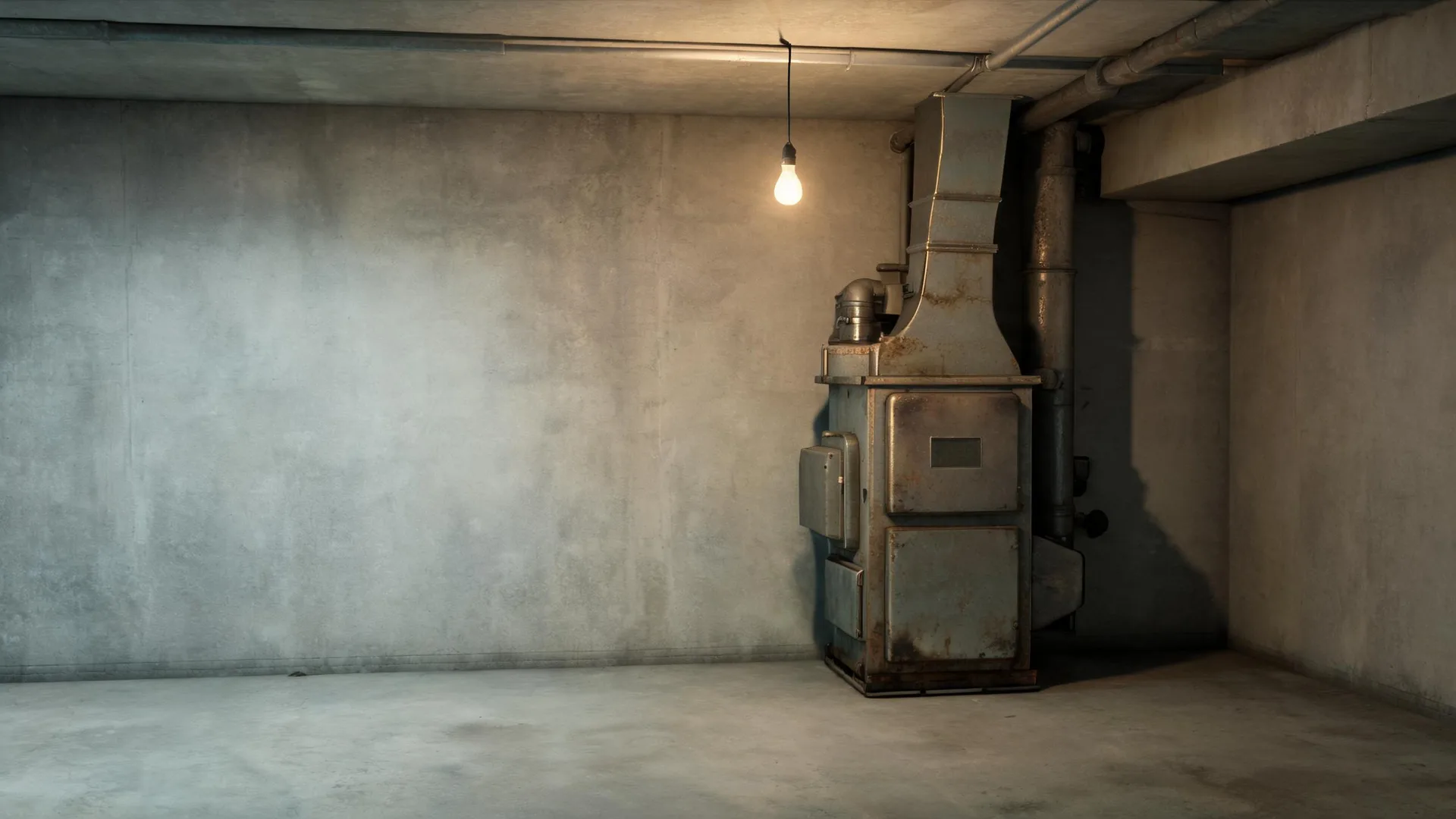
An unfinished concrete basement containing a metal HVAC air handler, exposed wooden ceiling joists with sheet-metal ducts, a hanging bare bulb, copper pipes, and stacked cardboard boxes.

A new furnace would cut about $110 a year off heating for a typical Grant County home.

  • A new high-efficiency furnace$440 a year
  • An older furnace$550 a year

Estimates for a typical Grant County home, compared with an older unit built to the previous federal minimum, from EIA household energy data, Indiana fuel prices and NOAA climate normals. Your home will differ.

Repair makes sense when one part has failed and the heat exchanger is sound.

Replacement makes sense when the heat exchanger is cracked or the furnace keeps needing parts.

Repair makes sense when the part that failed does one job and nothing else. An igniter lights the gas. A flame sensor confirms the flame is there. A pressure switch checks the draft is working. Replace the one that quit and the furnace goes back to normal. Replacement gets talked about when the thing that's failing is the furnace itself rather than a part bolted to it. A heat exchanger with a crack in it isn't a part you swap out and move on from, since it means the metal that separates the flame from the air you breathe has given out. A blower motor is somewhere in between. It can usually be replaced on its own, but if it's drawing hard because of a problem elsewhere in the system, the motor is just the part that gave up first.