





A row of dark-painted single-story houses with lawns and large deciduous trees, seen behind a tall trimmed hedge.

Furnace Repair in Michigan City, IN

Tell us about the job

Takes about a minute. No obligation.

RepairFurnace or heatingLaPorte County, IN
Step 1 of 2

What ZIP code is the job in?

Furnaces in Michigan City run from October through May, about eight months of the year. Overnight lows average 20°F through December, January and February, and the furnace has to keep up with that for weeks at a stretch. That kind of run time wears on an igniter, a blower motor, a flame sensor. Something that would hold up fine in a milder place starts giving out here sooner. If yours is acting up, the cause is usually tied to that workload. Getting it diagnosed properly matters more than a quick patch, because the same strain that caused this problem will find the next weak part too.

8 months
October through May, your furnace is on duty
20°F
the average winter night it heats against
83%
of homes here heat with gas, so most furnaces here burn gas
4 winter storms
in ten years, the nights a failure hurts most
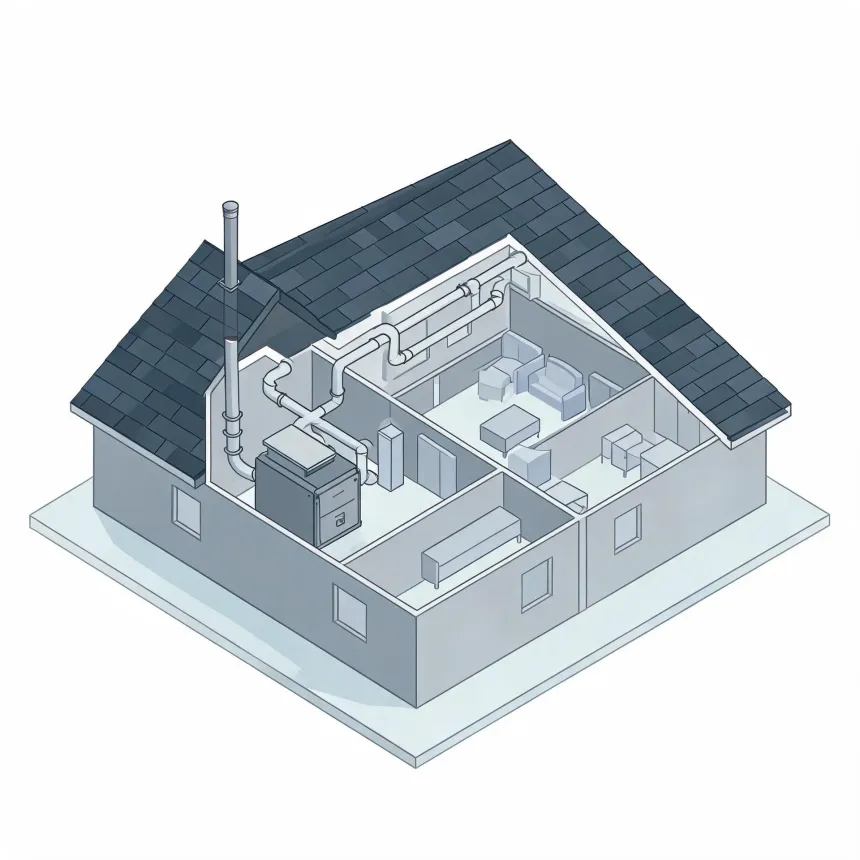
Isometric cutaway illustration of a single-story house with a dark shingled roof, showing interior rooms with furniture, ductwork, a flue pipe, and a furnace unit.
Your furnace works hardest from November through March.

NOAA nClimDiv, 1991–2020 normals

Half the homes in LaPorte County were built in 1969 or earlier.

A furnace that old is one worth asking how much life it has left, before you pay for a big repair.

October is when the weak part gets found

Heat runs October through May
Climate zone 5A
Winter nights average 20°F
Eight months of heat a yearA furnace here doesn't get much of a break.

Before you pay to fix what's broken, ask the contractor one more question. How much life is left in the rest of it. A repair makes sense on a furnace with years ahead of it. It makes less sense if the heat exchanger is near the end and the next call is a new unit anyway. A tech who has been inside the furnace can tell you which situation you're in. That answer should decide what you spend, not just what broke this time.

Get it diagnosed properly

Your furnace works hard here, and that's usually what's behind the problem. Have it diagnosed properly so the fix lasts.

Find a contractor
A man in a dark T-shirt and tan work pants, seen from behind, climbs porch steps toward a blue front door while carrying a canvas tool bag filled with hand tools.
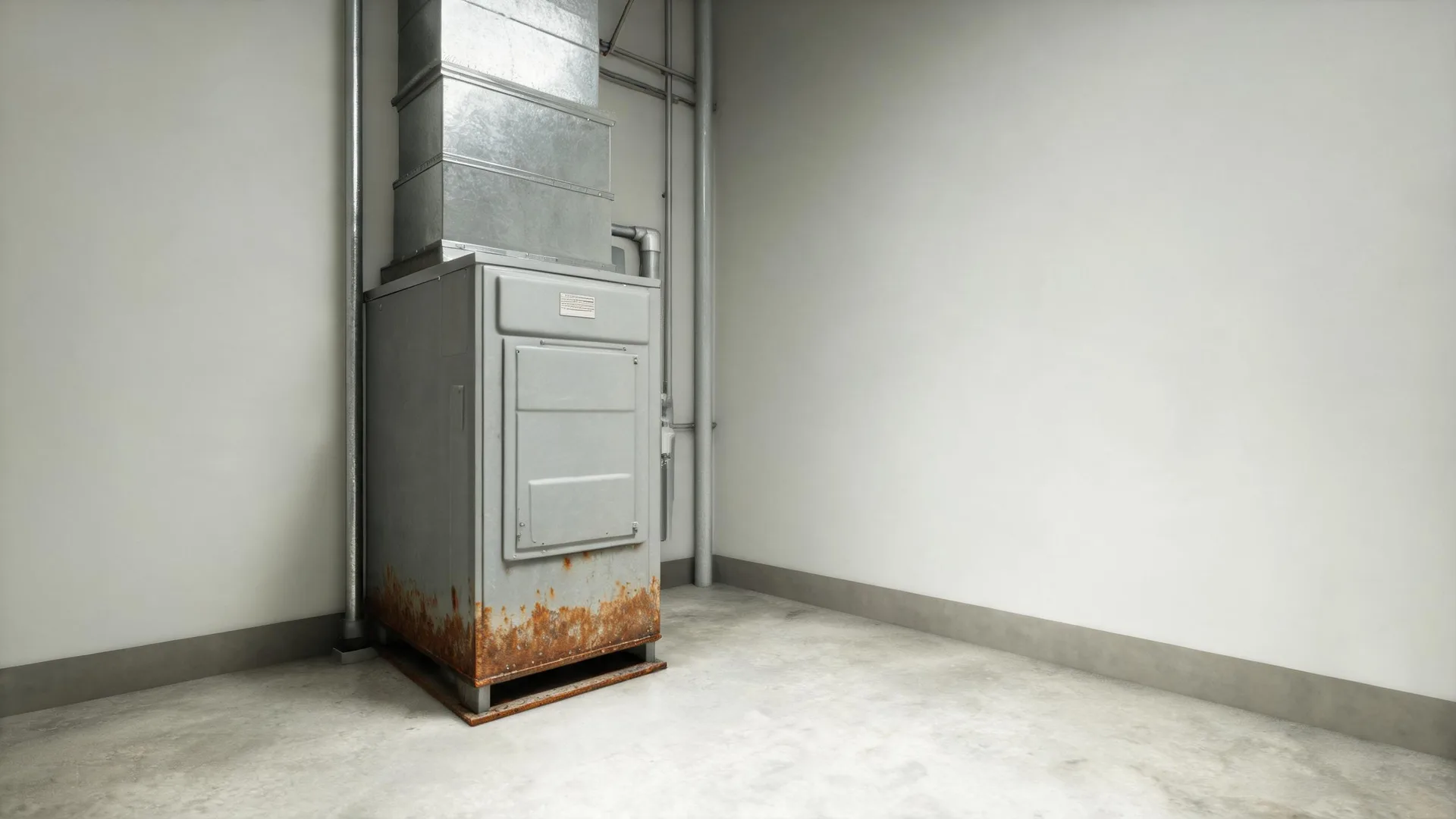
A gray residential gas furnace installed in an unfinished basement, connected to sheet-metal ductwork and PVC pipes.

What usually goes first

Most furnace failures trace back to one of a few parts. The igniter is the one that usually goes first. It's a thin strip that heats up to light the gas, and that heating and cooling cycle, over and over, eventually cracks it. A cracked igniter won't glow right and the furnace won't light. The flame sensor goes a different way. It doesn't break so much as get coated with a film from normal combustion, and once it's coated it can't tell the furnace a flame is there, so the furnace shuts itself down as a safety measure. That one's often a cleaning, not a replacement. The blower motor wears on its bearings from running so many hours, and a bearing going bad sounds like a squeal or a grinding before it quits outright. Further along, the heat exchanger can crack from years of heating and cooling, and that one's not a small fix, since a cracked exchanger is a safety problem, not just a performance one. A dirty filter doesn't fail on its own, but it's behind more of these problems than people think, because it starves the system of airflow and makes every other part work harder than it should.

Short cycling means something's wrong

A furnace that turns on, runs a couple minutes, then shuts off and starts again isn't warming up the way it should. That pattern usually points to a flame sensor losing its read on the flame, a clogged filter choking airflow, or a limit switch tripping because the air inside is running hotter than it should. It's not something to wait out. Each short cycle puts another start and stop on parts that are already wearing.

Listen for what's new

A bang when the burners light means gas is building up before it catches, instead of lighting right away. A squeal as the blower spins up is usually a bearing going. Rattling that wasn't there before often means a panel has worked loose or a part inside has broken free. None of these fix themselves, and running the furnace while you wait only gives the problem more time to spread to the parts around it.

A gray forced-air furnace with ductwork stands in an unfinished concrete basement surrounded by storage items and clutter.

A new furnace would cut about $110 a year off heating for a typical LaPorte County home.

  • A new high-efficiency furnace$480 a year
  • An older furnace$590 a year

Estimates for a typical LaPorte County home, compared with an older unit built to the previous federal minimum, from EIA household energy data, Indiana fuel prices and NOAA climate normals. Your home will differ.

Repair makes sense when one part has failed and the heat exchanger is sound.

Replacement makes sense when the heat exchanger is cracked or the furnace keeps needing parts.

A diagnostic visit starts before any panel comes off. The tech asks what the furnace is doing, when it started, and what you've noticed. A bang at startup and a squeal mid-cycle point in different directions, so those details matter. Then the panels come off and the tech watches a full cycle, from ignition through flame through blower through shutdown. They'll check the flame sensor and igniter, test the pressure switch, look at the heat exchanger for cracks, and pull the filter to see what it's been breathing through. The burner flame gets a look too. A flame that's too yellow or uneven usually means something's not burning clean. By the end they can usually tell you which part failed, why it failed, and whether anything around it is close behind.