Dark-sided single-story buildings with gray shingled roofs behind trimmed hedges, a mown lawn, and large leafy trees overhead.

Furnace Repair in Muncie, IN

Tell us about the job

Takes about a minute. No obligation.

RepairFurnace or heatingDelaware County, IN
Step 1 of 2

What ZIP code is the job in?

Eight months of real work

Furnaces in Delaware County run from October through May. Overnight lows average 22°F through December, January and February. A furnace that runs this long and this hard will wear out its normal parts. That's not a sign of anything unusual about this area. It's just what happens over eight months of regular use.

The usual causes, in that order

A furnace that won't start, short cycles, or blows cold air almost always comes down to a short list of parts. A dirty flame sensor. A failed igniter. A clogged filter choking off airflow. None of these are rare, and none of them are specific to Muncie winters. Finding which one it is, and fixing that part correctly, matters more than anything else.

8 months
October through May, your furnace is on duty
22°F
the average winter night it heats against
60%
of homes here heat with gas, so most furnaces here burn gas
12 winter storms
in ten years, the nights a failure hurts most
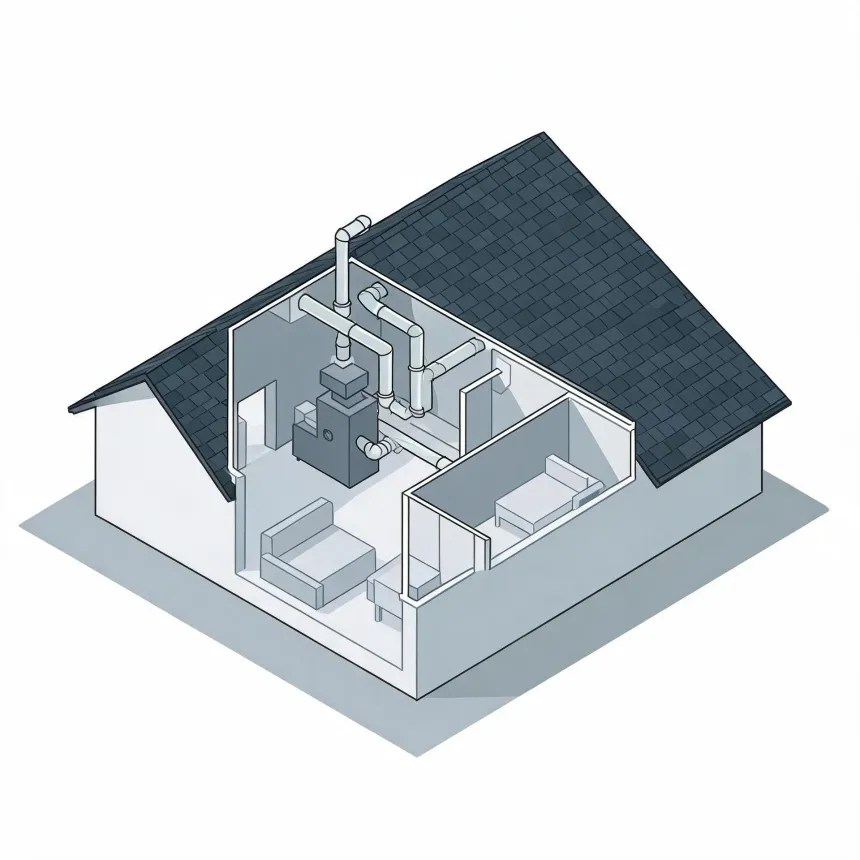
Isometric cutaway illustration of a single-story house with a dark shingled roof, showing interior rooms with furniture and a furnace connected to ductwork.
Your furnace works hardest from November through March.

NOAA nClimDiv, 1991–2020 normals

Check the filter before anything else.

A filter clogged with dust can choke airflow enough to trip the limit switch and shut the furnace down.

Half the homes in Delaware County were built in 1967 or earlier

Half the homes here were built by 1967
Heat runs October through May
Winter nights average 22°F

Get the usual fix

Nothing about this area is especially hard on it. It's most likely the usual problem with the usual fix.

Find a contractor
A man in a dark long-sleeve shirt and tan pants climbs porch steps toward a blue front door, carrying a worn canvas tool bag with tools in its side pockets, beside a potted shrub in a blue planter.
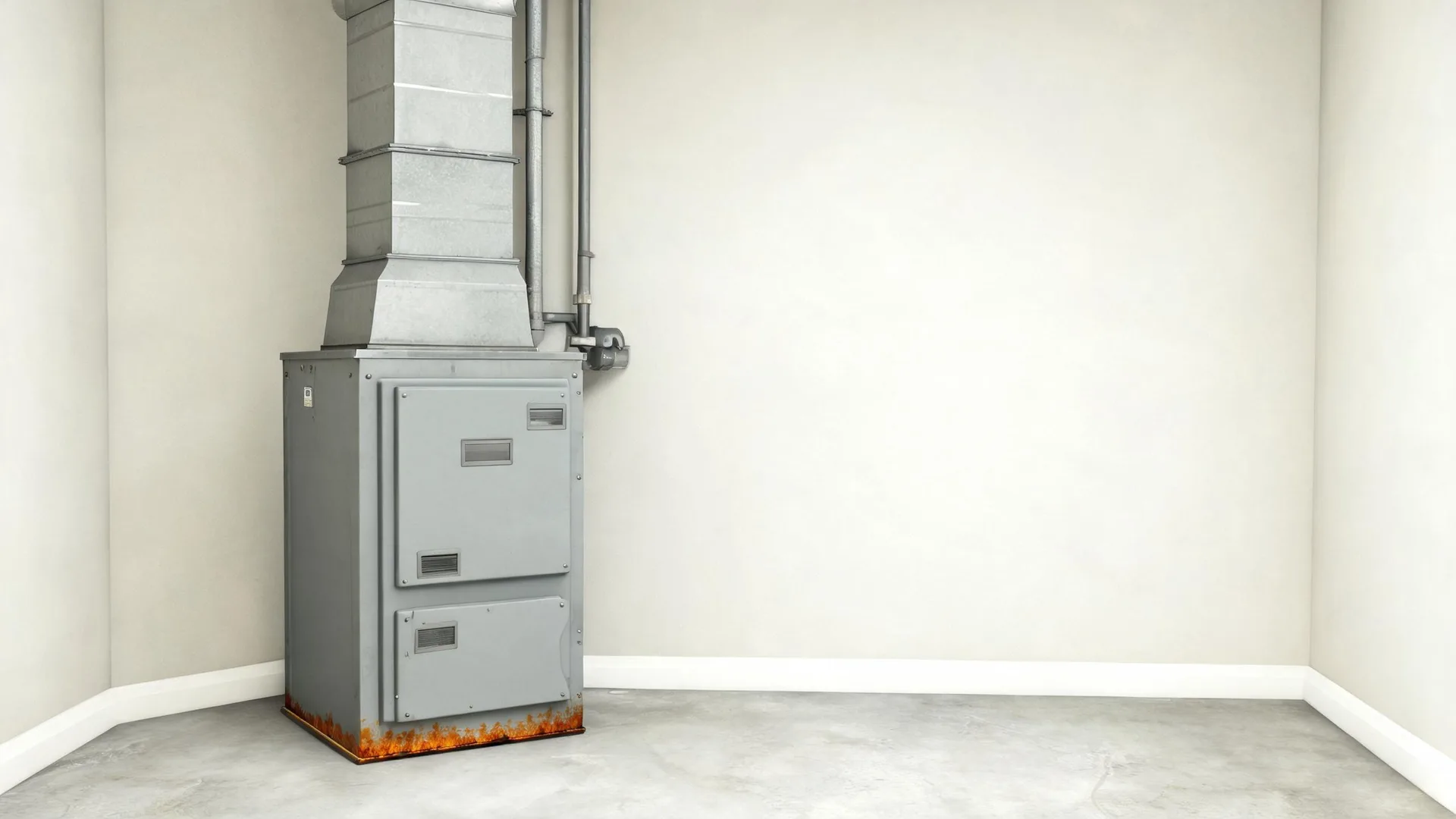
A gray residential gas furnace installed in an unfinished basement, connected to sheet-metal ductwork and PVC pipes.

Running it longer doesn't fix it

A furnace that's struggling will tell you before it quits. A weak flame sensor still lets the burner light, so the furnace keeps trying, shutting off a few minutes in, over and over. Each short cycle puts more wear on the igniter and the blower motor, parts that were fine to start with. A dirty filter does something similar. The blower has to work harder to pull air through it, and that extra strain shows up later in the motor or the limit switch. None of this fixes itself by running longer. The furnace is just doing the same bad cycle more times, and every cycle after the first one is wear you didn't need.

The igniter wears out from doing its job

Every heat cycle, the igniter heats up and cools back down. That cycle of expansion and contraction is what eventually cracks it or wears it thin, the same way a light bulb filament gives out after enough on and off switches. It's not a defect. It's just the end of a part's normal life.

The flame sensor fails quietly

A flame sensor builds up a thin coating from normal combustion over time. Once that coating gets thick enough, the sensor can't tell the control board the flame is lit, so the board shuts the gas back off. The burner was working fine. The sensor just couldn't see it anymore.

An unfinished basement containing a gas furnace with ductwork in the foreground and miscellaneous stored items along the far concrete wall.

A new furnace would cut about $110 a year off heating for a typical Delaware County home.

  • A new high-efficiency furnace$430 a year
  • An older furnace$540 a year

Estimates for a typical Delaware County home, compared with an older unit built to the previous federal minimum, from EIA household energy data, Indiana fuel prices and NOAA climate normals. Your home will differ.

Repair makes sense when one part has failed and the heat exchanger is sound.

Replacement makes sense when the heat exchanger is cracked or the furnace keeps needing parts.

A furnace that needs a part replaced isn't a furnace on its way out. Igniters, flame sensors, pressure switches, these fail on their own schedule and swapping one out tells you nothing about the heat exchanger or the blower motor sitting right next to it. What matters more is the pattern. One repair in a few years is just a part reaching the end of its life. The same furnace needing attention every season is a different situation, even if each individual fix looks small and cheap on its own. Age matters too, but not by itself. A furnace well past its expected life that needs a major part, a cracked heat exchanger or a failed blower motor, is a harder case to justify than a younger one with the same problem. The honest version of this conversation looks at what's actually broken, not just how old the furnace is or how many times it's been worked on before.