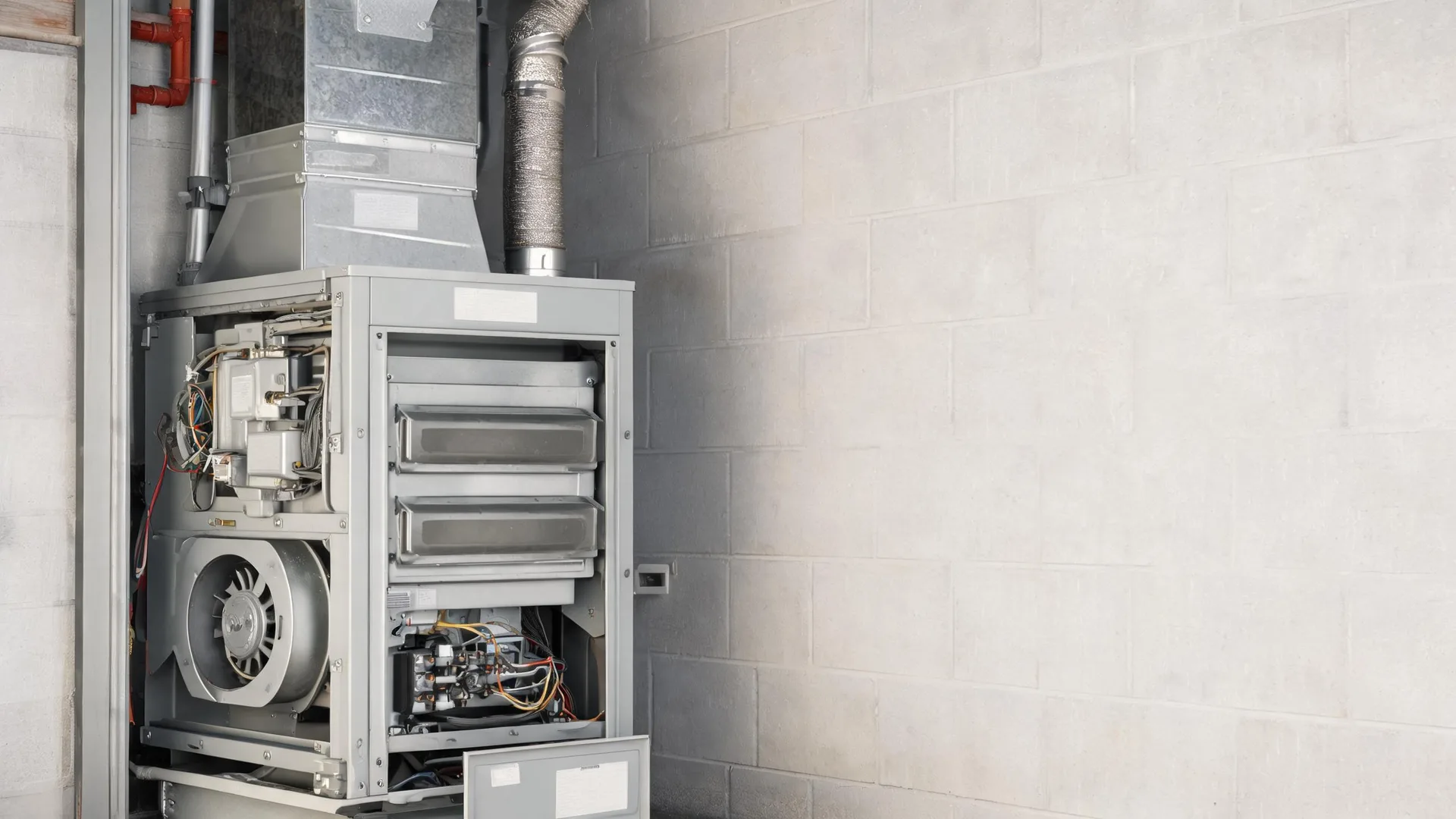
A gas furnace with sheet-metal ductwork and PVC pipes installed in an unfinished basement.

Furnace Repair in New Castle, IN

Tell us about the job

Takes about a minute. No obligation.

RepairFurnace or heatingHenry County, IN
Step 1 of 2

What ZIP code is the job in?

Eight months of work a year

Furnaces in Henry County run from October through May. That is most of the year, and it is normal use, not abuse. A furnace built for that kind of run time breaking down is not a sign of a strange local problem. It is a part wearing out on schedule.

The cold snaps don't change the diagnosis

Overnight lows average 22°F in December, January and February. That is ordinary winter weather for a furnace, not a strain that calls for anything special. A tech still starts the same way here as anywhere, by finding the part that failed and replacing it.

8 months
October through May, your furnace is on duty
22°F
the average winter night it heats against
52%
of homes here heat with gas, so most furnaces here burn gas
12 winter storms
in ten years, the nights a failure hurts most
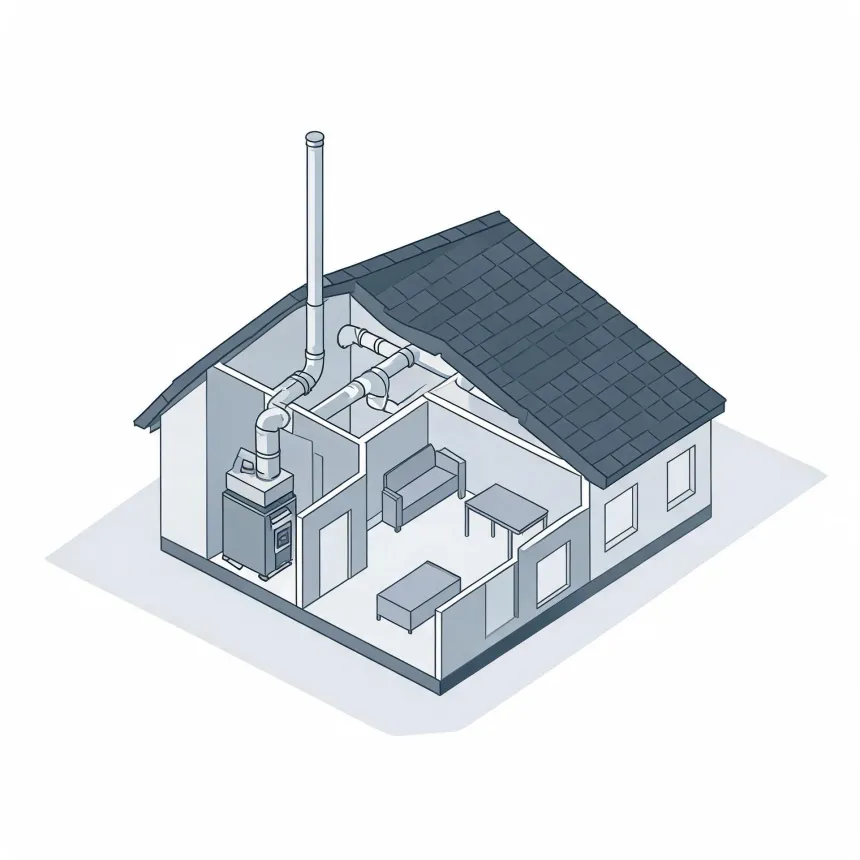
Isometric line illustration of a cutaway single-story house with a shingled roof, showing an interior furnace connected to ductwork and a tall vertical flue pipe, plus simple furniture in the adjacent room.
Your furnace works hardest from November through March.

NOAA nClimDiv, 1991–2020 normals

Furnaces in Henry County start running in October.

September is the month to get a weak part looked at, before the first cold week finds it.

Half the homes in Henry County were built by 1961, which puts a lot of furnaces near the end of their working life

Half the homes here were built by 1961
Heat runs October through May
Winter nights average 22°F

Ask the technician how old the furnace actually is before deciding what to do about a repair. A furnace that came with an older home may have been replaced once already, or it may still be the original, and the nameplate inside the cabinet is the only way to know which. If it is original, a repair is worth weighing against how much life is realistically left in it. If it was swapped in more recently, the age of the house tells you nothing, and the failed part is just a repair.

Get the usual fix

Nothing about this area is especially hard on it. It's most likely the usual problem with the usual fix.

Find a contractor
A gray gas furnace with attached ductwork and piping installed in an unfinished concrete basement.

Some of these don't wait for you to notice

A cracked heat exchanger lets exhaust gas mix into the air the blower is pushing through the house, and running the furnace longer only moves more of that air around. A limit switch stuck closed lets the blower keep moving hot air past a clogged filter, and the heat exchanger takes the strain that the airflow should have been carrying away. A weak igniter that sparks but doesn't light clean can leave unburned gas sitting in the burner compartment for a moment before it catches. None of these fix themselves by running. The part that's failing does the same bad thing every cycle, and some of what it's doing reaches past itself into the rest of the furnace. A new noise, a burning smell, or a furnace that keeps tripping its limit switch means shut it down and get it looked at, not wait through another cycle to see if it clears up.

What a tech checks first

A furnace fires in a set order. The thermostat calls for heat. The inducer motor starts and pulls air through to prove the vent is clear. The igniter glows or sparks. The gas valve opens. The burners light, and the flame sensor confirms they stayed lit. A tech walks through that order and watches where it stops. Whatever step the furnace fails at usually points straight at the part causing it.

Why it ends with one part, not a guess

A board with an error code can narrow things down, but a tech still checks the part itself with a meter before calling it. That is what makes it a diagnosis instead of a guess. Parts don't get swapped on a hunch to see what helps. The visit ends with the one part that tested bad, not a list of things that might be wrong.

A bare concrete basement containing a gray gas furnace with metal ductwork and a vertical flue pipe, lit by a single hanging bulb.

A new furnace would cut about $100 a year off heating for a typical Henry County home.

  • A new high-efficiency furnace$440 a year
  • An older furnace$540 a year

Estimates for a typical Henry County home, compared with an older unit built to the previous federal minimum, from EIA household energy data, Indiana fuel prices and NOAA climate normals. Your home will differ.

Repair makes sense when one part has failed and the heat exchanger is sound.

Replacement makes sense when the heat exchanger is cracked or the furnace keeps needing parts.

Age is the first thing to weigh, but how the furnace has been running matters just as much. A furnace that keeps needing repairs is telling you something different than one that's never given trouble and suddenly has. Parts fail on their own schedule, not all at the same time, so one bad igniter or one failed capacitor is usually just that part's turn. What changes the math is the heat exchanger. That part isn't meant to be replaced on its own, and a crack in it is a sign the whole furnace is at the end of its working life, not a repair waiting to happen. Short of that, most failures are a single part doing a job it can be replaced to keep doing.