A row of illuminated two-story brick houses with front porches and mature trees photographed at twilight.

Furnace Repair in Seymour, IN

Tell us about the job

Takes about a minute. No obligation.

RepairFurnace or heatingJackson County, IN
Step 1 of 2

What ZIP code is the job in?

Seven months of real work

Furnaces in Seymour run from October through April. That is a long stretch for an igniter, a blower motor or a flame sensor to do its job without a break, and it is normal for something to wear out or go out of adjustment over that time.

Nothing unusual to blame

Overnight lows around 25°F in December and January are ordinary for this area. A furnace here fails for the same reasons a furnace fails anywhere, so the fix is to find the actual cause, not to assume the cold did something unusual to it.

7 months
October through April, your furnace is on duty
25°F
the average winter night it heats against
7 winter storms
in ten years, the nights a failure hurts most
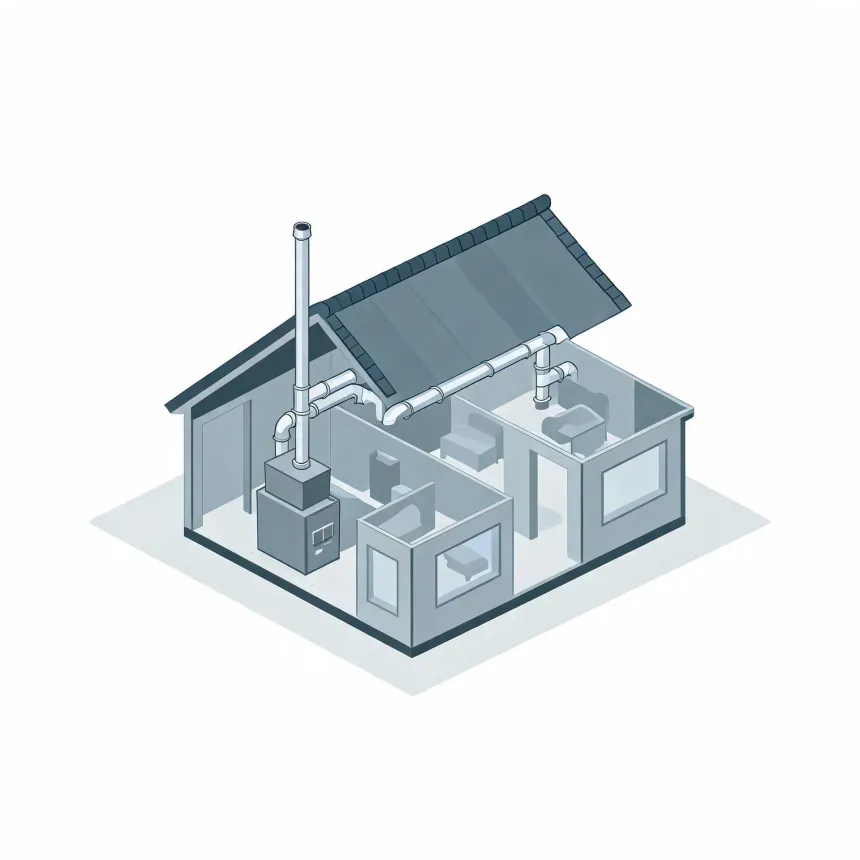
Isometric grayscale illustration of a cutaway house showing an interior furnace with a tall flue pipe and ductwork running to rooms under a partially lifted roof.
Your furnace works hardest from November through March.

NOAA nClimDiv, 1991–2020 normals

Furnaces in Jackson County start their season in October.

September is when a weak igniter or blower motor is still worth checking, before that first cold week finds it.

Electricity here runs $43.28 per million Btu, and a furnace that's struggling burns more of it every day it's left alone

Heat runs October through April
Winter nights average 25°F
Climate zone 4A
Nothing in Jackson County makes a furnace fail fasterHalf the homes in Jackson County were built in 1978 or earlier, but an older house isn't why your furnace is struggling.

A furnace that's short cycling or running longer than it should isn't just annoying. It's pulling more power every time it fires, at a rate that's already high in this state. Waiting a few weeks because it's still putting out heat usually costs more than the repair would have. If yours has been running rough, get it looked at before another month of bills proves the point.

Get the usual fix

Nothing about this area is especially hard on it. It's most likely the usual problem with the usual fix.

Find a contractor
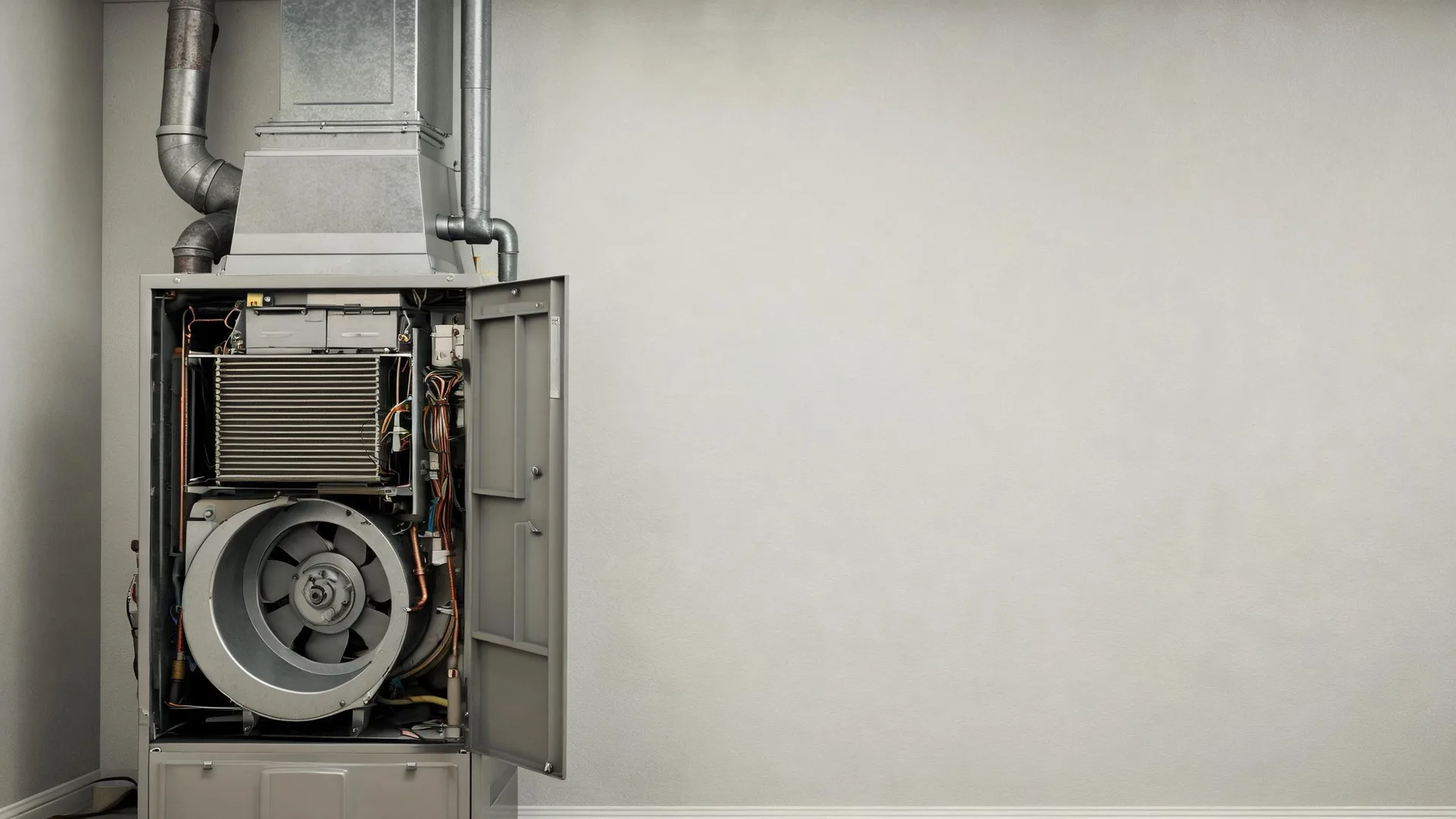
A gray high-efficiency gas furnace installed in an unfinished basement, surrounded by gas lines, a condensate drain, and sheet-metal ductwork.

Running rough now means failing sooner

A furnace that's struggling doesn't fix itself by staying on. A cracked heat exchanger gets worse every cycle, not better. A flame sensor coated with a little oxidation will keep misreading the flame until the furnace finally locks out for good. A blower motor running on a failing bearing will keep drawing hard on itself until it seizes, and when it seizes it usually takes the motor with it instead of just the bearing. Short cycling is the same story. Every time the furnace fires, ramps up, and shuts off early, it stresses the igniter and the heat exchanger a little more than a normal full cycle would. None of that shows up as a bigger problem right away. It shows up as the same small problem, happening more often, until the part it's wearing out finally gives.

What you'll actually notice first

The furnace takes longer to catch, or it tries again before it lights. The air coming out feels cooler than it used to, even though the furnace is running. You hear it cycle on and off more than it used to, sometimes before a room even feels warm. A burning smell on startup that fades fast is normal once a season, but one that lingers or comes back every cycle is not.

What those signs are telling you

A furnace that hesitates to light is usually down to a weak igniter or a flame sensor that can't read the flame cleanly anymore. Cooler air often means the blower motor is struggling or the burners aren't firing the way they should. Short cycling means something is shutting the furnace down early, a safety switch tripping because of poor airflow or a part that's wearing out. None of these fix themselves by waiting, and none of them mean the whole furnace is done. They mean one part needs attention before it takes something else down with it.

Before anyone comes out, there are a few things worth checking yourself. Look at the thermostat first. Make sure it's set to heat, not just on, and that the setting is actually above room temperature. Check the air filter next. A filter clogged with dust chokes off airflow and can make a furnace short cycle or blow cooler air, and it's something you can see just by pulling it out and holding it to the light. Check that the furnace switch, the one that looks like a light switch near the unit, hasn't been bumped off. Look at the breaker too. A tripped breaker will keep a furnace from starting at all, and resetting it is safe to try once. If the furnace has a standing pilot, see if it's lit. None of this fixes a cracked heat exchanger or a worn blower bearing, but it rules out the simple stuff before you pay someone to find it.

A diagnostic visit starts before any panel comes off. A tech will ask what's been happening, when it happens, and whether it's gotten worse, because that narrows things down fast. Then the cover comes off and the furnace gets watched through a full cycle, from ignition through flame through blower through shutdown. A multimeter checks the igniter's resistance. The flame sensor gets pulled, looked at, and usually cleaned or tested rather than replaced outright. Airflow gets checked at the filter and the vents, since restricted air can mimic other problems that have nothing to do with the blower or the burners. The point is to watch the furnace fail, or almost fail, with the right tool already in hand, not to start swapping parts and see what sticks.