







An unfinished basement featuring exposed ceiling joists, a metal HVAC unit with round ductwork, a hanging light bulb, and scattered boxes and debris along the left wall.

Furnace Repair in Vincennes, IN

Tell us about the job

Takes about a minute. No obligation.

RepairFurnace or heatingKnox County, IN
Step 1 of 2

What ZIP code is the job in?

September is when to get a furnace looked at here, right before it has to start working. Furnaces sit idle for months and the first cold stretch in October is what finds the weak part, whether that's an igniter on its way out or a blower motor that was already struggling. A furnace that gets asked to run hard after months of doing nothing is the one that quits in the first week of real use. If yours is acting up now, this is that same pattern showing itself early. Knox County furnaces run October through April, so a repair done now holds up through all seven of those months instead of failing partway through.

7 months
October through April, your furnace is on duty
25°F
the average winter night it heats against
55%
of homes here heat with gas, so most furnaces here burn gas
6 winter storms
in ten years, the nights a failure hurts most
Isometric cutaway illustration of a single-story house showing interior rooms with a dark furnace unit, connected ductwork, a vertical flue pipe through the roof, and simple furniture, on a white background.
Your furnace works hardest from November through March.

NOAA nClimDiv, 1991–2020 normals

Furnaces in Knox County run from October through April, seven months straight.

A repair done now has to hold up through all seven, including nights near 25°F.

Half the furnaces here are as old as the houses

Half the homes here were built by 1962
Heat runs October through April
Winter nights average 25°F
Knox County weather doesn't wear out a furnace faster128 severe weather events hit the county between 2015 and 2024. That's not what's breaking yours.

Before paying for a repair, ask the contractor one more thing. How much life is left in the furnace itself. A cracked heat exchanger or a blower motor on its way out matters more if it's the original unit from whenever the house was built. If yours came with the house, and the house is one of the older ones here, say that before any work starts. A straight answer on remaining life tells you whether you're fixing a furnace or just putting off a replacement.

Get it looked at early

Problems tend to show up in the first weeks of the season, when the load hits a part that was already weak.

Find a contractor
A man in a cap, navy T-shirt and brown pants carries a waxed canvas tool bag up the steps toward a blue front door of a shingled house, beside a potted shrub.
A gas furnace with attached ductwork, gas piping, and condensate lines installed in a concrete-block basement.

What a furnace tells you before it quits

A furnace rarely fails all at once. It gives you something first. Short cycling is one of the most common signs. It fires up, runs for a short while, then shuts off before the house warms, then kicks on again. That usually means a flame sensor that's coated and can't tell the burner is lit, or a filter so clogged the furnace overheats and trips a safety switch before it should. A burner that won't stay lit, or won't light at all, usually comes down to the igniter or that same flame sensor. You'll also hear things a working furnace doesn't do. A grinding or squealing points to the blower motor's bearings wearing out. Loud banging when it first fires is usually trapped gas igniting all at once, and that's not something to leave alone. Warm air one day and lukewarm the next, with the blower running the whole time, often means the heat exchanger is cracked or the gas valve isn't opening all the way. None of these get better on their own. A part that's struggling now is a part that's closer to failing outright, usually on the night you need the heat most.

A cracked heat exchanger gets worse by running

Heat makes metal expand. Every cycle flexes that crack a little more, and a crack that's only letting out a trace now can open enough to push combustion gas into the air the blower moves through the house.

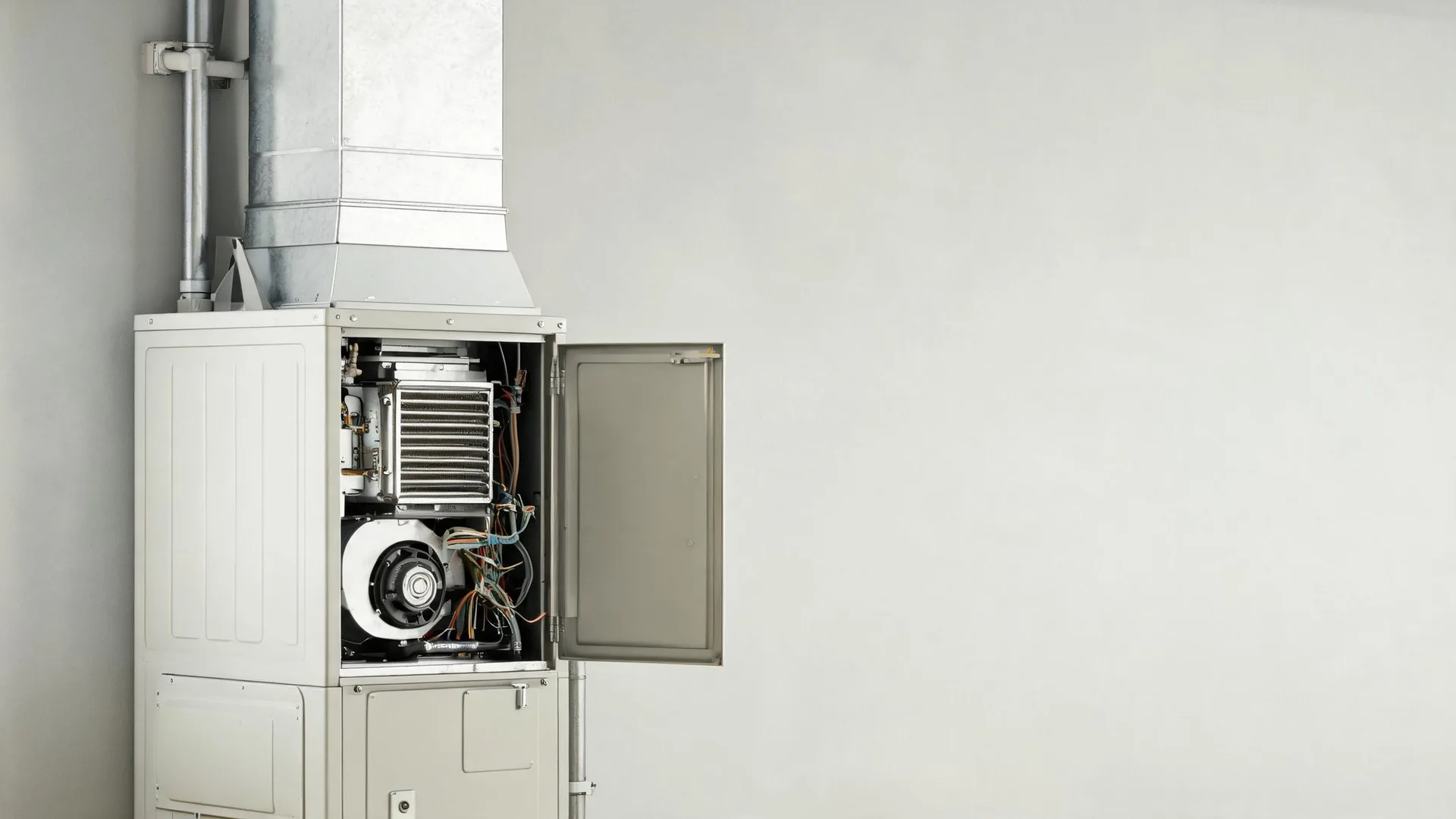
A failing blower motor can take other parts with it

Bearings that are starting to grind don't fix themselves by working harder. A motor that keeps straining can overheat and seize, and some furnaces will run the burner with no blower moving air at all, which overheats the heat exchanger on top of it.

An unfinished basement interior showing a gray furnace unit beneath a bare incandescent bulb, surrounded by exposed joists, concrete walls, cardboard boxes, and utility pipes.

A new furnace would cut about $90 a year off heating for a typical Knox County home.

  • A new high-efficiency furnace$370 a year
  • An older furnace$460 a year

Estimates for a typical Knox County home, compared with an older unit built to the previous federal minimum, from EIA household energy data, Indiana fuel prices and NOAA climate normals. Your home will differ.

Repair makes sense when one part has failed and the heat exchanger is sound.

Replacement makes sense when the heat exchanger is cracked or the furnace keeps needing parts.

A repair is worth it when the problem is one part acting up on a furnace that's otherwise sound. A new igniter, a cleaned flame sensor, a replaced blower motor, these fix the furnace and the rest of the unit keeps going. Replacement starts to make more sense when the failures stack up, one part fixed this year and a different one next year, because that pattern means the furnace as a whole is wearing out, not just one piece of it. The heat exchanger is the one part that changes the math by itself. A cracked heat exchanger means the whole furnace gets replaced, not just that part, because it's not sold or swapped on its own. Age matters less than what's actually failing. A furnace with one worn part and years of working life left is worth fixing. A furnace where the failing part is the heat exchanger, or where parts keep failing one after another, is telling you it's done.