A row of dark-painted single-story houses with gray shingled roofs behind a tall trimmed hedge, with mown lawn, a walkway, and leafy trees under an overcast sky.

Heat Pump Installation in Anderson, IN

Tell us about the job

Takes about a minute. No obligation.

New system or replacementHeat PumpMadison County, IN
Step 1 of 2

What ZIP code is the job in?

Most homes here run on gas

Gas heats about two out of three homes in Madison County. A heat pump going into one of these homes usually pairs with the existing ductwork and works alongside the furnace, taking over the mild months and stepping back when it gets cold.

What that means for the install

A contractor sizing a heat pump for a gas-heated home has to account for a system that already shares the ducts with a furnace. The heat pump and furnace need to work together, not compete, which is a different job than putting a heat pump into a home with no gas line at all.

8 months
October through May, your system heats
3 months
June through August, it cools
22°F
the average winter night it heats against
83°F
the average summer afternoon it cools against
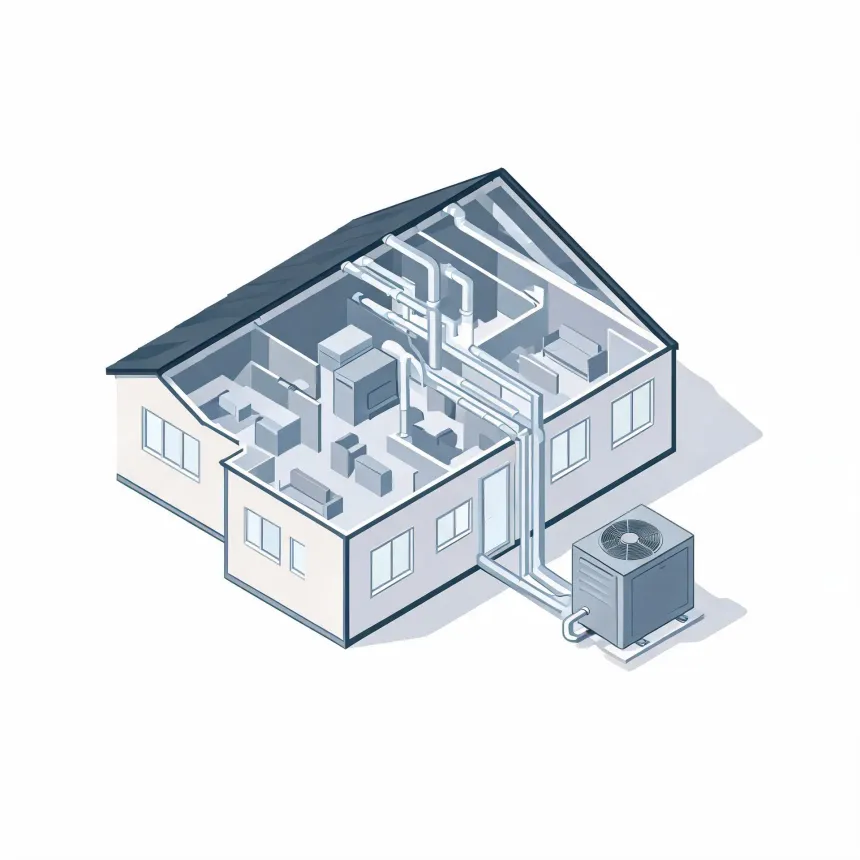
Isometric illustration of a cutaway single-story house showing interior ductwork and vents connected to an outdoor condenser unit beside the building, on a white background.
Your system heats October through May and cools June through August.

NOAA nClimDiv, 1991–2020 normals

Madison County saw 121 severe weather events between 2015 and 2024, including 68 windstorms and 36 hail events.

None of that changes what size or efficiency a heat pump here needs to be.

Eight months of heat, three of cooling, and not much time between

Cooling runs June through August
Heat runs October through May
68 damaging wind events from 2015 to 2024
A system that doesn't have to work hardMadison County summers run muggy, not brutal: the dew point averages 63°F in June, July and August.

A heat pump here doesn't need to be oversized or loaded with extra features to earn its keep. Standard sizing, matched to the home, handles what Anderson's winters and summers actually ask of it. Electricity in Madison County ran 14.30 cents per kilowatt-hour in 2025, in line with typical rates, so there's no local reason to chase the highest efficiency rating on the shelf hoping to offset a steep power cost. A contractor sizing the unit will look at the home itself, its square footage, its ductwork, its insulation, not at anything unusual about the county. Get the size right for the house and a mid-range efficiency system will do the job for years.

Sized for the house you have, not a newer one

Half the homes in Madison County were built in 1965 or earlier. An install into a house that age means fitting the heat pump to the ductwork, the layout, and the furnace already there, not to a generic spec sheet. Getting that match right is what makes the system worth installing in the first place.

Find a contractor
A man in a cap, dark long-sleeve shirt, tan work pants and boots walks up wooden porch steps toward a teal front door, carrying a canvas tool bag with hand tools.
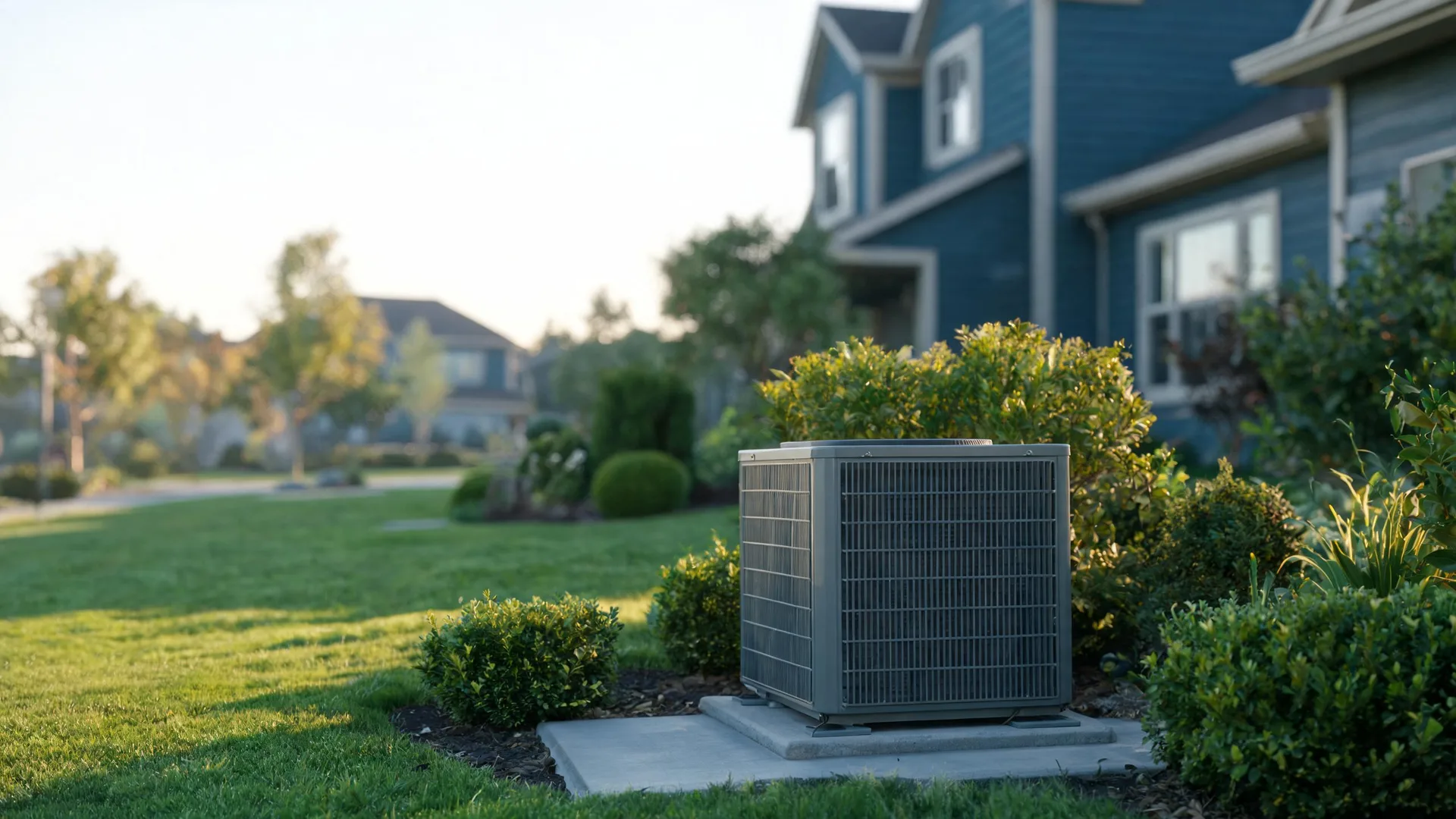
A gray heat pump outdoor unit mounted on a concrete pad next to the stone-accented exterior wall of a house.

A system that works steadily, not hard

Zone 5A means winter is the bigger job here, but in most homes the furnace carries the coldest stretch and the heat pump takes the months on either side of it, plus the muggy pull in summer. That split keeps the compressor out of the hardest conditions it could face. Watch the time-lapse through a full day and the pattern holds: steady runtime, nothing extreme to recover from. A system that never gets pushed to its limit wears slower, and a problem showing up early usually points to the install or the unit, not the climate.

What the two numbers on the label mean

A heat pump carries two ratings, one for cooling and one for heating. The cooling number comes from a lab test run over a full season of cycling on and off, not a guarantee of what the unit will use in any one house. The heating number works the same way, measured across a range of outdoor temperatures. Both let you compare one model against another. Neither promises what the bill will look like, since that depends on the ductwork, the insulation, and how the thermostat gets used.

What a higher number buys you

A higher rating usually means a two-stage or variable-speed compressor instead of a simple on-off one, plus the electronics to run it. That buys smoother, quieter operation and finer control over temperature swings. It also means more parts that can eventually need service. Whether that trade is worth it depends on the house and the system it's paired with, not on picking the biggest number on the shelf.

Sizing a heat pump starts with a load calculation, not a tape measure around the house. A contractor works out how fast the home loses heat in winter and gains it in summer, room by room, using the insulation, the window area, the duct layout, and the square footage together. That number, not the size of the old system, is what tells you the right capacity. Too big and the unit short cycles, running in bursts that cool the air but never run long enough to pull the moisture out of it. Too small and it runs constantly without reaching the temperature on the thermostat, especially on the coldest days. The right size runs long, steady cycles, which is what keeps a compressor healthy over its years on the job.

Madison County falls under zone 5A in the 2021 energy code, a cool, humid zone where heating carries the bigger share of the year's work. Any split-system heat pump installed here now has to meet the federal minimums that took effect for units built on or after January 1, 2023: at least 14.3 Btu of heat moved per watt-hour over summer, and at least 7.5 Btu per watt-hour over winter. That standard applies everywhere, but it's the winter number that matters more in a zone like this one. A contractor won't be offering anything below that floor, so the real comparison between units starts above it, not at it.