Most homes here run on gas
Utility gas heats 57.9% of occupied homes in Warrick County. Electricity is next at 37.6%, with a small share on bottled or LP gas. A furnace is what most houses here already have.
Takes about a minute. No obligation.
Utility gas heats 57.9% of occupied homes in Warrick County. Electricity is next at 37.6%, with a small share on bottled or LP gas. A furnace is what most houses here already have.
Installing a heat pump in a gas-heated house usually means adding a new electric circuit and deciding whether the furnace stays as backup or gets replaced. That's a different job than swapping one furnace for another, and it's worth asking the contractor to walk through what your house needs.

NOAA nClimDiv, 1991–2020 normals
Boonville sits in zone 4A, a mixed climate that works a heat pump hard in both summer heat and winter cold.
A standard-size, standard-efficiency heat pump is built to handle both, so there's no reason to size up or pay for extra capacity here.



Warrick County falls under zone 4A, a mixed climate that asks real work of both heating and cooling. Any split-system heat pump installed here has to clear federal minimums of 14.3 SEER2 for cooling and 7.5 HSPF2 for heating. That's not a local add-on. It's the baseline for the equipment itself, so whatever goes in is built to perform in both directions, not just one. It narrows what a contractor can offer you, but it also sets a floor you don't have to think about or negotiate.
Nothing about Boonville calls for sizing up or paying for extra capacity. The federal minimums already cover what zone 4A asks of a heat pump, and electricity here runs 14.77 cents per kilowatthour, the same rate any standard system is built around. A correctly sized, standard-efficiency unit is the right call.
Find a contractor
If the old system is a furnace staying on as backup, it doesn't go anywhere. It sits downstream of the new air handler or gets tied into the same ductwork, waiting for the heat pump to need help on the coldest days. If the furnace is coming out, a contractor disconnects the gas line and caps it, pulls the old unit, and checks whether the existing ductwork and electrical can serve the heat pump on its own. An old outdoor condenser or coil from a straight AC setup is usually removed, since heat pump equipment runs different refrigerant lines and controls than cooling-only gear. Whatever gets pulled out, a licensed contractor has to reclaim the refrigerant before disconnecting anything. That's not optional, it's how the refrigerant gets handled legally. None of this is a quick swap. It's closer to deciding what role the old equipment still plays, if any, before the new one goes in.
A heat pump moves more air at lower temperatures than a furnace does, so it leans harder on duct sizing and sealing. Ducts that were sized for a gas furnace sometimes need adjustment, especially the return side. A contractor checks this before quoting, because undersized or leaky ducts mean the system can't deliver what it's rated for, no matter how good the equipment is.
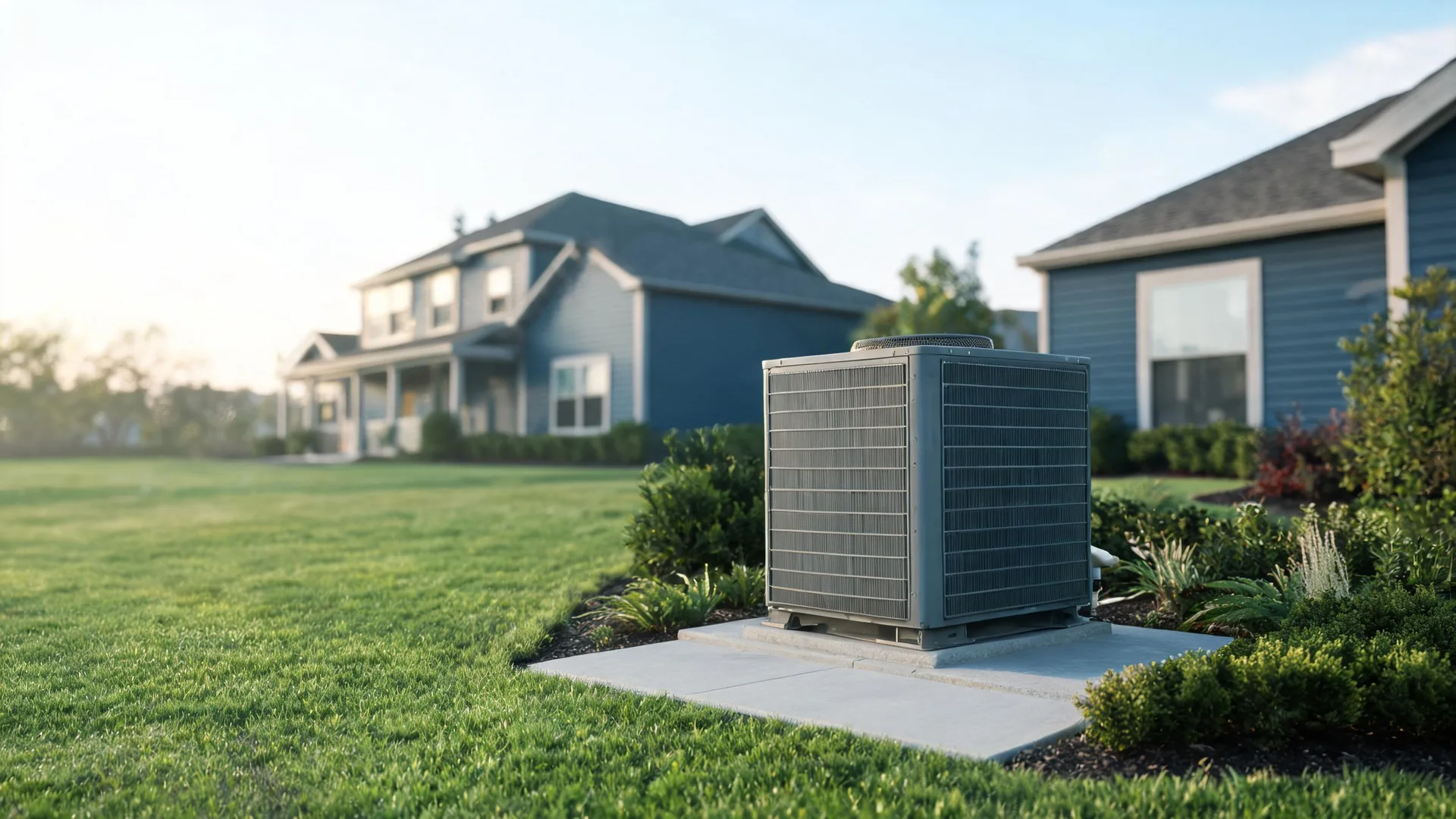
The outdoor unit needs clearance on all sides to pull in air and release it, and a pad or mount that keeps it level and off the ground. Where it lands affects line length to the indoor coil, how much refrigerant line needs running, and how much electrical work is involved getting power to it. A tight or awkward spot can add labor even when the equipment itself is straightforward.
Sizing a heat pump is not like sizing a furnace. A furnace that's a little too big just short cycles and wastes some fuel. An oversized heat pump cools the air fast but doesn't run long enough to pull the moisture out, so the house feels clammy even at the right temperature. Undersized, it runs constantly on the coldest and hottest days and still can't keep up. The right size comes from a load calculation, a room-by-room look at window area, insulation, ceiling height and orientation, not a rule of thumb based on square footage or whatever the old equipment happened to be. Houses that look about the same from the street can still need different sized systems depending on how they're built.
Install day starts with the equipment already sized and ordered, so most of the day is connecting things, not figuring them out. The outdoor unit goes on its pad first. Then a contractor runs the line set between it and the indoor coil, connecting to existing refrigerant lines or running new ones depending on what the old system left behind. The indoor side ties into the air handler or ductwork, the electrical circuit gets run out to the condenser, and the system gets charged with refrigerant to the manufacturer's spec rather than topped off by feel. Before anyone leaves, a contractor runs the system in both directions, heating and cooling, and checks static pressure in the ducts along with the temperature split at the vents. A heat pump that starts up fine but isn't moving enough air or holding the right charge will show it in uneven rooms long before it shows up as a breakdown.