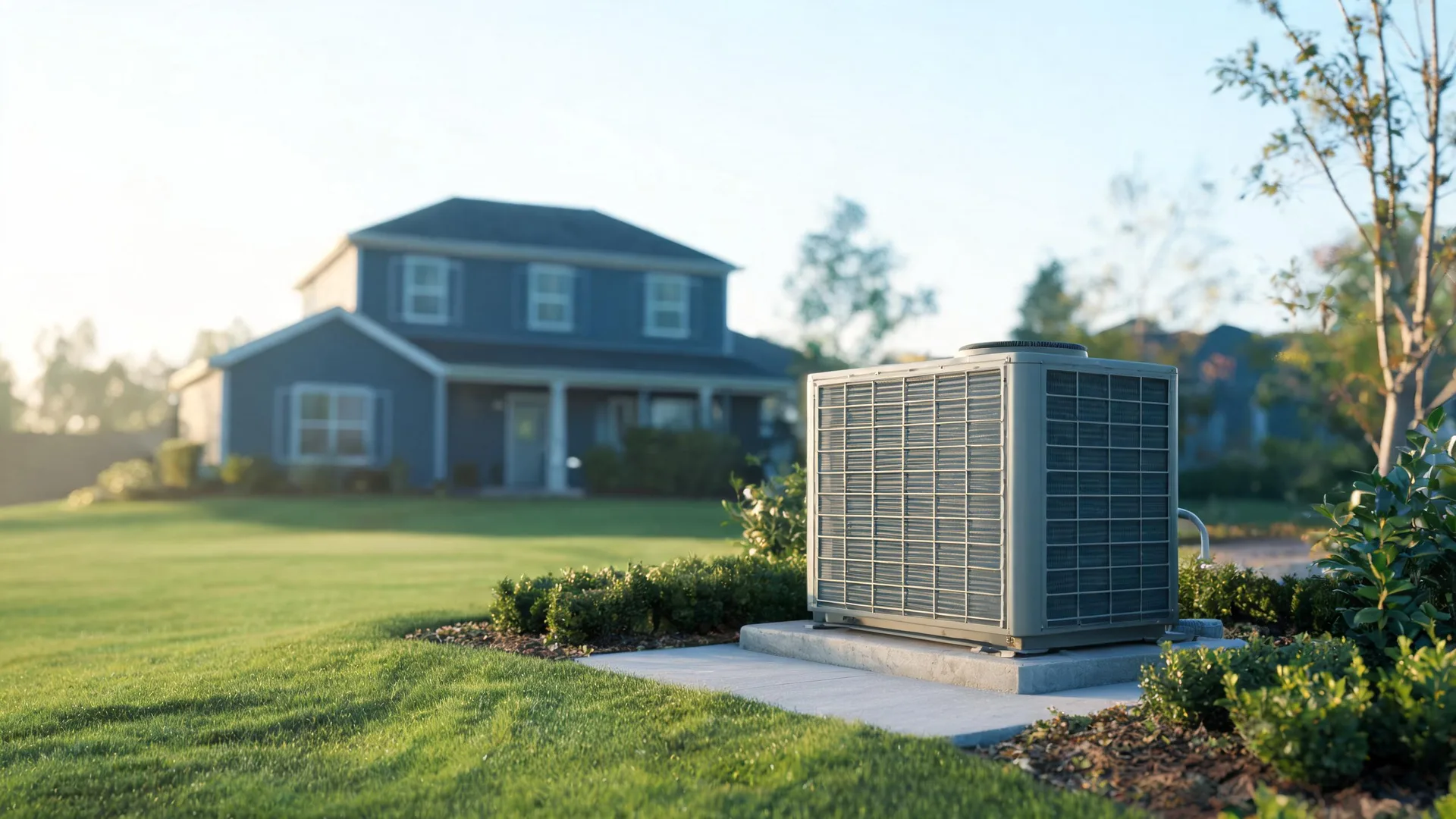
Electricity here runs 14.77 cents a kilowatt-hour
Indiana homes paid that rate on average in 2024. A heat pump runs on electricity for both heating and cooling, so this rate applies to the system all year, not just in summer.

Takes about a minute. No obligation.
Indiana homes paid that rate on average in 2024. A heat pump runs on electricity for both heating and cooling, so this rate applies to the system all year, not just in summer.
Two heat pumps can heat the same house and use different amounts of electricity doing it. At 14.77 cents a kilowatt-hour, that difference shows up on every bill, not just on the install invoice.
NOAA nClimDiv, 1991–2020 normals
Gas heats half the homes in Whitley County.
A heat pump replacing a furnace here is still the exception, not the rule.



Whitley County sits in climate zone 5A, a cool zone where heating carries the bigger share of the work. Any split-system heat pump installed here has to meet federal minimums of 14.3 SEER2 for cooling and 7.5 HSPF2 for heating. That heating number matters more than the cooling one in this zone, since the furnace side of the job is what the system spends most of its year doing. A contractor quoting a system below those numbers isn't quoting a legal install here. Above the minimum, there's room to choose, and that choice is what shows up on the electric bill every month the system runs.
Heat here starts in October, so September is the last month to get a new system in on your own schedule. Install before then and the heat pump is already broken in and running right by the time it has to carry the load for eight months straight.
Find a contractor
Pick a heat pump sized and rated for a cool zone, not the model built to impress on a spec sheet. Whitley County's winters are the load it has to answer to, and the overnight low averages 20°F across December, January and February. A unit that clears the federal minimums here will run those months and the milder ones without strain. Summer asks little of it by comparison, so there's no case for paying up for cooling power it won't use. Reliable and correctly sized beats top-of-the-line for a system that spends most of its year on heat, not cooling.
HSPF2 and SEER2 tell you how much heat or cooling a system moves for the electricity it uses. They're measured under set lab conditions, not inside any particular house. A higher number means less electricity for the same work, but only if the system is sized right and installed right. A good rating paired with a bad install still runs up the bill.
A contractor can quote a well-rated heat pump and still hand you a system that burns more than it should, because the rating assumes correct refrigerant charge, correct airflow, and ductwork that can deliver what the unit produces. Ductwork that's undersized or leaking air chokes a high-rated system down toward a low-rated one. The label tells you what the equipment can do, not what it will do once it's hooked to your ducts.
Ask what size load calculation the contractor ran, and ask to see the number, not just take their word for it. A heat pump sized off square footage alone can end up oversized or undersized, and both cost you. Oversized units short cycle, turning on and off before they've pulled moisture out of the air or settled into steady heating, and that wear adds up over the years. Undersized units run constantly and still fall behind on the coldest days, leaning hard on backup heat strips that burn more electricity than the heat pump itself. Ask too what happens below the heat pump's balance point, the temperature where it can no longer keep up alone. Some systems lean on electric resistance heat at that point, others pair with a furnace in a dual-fuel setup. That answer changes what your coldest months actually cost to run, and it's worth hearing straight rather than assumed.
Whatever is coming out, a furnace or an old heat pump, someone still has to deal with the refrigerant or the gas line before anything new goes in. A furnace gets disconnected from its gas line and vent, and the line gets capped off properly, not just shut at the valve. An old heat pump holds refrigerant under pressure, and that has to be recovered into a tank rather than vented, since releasing it into the air is against the law. Once the old equipment is unhooked, it gets hauled off, cabinet, coil and all. If the old system shares a pad or a closet with electrical work, that gets checked too, since a new heat pump often draws differently than what it's replacing. None of this is the hard part of the job, but skipping it is how a new install ends up with a problem that trace back to what never got properly disconnected.