

Can a heat pump keep up with winter here
Whitley County winters average 20°F overnight across December, January and February, and the low drops to freezing or below on about 135 nights a year. A standard heat pump's heat output falls short of its rating once it's below 40°F outside, and it often needs backup heat once it's below about 35°F. Every one of those 135 nights falls below both marks.
That doesn't mean the heat pump stops working. It means a second heat source, usually electric resistance coils, has to carry part of the load on most nights of an eight-month heating season here. The about 9 nights a year that reach 0°F or below are a small part of the problem. The much larger problem is the 135 nights at or below freezing, because that's where a standard heat pump spends most of its winter.
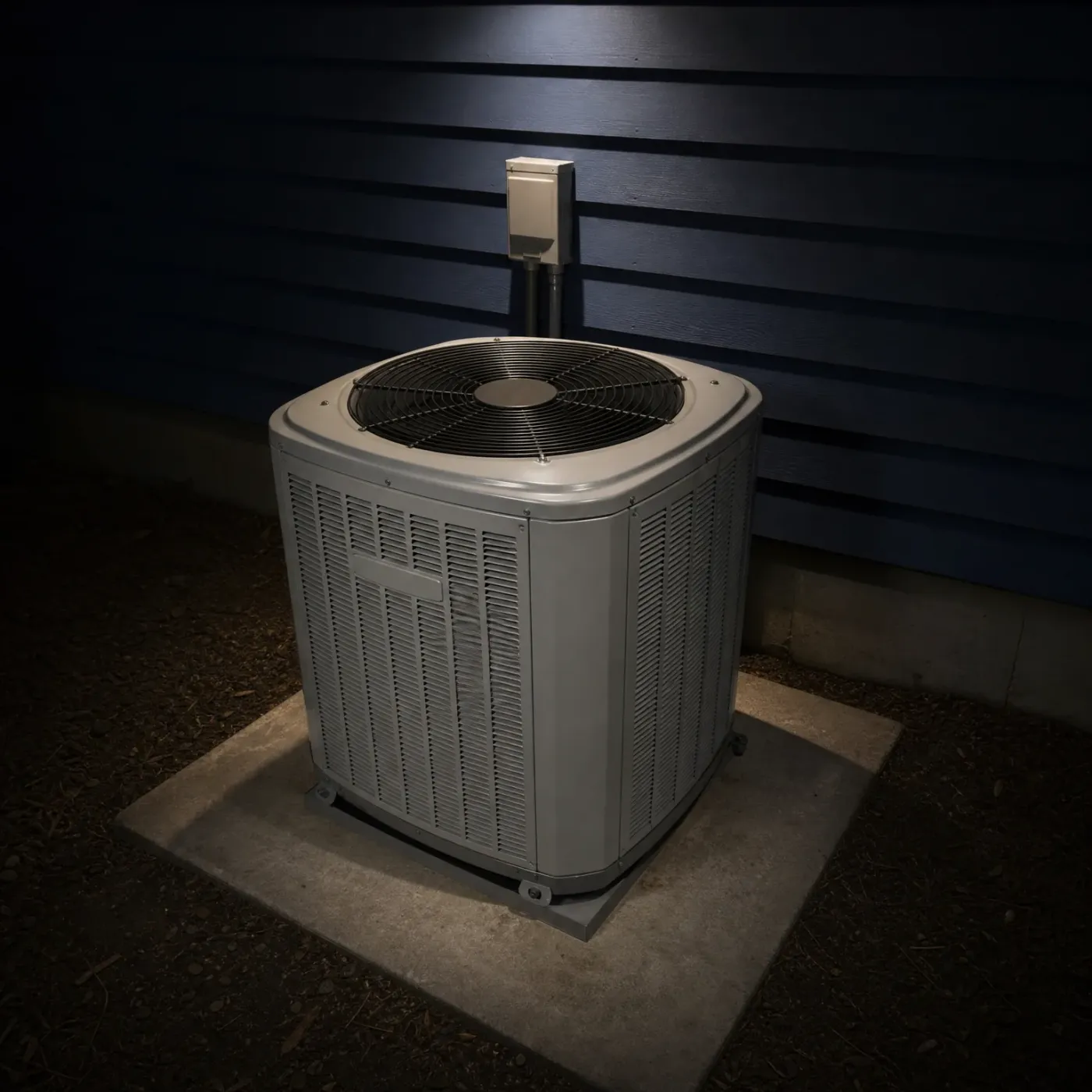
A heat pump built and tested to the ENERGY STAR Cold Climate standard is a different machine on paper. To earn that label it has to deliver at least 1.75 units of heat per unit of electricity at 5°F and hold onto at least 70 percent of its 47°F capacity at that temperature. In field testing, prototype cold-climate heat pumps in occupied homes drew only a small share of their heat from backup between 0°F and 35°F, and running on backup alone was rare even above 0°F. If a heat pump is the choice here, that distinction is the one that matters most.