


A gray forced-air furnace with ductwork stands in an unfinished concrete basement surrounded by storage items and clutter.

Furnace Repair in Columbia City, IN

Tell us about the job

Takes about a minute. No obligation.

RepairFurnace or heatingWhitley County, IN
Step 1 of 2

What ZIP code is the job in?

Furnaces around Columbia City run from October through May, about eight months of the year. Overnight lows average 20°F through December, January and February, so the furnace is holding that line for weeks at a stretch, not just kicking on now and then. That kind of stretch wears on an igniter or a blower motor sooner than it would somewhere milder. If yours is making noise, short cycling, or not keeping up, it's worth having someone look at what's actually going on instead of guessing.

8 months
October through May, your furnace is on duty
20°F
the average winter night it heats against
10 winter storms
in ten years, the nights a failure hurts most
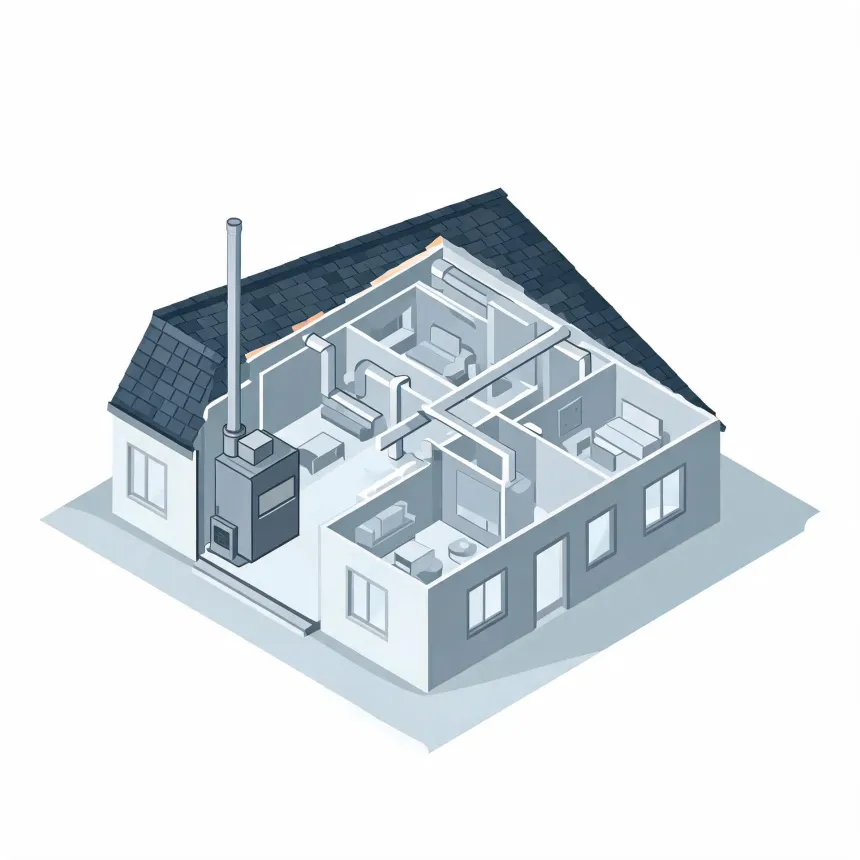
Isometric cutaway illustration of a single-story house showing interior rooms, ductwork, and a dark furnace unit with a tall flue pipe rising past the shingled roof.
Your furnace works hardest from November through March.

NOAA nClimDiv, 1991–2020 normals

Furnaces in Whitley County start up again in October.

A furnace that sat idle since spring is where a weak igniter or blower motor finally gives out.

Columbia City furnace repairFurnace season here runs eight months, October through May.

Half the homes in Whitley County were built in 1979 or later, so a lot of furnaces here are running in houses that aren't old themselves. That doesn't tell you how old the furnace is, since a system gets swapped out over a house's life. But if yours came in with the house, or you know it's a newer unit, a repair is usually worth it rather than a replacement. A blower motor or igniter failing early in a furnace's life is a fixable problem, not a sign the whole system is done. Worth checking what year your place was built or when the furnace was last replaced before you decide.

Get it diagnosed properly

Your furnace works hard here, and that's usually what's behind the problem. Have it diagnosed properly so the fix lasts.

Find a contractor
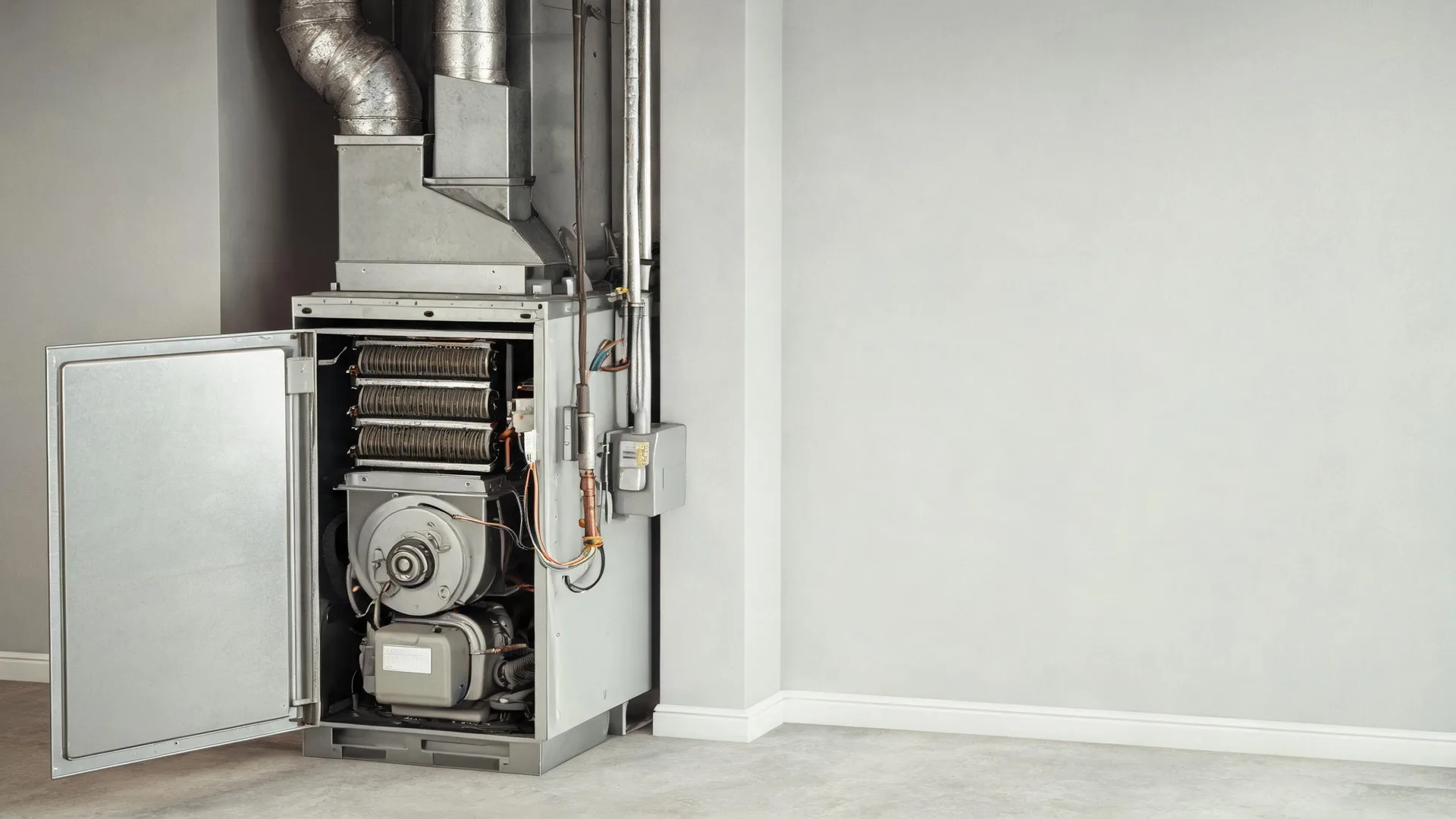
A gray residential gas furnace installed in an unfinished basement, surrounded by ductwork, a metal flue pipe, and a gas supply line.

What actually wears out

Most furnace failures trace back to one of a handful of parts. The igniter is the one that goes most often. It's a thin strip that heats up to light the gas, and that heating and cooling cycle makes it brittle over time until it cracks. A cracked igniter won't light the burners at all, so the furnace runs air but no heat. The flame sensor fails a different way. It coats over with a thin film from normal combustion, and once that film builds up enough, it can't tell the control board a flame is lit, so the system shuts itself down as a safety measure. The blower motor wears from straight use. Bearings dry out, the motor starts running hot, and eventually it seizes or trips its own limit switch. A clogged filter speeds that up, because it makes the blower push harder against airflow it doesn't have. Capacitors that help start the blower weaken with age and stop giving it enough of a kick to get moving. None of these failures mean the furnace itself is bad. They're wear parts doing what wear parts do, and replacing the one that failed is usually all it takes.

What you can check yourself

Look at the thermostat first. Make sure it's set to heat and the setting is above room temperature, and change the batteries if it uses them. Check the air filter and swap it if it's gray or clogged, since a blocked filter can make the furnace shut down on its own. Then check the breaker box and make sure the furnace switch, the one that looks like a light switch near the unit, is flipped on. If you have a gas furnace, confirm the gas valve is open.

What to leave alone

Don't take any panels off the furnace or reach inside it. If you smell gas, leave the house and call the gas company before calling anyone else. A furnace that's short cycling, making a grinding or screeching noise, or tripping its breaker repeatedly needs a tech, not more troubleshooting. Flipping a switch is safe. Chasing the problem past that point usually just delays the fix.

An empty unfinished basement containing a forced-air furnace with overhead ductwork, exposed ceiling joists, and a single hanging light bulb.

A new furnace would cut about $110 a year off heating for a typical Whitley County home.

  • A new high-efficiency furnace$470 a year
  • An older furnace$580 a year

Estimates for a typical Whitley County home, compared with an older unit built to the previous federal minimum, from EIA household energy data, Indiana fuel prices and NOAA climate normals. Your home will differ.

Repair makes sense when one part has failed and the heat exchanger is sound.

Replacement makes sense when the heat exchanger is cracked or the furnace keeps needing parts.

Most furnace repairs are worth doing. A new igniter, flame sensor or blower motor fixes the problem without touching anything else in the system, and those parts fail on their own regardless of how old the furnace is. The harder call is a cracked heat exchanger or a failing control board, since those sit closer to the cost of a whole new unit. A tech who finds one of those will tell you straight instead of just swapping the part. Age matters more than the symptom. A furnace early in its life is almost always worth repairing outright. One that keeps failing season after season, a different part each time, is the case where it's worth asking whether you're about to pay for a fix that just strands you again next winter.