Electricity here runs 14.77 cents a kilowatt-hour
Indiana power costs more than in most states, and a heat pump runs on electricity for both heating and cooling. That rate applies to every hour the compressor runs, all year.
Takes about a minute. No obligation.
Indiana power costs more than in most states, and a heat pump runs on electricity for both heating and cooling. That rate applies to every hour the compressor runs, all year.
Two heat pumps can heat the same house and cost different amounts to run every month. At this rate, the difference between a system that runs efficiently and one that doesn't shows up on every bill, not just the install invoice.
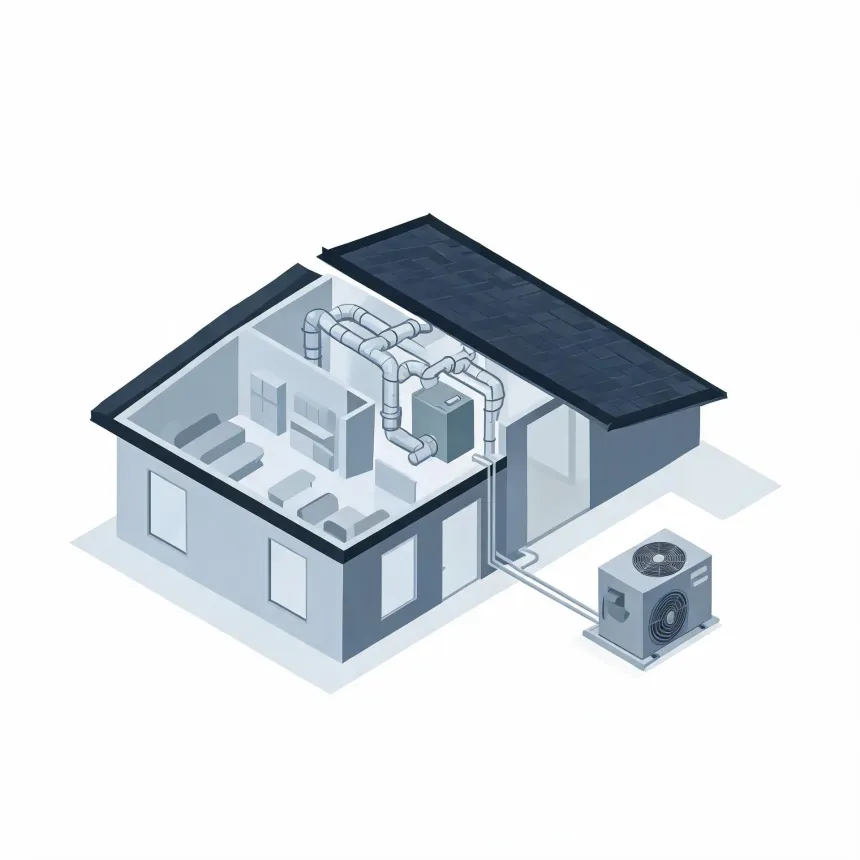
NOAA nClimDiv, 1991–2020 normals
Heat pumps here run nearly year round, October through April for heat and June through September for cooling.
Plan the swap for May or September, so the old system isn't the one deciding when it quits.



Bartholomew County falls under zone 4A for energy code purposes, a mixed climate that works both the heating and cooling sides of a heat pump. Any split system installed here has to meet a federal minimum of 14.3 SEER2 for cooling and 7.5 HSPF2 for heating. That's the floor, not a target. A contractor sizing a system for your house has to work above that line, which narrows down what's worth installing here versus somewhere milder. There's also a federal tax credit for qualifying heat pumps, worth checking against whatever unit you're considering before you decide.
Gas heats a little over half the homes in Bartholomew County, electricity heats most of the rest. If your house is one of the gas homes, a heat pump can still work alongside that furnace instead of replacing it outright, handling the mild months and backing off when it gets cold. Worth asking what setup fits what you already have.
Find a contractorOvernight lows average 24°F in December, January and February here. That's cold enough for a heat pump to work for its heat, but it's not the kind of extreme that shortens a system's life. Pick one sized right for this house and rated for the cold it will actually see, and skip paying for capacity built for weather Columbus doesn't get.
A contractor should size the system by running a load calculation on your house, room by room, not by matching whatever is already out there or eyeballing the square footage. Oversized units cycle on and off too fast and never run long enough to dehumidify properly. Undersized ones run constantly and still can't keep up on the coldest days. Ask to see the numbers, not just the recommendation.
Every heat pump has a temperature where it can no longer pull enough heat from the outside air to keep up on its own. Below that point something else has to carry the load, either electric resistance heat built into the air handler or a furnace working alongside it. Ask what kicks in, at what temperature, and what that backup costs to run compared to the heat pump itself.
Sizing a heat pump means working out both the heating load and the cooling load for the house, since the same unit has to cover both. A contractor runs that calculation by looking at the walls, the windows, the ceiling height, which way rooms face, and how they're used, then figures out how much heat the house loses in cold weather and gains in warm weather. Get the size wrong and both seasons suffer, in different ways. An oversized unit blasts the house to temperature fast, shuts off, and leaves the air clammy because it never ran long enough to pull moisture out. An undersized one runs nonstop on the hardest days, straining to keep up without ever quite getting there. The right size isn't the biggest unit that fits the budget, and it isn't automatically whatever size is already out there. It's whatever size matches the house.
Installation day starts with the outdoor unit and the indoor coil coming out and going in. The old refrigerant gets recovered, not vented into the air. The line set either gets reused or replaced, depending on its condition and what the new equipment calls for. If the air handler or furnace is changing too, that adds hours, since the ductwork connections and the electrical whip have to match the new gear. Once everything's in place, the system gets charged with refrigerant to the exact weight the manufacturer specifies, not just until the pressure looks about right. Then it goes through a startup check. Airflow gets measured. The temperature split gets checked. The thermostat has to be talking to the system the way it should. A job that skips that last part can look finished and still not be done.