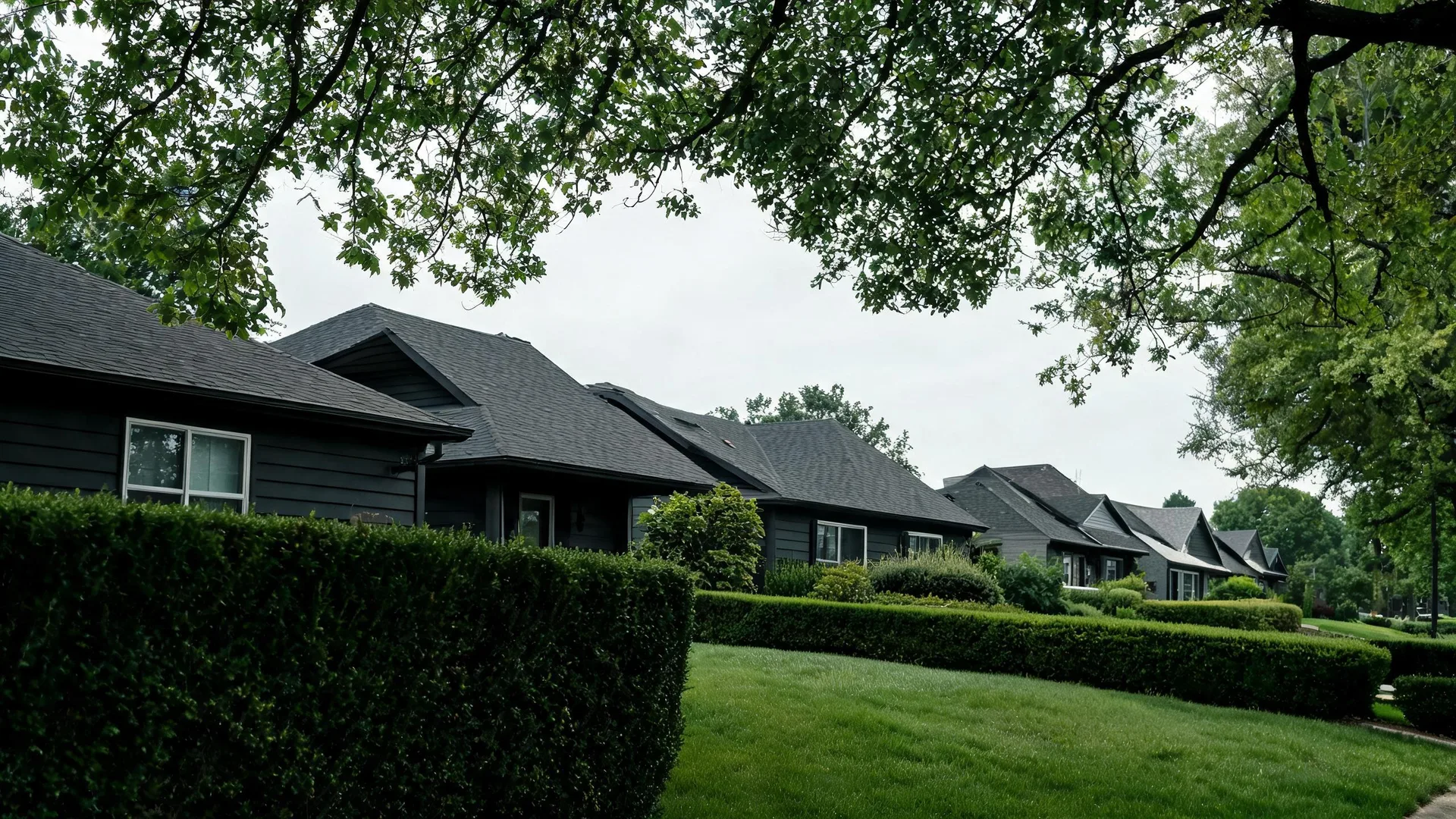





A row of dark-sided single-story houses with gray shingled roofs behind trimmed hedges and a mown lawn, framed by overhanging tree branches under an overcast sky.

Heat Pump Installation in Crawfordsville, IN

Tell us about the job

Takes about a minute. No obligation.

New system or replacementHeat PumpMontgomery County, IN
Step 1 of 2

What ZIP code is the job in?

Electricity in Indiana ran 14.77 cents per kilowatthour in 2024. A heat pump moves heat instead of burning gas to make it, so it gets more out of every kilowatthour than straight electric heat does. At that rate, the difference between a unit that runs efficiently and one that doesn't shows up on your bill every month, not just in the summer when the air conditioner would have run anyway. This is worth working out with a contractor before you buy, not after.

8 months
October through May, your system heats
3 months
June through August, it cools
21°F
the average winter night it heats against
83°F
the average summer afternoon it cools against
Isometric grey-toned illustration of a cutaway house showing interior rooms, ceiling ductwork and an air handler, connected by lines to an outdoor condenser unit beside the building.
Your system heats October through May and cools June through August.

NOAA nClimDiv, 1991–2020 normals

Heat here runs October through May, eight months out of the year.

Put a heat pump in before September and it's sized and set up before it has to carry the load.

Half the homes here were built in 1967 or earlier. A heat pump going in now has to match the house you have, not a newer one.

Half the homes here were built by 1967
20 hail events from 2015 to 2024
8 winter storms from 2015 to 2024

Montgomery County sits in climate zone 5A, a cool zone where heating carries more of the year's load than cooling does. Any split-system heat pump installed here has to meet the federal minimum. That's 14.3 SEER2 for cooling and 7.5 HSPF2 for heating, for units made from 2023 on. That floor narrows what a contractor can legally put in. It's worth asking what rating a unit carries before you agree to it, not after it's installed.

A heat pump here has a manageable job. Size it right and it will do that job for years.

Winters here average 21 degrees overnight, and the county sees weather events like hail and winter storms some years. None of that puts hard strain on a heat pump day in and day out. A system here works through steady cold, not punishing heat or constant storms. That means a well-built, correctly sized unit should hold up on its own merits, without paying extra for the highest efficiency tier on the market.

Find a contractor
A white mini-split heat pump outdoor unit mounted on a concrete pad beside a gray-sided house, surrounded by gravel and green shrubs.

Sized right, it lasts on its own

Get the sizing right and the rest follows. A contractor should run a load calculation on your house, not measure the old unit or guess from square footage. A heat pump sized that way, built to meet the federal minimum ratings, is what carries it through ordinary winters here for years. You don't need to chase a higher tier to get that.

The old unit gets hauled away

Whoever installs the new heat pump disconnects the old one, recovers the refrigerant from the lines, and takes the equipment with them. Refrigerant can't legally be vented into the air, so a licensed contractor has to reclaim it before the outdoor unit gets disconnected and removed.

What's buried or bolted down may stay

If the old system ran on a gas furnace paired with an air conditioner, the furnace might stay in place as backup heat or get capped off, depending on what you choose. The line set and electrical whip running to the outdoor pad often get reused rather than pulled out, since running new ones means opening up walls.

Ask what temperature the unit can still pull heat from outside air before it leans on backup heat strips. Systems carrying the same rating can split on that point, and it decides how much of the winter the backup heat kicks in. Ask whether the quote includes a load calculation on your house or just swaps in a same-size unit for the one coming out. Ask what the warranty covers on the compressor versus the labor to replace it, since those are often sold separately. And ask who services the brand locally. A heat pump with a hard-to-find part sitting in a warehouse across the state is a different ownership experience than one a nearby contractor stocks.

What drives the price on a job like this is mostly labor and how much has to change to make the new unit fit. A straight swap, same spot, same line set, same electrical, costs less than a job where the old furnace and ductwork have to be reworked to carry a heat pump properly. Ductwork matters more than people expect. A heat pump moves a larger volume of air at a lower temperature than a gas furnace does, and undersized or leaky ducts can choke that airflow no matter how good the unit is. If the electrical panel doesn't have room for a new circuit, that's its own cost before the heat pump itself goes in. The unit's size and efficiency rating set a baseline, but what's already in the walls and attic decides how much work gets built on top of that baseline.