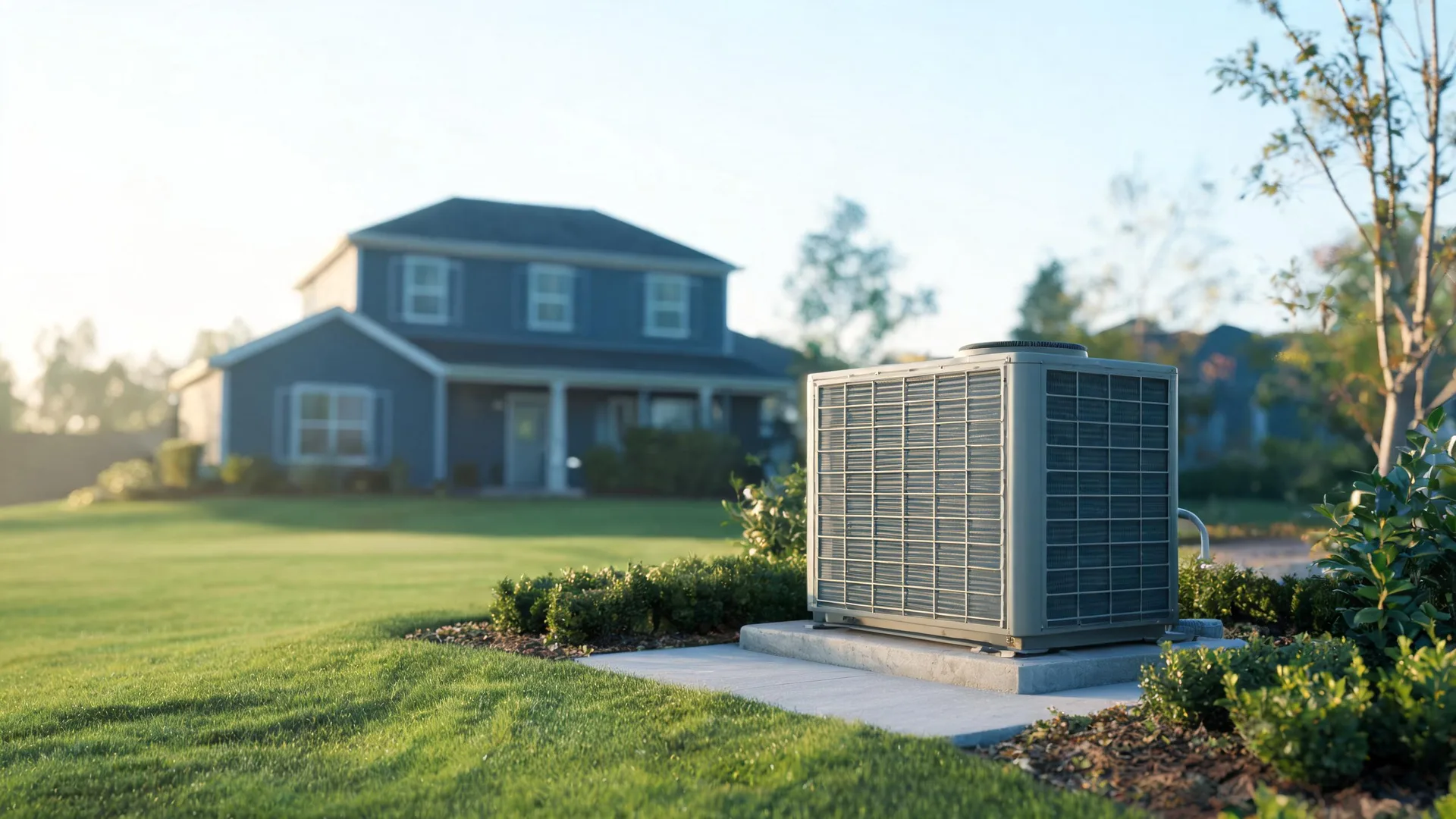
Electricity here runs 18.46 cents a kilowatt-hour
That is above what most US counties pay. A heat pump runs on electricity for both heating and cooling, so that rate applies to the system year round, not just in summer.

Takes about a minute. No obligation.
That is above what most US counties pay. A heat pump runs on electricity for both heating and cooling, so that rate applies to the system year round, not just in summer.
When the power rate is already high, a unit that uses less to do the same job shows up directly on the bill. Sizing and installation quality decide how much electricity this heat pump actually draws to heat and cool your home.
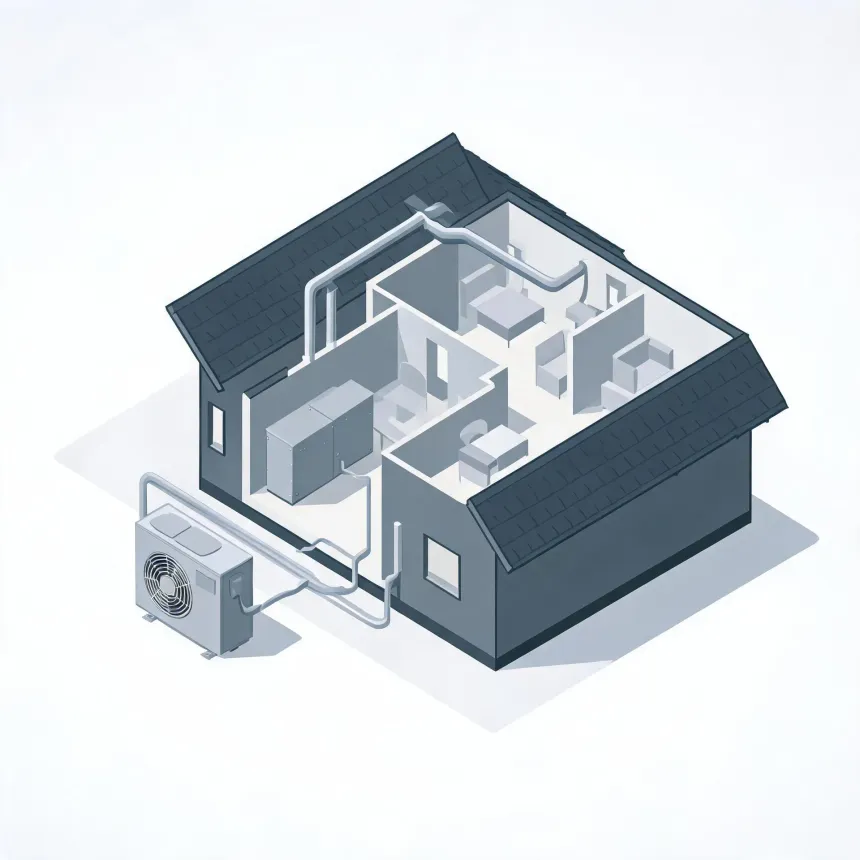
NOAA nClimDiv, 1991–2020 normals
A heat pump sized too big short cycles, shutting off before it finishes a full heating or cooling run.
A unit that never runs a full cycle never settles into its most efficient stretch, so the load calculation has to come before the equipment choice.




Elkhart County sits in zone 5A under the 2021 energy code, a cool zone where heating carries the bigger load. Any split-system heat pump manufactured on or after January 1, 2023 has to clear a federal floor before it can go in your house: at least 14.3 Btu of heat removed per watt-hour of electricity over the summer, and at least 7.5 Btu of heat delivered per watt-hour over the winter. That floor is set for a climate like this one, not a mild one, so it already assumes a hard winter and a sticky summer. A contractor can install something more efficient than the minimum. They cannot legally install less.
The rate here is already set, and it is not a low one. What decides the bill from here is how well this unit is sized and installed. That gets decided once, at installation.
Find a contractor
The old system doesn't get reused. Once a heat pump or furnace comes out, it's done. The refrigerant in the old unit gets recovered, never vented, and the equipment goes to scrap. If the home is switching from a furnace to a heat pump, the old ductwork usually stays, but a contractor should check it against the new system's airflow needs before assuming it fits. A duct system sized for a furnace blowing hot air isn't always right for a heat pump moving a steadier, cooler stream of air. If there's an old line set running to an outdoor condenser, that copper typically can't be reused either, since the new system needs the right diameter and a clean, dry line free of old oil and debris. Whatever thermostat was running the old system usually gets replaced too, since most heat pumps need a thermostat that can manage both the compressor and the backup heat strip correctly.
Two heat pumps can carry similar names and perform nothing alike. Ask for the rated heating capacity at low outdoor temperatures, not just the summer cooling number. Some units lose a lot of heating output as it gets colder outside, and keep themselves going with backup heat strips that cost more to run than the compressor. A contractor should be able to show you how much heat the unit still delivers at a low outdoor temperature, straight from the manufacturer's performance data.
Every heat pump has a temperature where it can no longer pull enough heat from the outdoor air to keep up, and the backup heat kicks in to cover the rest. That point depends on the unit and how it's sized for the house. A contractor should be able to tell you roughly where that point sits for the system they're proposing, and how the backup heat is controlled. A unit that leans on backup heat too early will cost more to run than one chosen with that cutoff in mind.
The rating on the label is a ratio, not a guarantee. It tells you how much heat a unit moves for the electricity it uses, under a specific outdoor condition set by the test. Your actual result depends on how the unit is sized for your house and how it's installed, since a correct charge and strong airflow across the coil let it hit that number, while a pinched duct or an undercharged line set will not. Two homes with the same rated equipment can see different results because of duct leakage, a dirty coil, or refrigerant that wasn't weighed in correctly at startup. The rating is a ceiling the equipment can reach, not a number it delivers on its own.
Installation starts with pulling the old equipment and running a load calculation if one hasn't been done, since the outdoor unit and the indoor coil get matched to that number, not to whatever size was there before. The outdoor unit gets set on a pad, leveled, with clearance around it for airflow. Line sets get run between the outdoor unit and the indoor coil, then pressure tested to make sure there are no leaks before anything gets charged. The system gets evacuated to pull moisture and air out of the lines, because either one left behind will keep the system from running the way it's rated to. Refrigerant gets weighed in to the manufacturer's spec rather than judged by feel. Once it's running, a tech checks airflow across the indoor coil, confirms the thermostat is talking to both the compressor and the backup heat correctly, and checks that the system actually ramps down and holds steady instead of shutting off and restarting right away. None of that shows up in a walkthrough afterward, but it's what decides whether the unit runs the way the label says it should.