





A row of dark-clad gabled houses with gray shingle roofs behind trimmed green hedges, mown lawn, and leafy trees under an overcast sky.

Heat Pump Installation in Greencastle, IN

Tell us about the job

Takes about a minute. No obligation.

New system or replacementHeat PumpPutnam County, IN
Step 1 of 2

What ZIP code is the job in?

Electricity in Indiana ran 14.77 cents per kilowatthour in 2024. A heat pump moves heat instead of burning fuel to make it, so it gets more warmth out of every kilowatthour than baseboard or resistance heat. At that price, the difference between a unit that runs efficiently and one that doesn't shows up on every bill it sends you. Look at the HSPF and SEER2 ratings when you compare equipment. A higher rating costs more up front, but it costs less every month it runs after that.

8 months
October through May, your system heats
3 months
June through August, it cools
22°F
the average winter night it heats against
83°F
the average summer afternoon it cools against
Isometric grayscale illustration of a cutaway house showing interior rooms, ceiling ductwork and an air handler, connected by lines to an outdoor condenser unit on a pad outside.
Your system heats October through May and cools June through August.

NOAA nClimDiv, 1991–2020 normals

Greencastle winters average 22°F at night, and summers ask real work of a heat pump too.

Zone 4A means this system earns its keep both ways, but it's still not running against extremes.

Put it in before October, not after the first cold snap

Cooling runs June through August
Heat runs October through May
51 damaging wind events from 2015 to 2024

Putnam County is zone 4A, a mixed climate that asks real work of both heating and cooling. Any split-system heat pump installed here has to clear 14.3 SEER2 for cooling and 7.5 HSPF2 for heating if it was built after the standard took effect. That's the floor, not a recommendation. It rules out the older, cheaper lines some contractors still have sitting in a warehouse. A federal tax credit is available on top of whatever the installer quotes you, worth checking before you settle on a unit.

Most homes here already run on electric heat

Electricity already heats more homes in Putnam County than gas, propane and oil combined. A heat pump fits that pattern instead of working against it. If you're replacing what's there, you're not asking the house to do something it's never done before.

Find a contractor
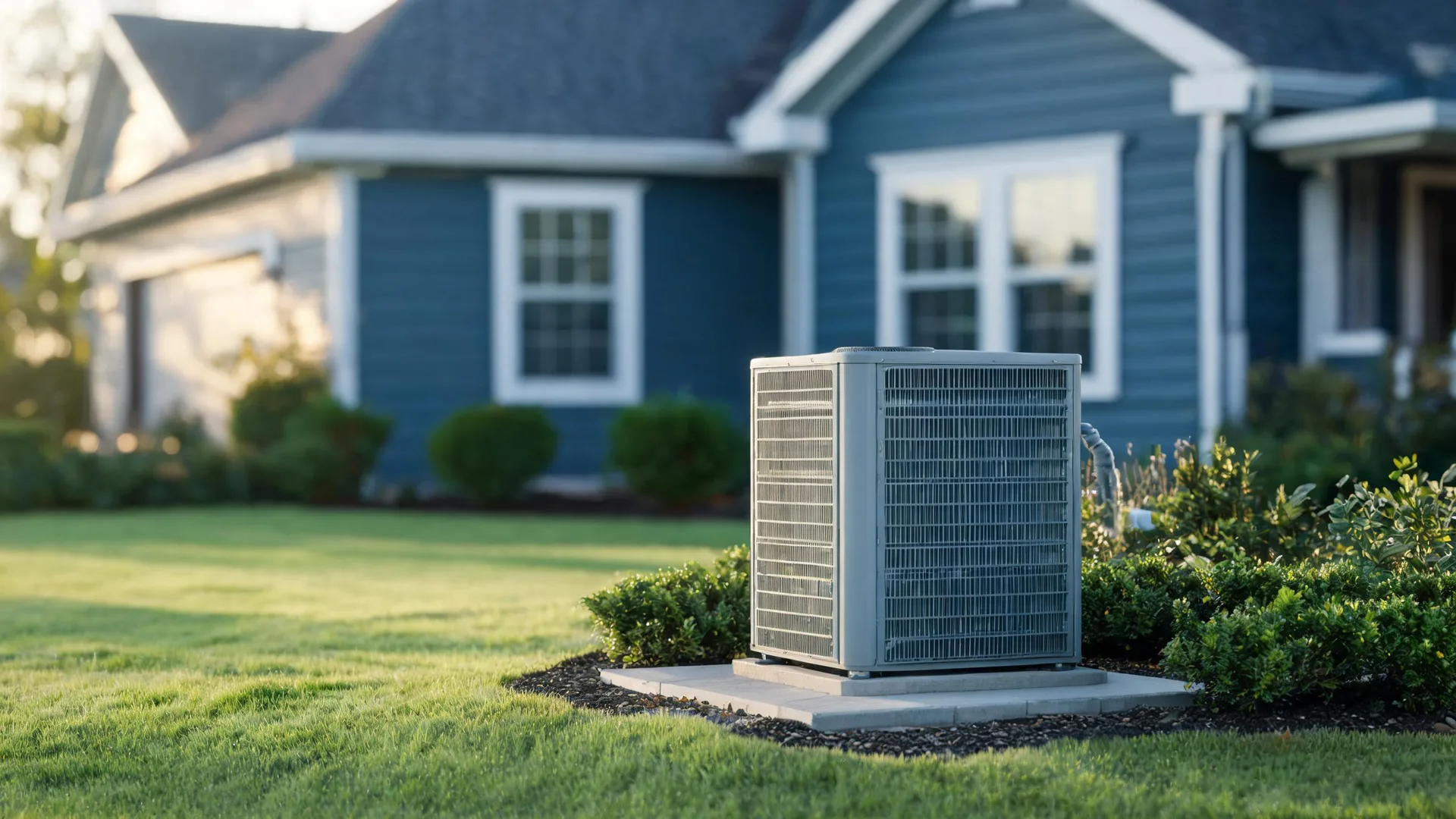
A white mini-split heat pump outdoor unit mounted on a concrete pad beside a gray-sided house, surrounded by gravel and green shrubs.

Working hard is not the same as working against extremes

Don't pay for a unit built to handle colder ground than this. Zone 4A still asks real work of a heat pump both ways, but 22°F isn't the single-digit cold that pushes a system to its edge. Put the money into correct sizing and a clean installation instead of chasing a rating past what this place asks for.

Ask what the load calculation showed

A contractor should size a heat pump to the house, not to the system being replaced. That means a room by room load calculation, not a quick look at the old equipment's rating. Ask to see the numbers, not just the final recommendation. A unit sized too big cycles on and off instead of running long steady stretches, and that short cycling wears on the compressor and leaves rooms uneven.
Ask how backup heat is handled

A heat pump pulls heat from outside air even in cold weather, but every unit has a point where it needs help. Ask what kicks in below that point. It might be strip heat built into the air handler, or the existing furnace staged behind it. A dual fuel setup that switches to gas in the coldest stretches behaves differently on those nights than one leaning on electric resistance coils, and that's worth understanding before you decide, not after.

Sizing a heat pump means matching its output to how fast the house loses heat in winter and gains it in summer, room by room, not guessing from square footage. A contractor measures the walls, windows, insulation and duct layout and runs that through a load calculation to get a number specific to that house. Skip that step and you're stuck with whatever the old equipment happened to be rated for, which may have been wrong from the start. Too big and the unit blasts the house to temperature and shuts off, then does it again a few minutes later, never running long enough to pull moisture out of the air or settle into a steady rhythm. Too small and it runs constantly without catching up on the coldest or hottest days. Either way the compressor wears faster and the rooms farthest from the air handler end up too warm or too cold compared to the rest of the house.

The outdoor unit and indoor coil go in first, before the old equipment comes out. If the existing lineset is being reused, it gets flushed and pressure tested rather than trusted on sight. The electrical side gets checked too. A heat pump draws power differently than a straight air conditioner, so the disconnect, breaker and wiring have to match what the new unit calls for, not what the old one needed. Once it's connected, the system gets charged with refrigerant to the exact weight the manufacturer specifies rather than topped off by feel. Then comes commissioning. Airflow gets checked at the vents, the thermostat gets confirmed talking to the system correctly, and backup heat gets tested to make sure it kicks in the way it should. That last check matters more with a heat pump than a furnace. If the handoff to backup heat is set wrong, nobody notices until the first really cold morning.