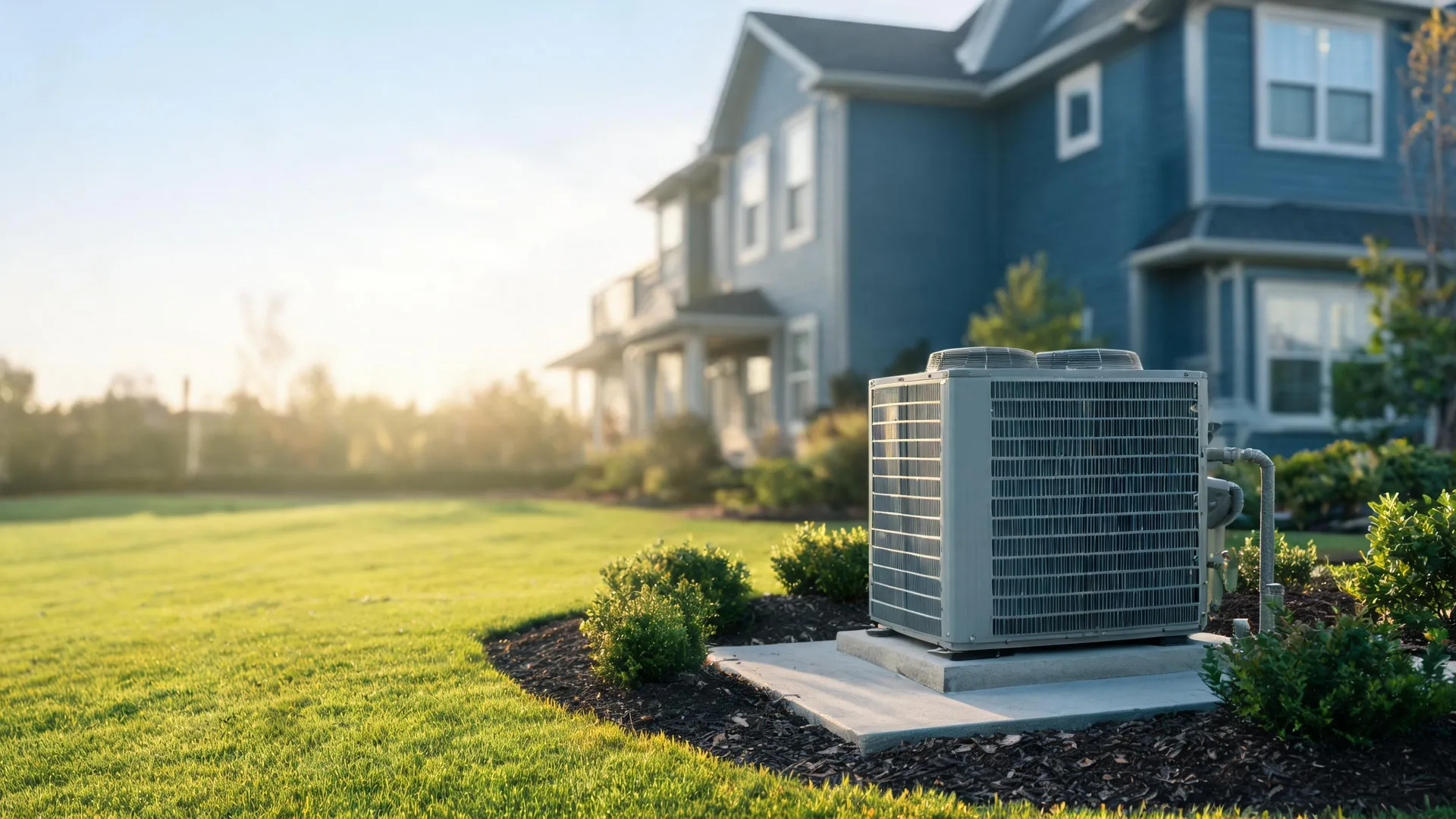
A gray outdoor HVAC condenser unit mounted on a concrete pad in the front yard of a two-story suburban house.

Heat Pump Installation in Indianapolis, IN

Tell us about the job

Takes about a minute. No obligation.

New system or replacementHeat PumpMarion County, IN
Step 1 of 2

What ZIP code is the job in?

Electricity here runs 14.77 cents a kilowatt-hour

A heat pump runs on electricity for both heating and cooling, so that rate applies to the system year round. Marion County homes paid an average of 14.77 cents per kilowatt-hour in 2025. Every degree the system has to make up comes out of that rate.


The muggy air adds to the load

A heat pump has to pull moisture out of the air as well as cool it. Marion County summers average a 64°F dew point across June, July and August, which is heavy air to work through. A unit sized and installed to handle that load runs less to do the same job.

8 months
October through May, your system heats
4 months
June through September, it cools
23°F
the average winter night it heats against
83°F
the average summer afternoon it cools against
Isometric line illustration of a cutaway single-story building showing interior rooms, ceiling ductwork, an indoor air handler, and an outdoor condenser unit connected by refrigerant lines.
Your system heats October through May and cools June through September.

NOAA nClimDiv, 1991–2020 normals

Most homes in Marion County heat with gas.

A heat pump installed here usually means adding electric heating and cooling where gas handled heat before, not swapping one heat pump for another.

Eight months of heat, four months of cooling, and this unit covers both

Cooling runs June through September
Heat runs October through May
Climate zone 4A
Storms here knock out power, and this unit depends on itMarion County saw 227 severe weather events between 2015 and 2024, including 67 hail events.

Half the homes in Marion County were built in 1973 or earlier. A heat pump going into a house that age has to work with whatever ductwork and electrical setup came with it, not with a blank slate. Sizing matters more here than in new construction, because a unit too big or too small for the space will run worse no matter how good the equipment is. Older ducts may have been sized for a gas furnace blowing hot air, not for the steadier, lower output a heat pump puts out. None of that means an old house can't take a heat pump well. It means the install has to account for the house as it actually is, not as a standard plan assumes it to be.

Size it right, and the install pays you back on every bill

A heat pump installed to match this house runs less to do the same job. In a place where electricity is the fuel for both heating and cooling, that difference shows up on every bill the system generates.

Find a contractor
A man in a brown jacket and cap, seen from behind, carries a canvas tool bag up porch steps toward a blue front door beside a potted broad-leafed plant.
A gray heat pump outdoor unit mounted on a concrete pad next to the stone-accented exterior wall of a house.

This runs for years, starting with how it's sized

A contractor sizing this job should walk the house before quoting it. That means a load calculation for the rooms and windows as they are, not a number pulled from the square footage alone. If the ductwork is original to the house, it's worth asking whether it needs modification to work with a heat pump instead of the furnace it was built for. This machine will run for years in that house, through every summer and every winter. What gets decided before install is what it will be running against the whole time.

A bigger unit is not a safer bet

An oversized heat pump cools the air fast and shuts off before it pulls the moisture out, so the house feels clammy even at the set temperature. It also cycles on and off more, and every start puts more wear on the compressor than a long steady run would. Undersized does the opposite problem: it runs constantly and still can't keep up on the coldest or hottest days. Matching the output to the house is what makes the system work the way it's supposed to, not just turn on.

The load calculation is the real sizing tool

A proper load calculation looks at the square footage, but also the windows, the insulation, the ceiling height, and which way the rooms face. Two houses the same size can need different sized systems because of how they're built. Pulling a number from square footage alone skips all of that, and it's how a system ends up the wrong size before it's even installed. Getting this step right is what the rest of the installation depends on.

The efficiency rating on a heat pump tells you how much heat it moves for the power it uses, not how much heat it can make. A higher rated unit moves more heat per unit of electricity than a lower rated one, in both directions, heating and cooling. That rating is measured under set conditions in a lab, so it's a way to compare units against each other, not a promise of what you'll see running in a real house. Two units with the same rating can still perform differently depending on how well the install matches the equipment to the space. A high rated unit installed wrong will still run worse than it should. The rating matters, but only as one piece of a job that depends just as much on sizing and ductwork.

Marion County falls under zone 4A in the 2021 energy code, a mixed climate that works a system hard in both directions. Any split-system heat pump sold new has to meet that standard now anyway: units made from January 2023 on must hit at least 14.3 on the cooling side and 7.5 on the heating side, measured in Btu of heat per watt-hour of electricity. That's a federal floor, not a local one, so it sets what's available to install here no matter who's doing the job. A unit that clears those numbers still has to be sized and installed to fit the house. The rating tells you what the equipment is capable of, not what it will do in your living room.