Gas heats most homes in Dubois County
Utility gas heats 45.7% of occupied homes in Dubois County, with electricity at 33.3% and LP gas at 16.1%. A furnace paired with central air is the system most homes around Jasper already have.
Takes about a minute. No obligation.
Utility gas heats 45.7% of occupied homes in Dubois County, with electricity at 33.3% and LP gas at 16.1%. A furnace paired with central air is the system most homes around Jasper already have.
Installing a heat pump here usually means replacing the furnace side of that pairing, not just the air conditioner. Whoever installs it needs to size it for the coldest days this place actually gets, not just the summer load.
NOAA nClimDiv, 1991–2020 normals
Indiana homes paid 14.77 cents per kilowatthour in 2024.
A heat pump sized right for this house keeps that electric bill predictable instead of guessing at it.




Jasper sits in climate zone 4A, a mixed zone that asks real work of both sides of a heat pump, not just one. Any split-system heat pump installed here, if manufactured from 2023 on, has to meet 14.3 SEER2 for cooling and 7.5 HSPF2 for heating. That floor is federal, so it holds the same whether the unit goes into a new build or replaces a furnace and AC pairing. A contractor sizing the system still has to account for Jasper's cold snaps and its humid summers both, since the rating is about efficiency, not how big a system this house needs.
A standard size and efficiency fit fine here. There's no local reason to go bigger or pricier.
Find a contractorA heat pump here runs on the same clock as the furnace it replaces, working hardest when that overnight average drops to 25°F in December, January and February. That's the stretch that decides whether a system is sized right, not the summer side. The rest of the year it idles or runs light. That kind of duty cycle doesn't call for a top-tier unit. A standard heat pump, sized to handle those cold mornings, will carry this house without strain.
Every heat pump reaches a temperature where it can't pull enough heat from outside air to keep up, and backup heat has to take over. That balance point depends on the unit, not just the house. A contractor should be able to tell you where it sits and what kicks in below it, whether that's electric resistance strips or the furnace staying in place as backup.
Some installations pair the heat pump with the existing furnace in a dual-fuel setup, switching to gas only when it gets too cold for the heat pump to work efficiently. Others pull the furnace out entirely and rely on electric strips for backup. Those are different jobs with different running costs, and the quote should say which one you're getting.
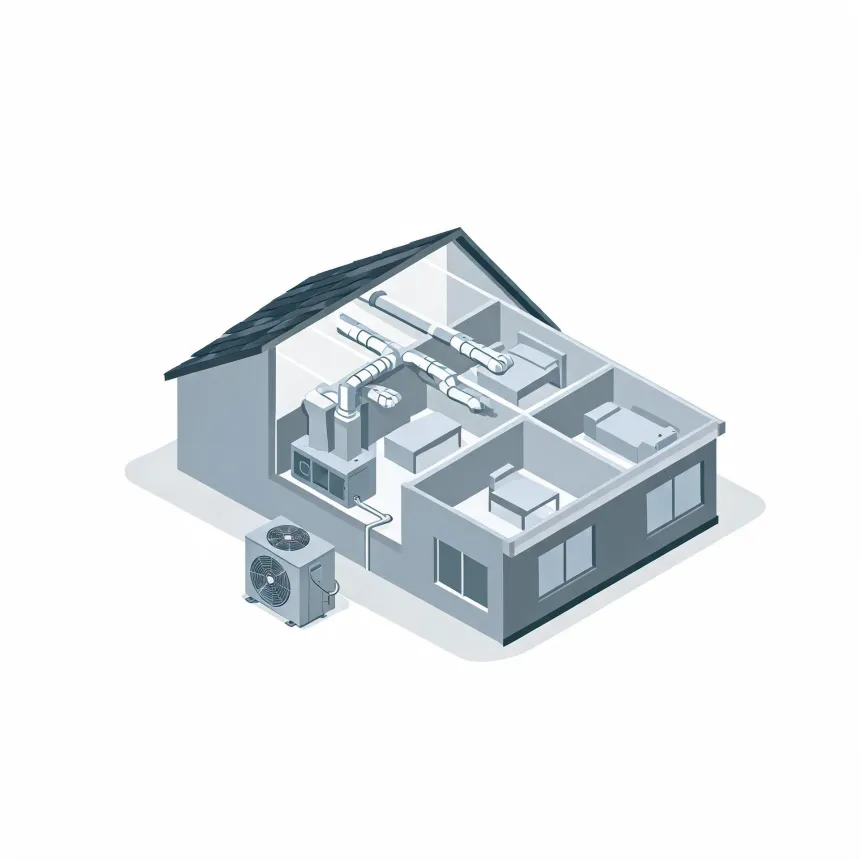
What drives the price of a heat pump install is everything beyond the unit itself. Pulling a furnace and putting in an air handler or coil usually means running new refrigerant lines, since a furnace never needed them. If the electrical panel doesn't have the capacity or the right breaker for a heat pump, that's an upgrade before the unit goes in. Ductwork gets checked too, not because the heat pump works harder, but because a system sized for a furnace needs to be confirmed as right for a heat pump's airflow. Whether it's a straight swap or a dual-fuel setup that keeps the furnace as backup changes the labor, since the furnace has to stay wired into the system instead of coming out. None of that shows up on the unit's price tag, but it's where the real cost of the job sits.
Install day starts with taking the old equipment out, and that part takes longer than most people expect. A contractor disconnects the furnace or AC, drains any refrigerant lines, and clears the space before anything new goes in. The outdoor unit gets set on a pad and leveled. A heat pump that sits unlevel can wear its compressor unevenly over time. Inside, the air handler or coil takes the furnace's place, tied into the same ducts if those are staying. Refrigerant lines get run and pressure tested for leaks before anyone charges the system. The electrical gets its own breaker, and the condensate drain gets checked to make sure it slopes toward the drain instead of pooling. Once everything is connected, the unit runs through both heating and cooling so the installer can check the temperature at the vents and confirm the charge is right. That check matters more for a heat pump than it did for the furnace it replaced. A system that's undercharged or overcharged won't show it right away. It just runs worse all year.