






A row of dark-sided single-story cottages with brown shingled gable roofs behind trimmed hedges, mown lawn and a light-colored path, surrounded by large deciduous trees under an overcast sky.

Heat Pump Installation in Lafayette, IN

Tell us about the job

Takes about a minute. No obligation.

New system or replacementHeat PumpTippecanoe County, IN
Step 1 of 2

What ZIP code is the job in?

Electricity in Tippecanoe County ran 15.37 cents per kilowatt-hour in 2025. A heat pump runs on electricity both to heat the house and to cool it, so every degree it moves costs something on that meter. Summer air here carries real weight, with the dew point averaging 64°F across June, July and August, and a system has to wring that moisture out before the house feels dry. A unit sized and installed to handle that load without straining uses less power doing it than one that's undersized or worn down. Where a heat pump falls on efficiency shows up on the electric bill before it shows up anywhere else.

8 months
October through May, your system heats
3 months
June through August, it cools
21°F
the average winter night it heats against
83°F
the average summer afternoon it cools against
Isometric line illustration of a cutaway house showing interior rooms with furniture, ceiling ductwork, and an outdoor condenser unit connected by lines along the exterior wall.
Your system heats October through May and cools June through August.

NOAA nClimDiv, 1991–2020 normals

The old system has to come out before the new one goes in, refrigerant recovered and the line set drained.

Whatever gets left behind, a bad duct connection or a thermostat wire that doesn't match up, becomes the new system's problem.

Eight months of heat, three of cooling, and not much time where this machine gets to rest

Cooling runs June through August
Heat runs October through May
83 damaging wind events from 2015 to 2024
Most Of This County Heats With GasUtility gas heats 54 percent of homes here, electricity heats 37.1 percent, and a heat pump changes which side of that line a house falls on.

Tippecanoe County falls under zone 5A in the 2021 energy code, a cool zone where the heating load outweighs the cooling load. Any split-system heat pump installed here has to meet the federal minimums for units built from 2023 onward: at least 14.3 Btu of cooling delivered for every watt-hour it draws over the summer, and at least 7.5 Btu of heating for every watt-hour over the winter. That's the floor, not a target, so a contractor can't legally install something that falls short of it. Units sold today are built to clear that bar, but they clear it by different margins, and the margin is what a buyer is actually choosing between.

What Gets Decided At Installation Shows Up On Every Bill After

The margin a heat pump clears above the federal minimum is the margin paid for on every electric bill after. That margin gets set once, at installation, by the sizing and the setup work. Get it right now and the system keeps paying that back all year.

Find a contractor
A man in a cap and brown jacket, seen from behind, climbs porch steps toward a blue front door while carrying a canvas tool bag, with a potted shrub in a blue planter beside him.
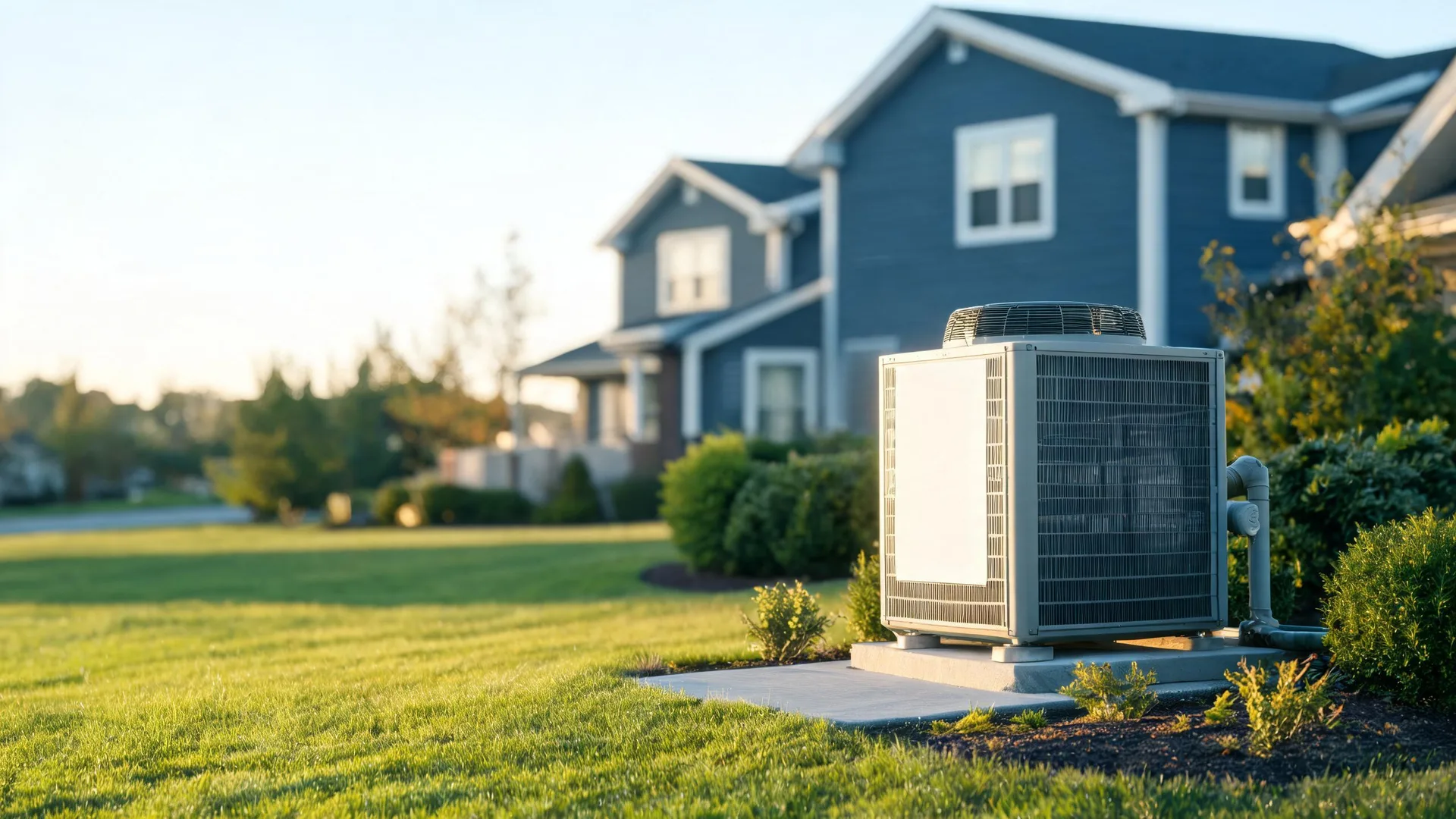
A gray heat pump outdoor unit mounted on a concrete pad next to a residential house with lap siding and stone accents.

The Number On The Label Is A Ceiling, Not A Guarantee

The rating on the label gets measured a specific way. A testing lab runs the unit through a range of outdoor temperatures, not just one mild afternoon, and averages what it draws against what it delivers over that whole range. So the number is already an average before it ever reaches your house. Two units with the same rating can still behave differently once installed, because the rating assumes correct charge, correct airflow, and ductwork that isn't fighting the system. Low refrigerant knocks the real efficiency down from day one. A coil that's been left dirty does the same, since the system has to run longer to move the same heat. None of that shows up on the label. The label tells you what the equipment is capable of under test conditions. What you actually get depends on whether the installation lets it get there.

Size Drives The Price Before Anything Else Does

A heat pump has to be sized to the house through a load calculation, not picked by the square footage of the one it's replacing. Going bigger costs more up front in equipment and still runs worse, cycling on and off instead of settling into a long, steady run. Going too small means it never stops working. The sizing step is where the real cost of the job gets set, before a single line is run.
The Ductwork Decides What The Install Actually Involves

A heat pump moves more air across the coil than a gas furnace typically does, and existing ductwork was often sized around the old equipment. If the trunk lines and returns can carry that extra airflow, the crew connects the new unit and moves on. If they can't, duct modification becomes part of the job, and that work, not the heat pump itself, is what separates a straightforward installation from a longer one.

Two heat pumps can carry the same rating and still be different machines once you look past the label. Ask what sound level each one runs at, since the outdoor unit sits where you'll hear it and the indoor handler runs for longer stretches than a furnace does. Ask how the system handles low outdoor temperatures, because every heat pump loses capacity as it gets colder outside, and some lean on backup heat sooner than others. Ask what stage the compressor runs, since a single-stage unit is either on at full output or off, while a variable-capacity one can throttle down and hold a steadier temperature. Ask what the warranty actually covers on the compressor versus the rest of the parts, because that's usually where the coverage is thinnest. And ask what happens if the ductwork needs work to carry the airflow this unit is built to move. That answer tells you more about the real job than anything on the spec sheet.

Installation day starts with the old equipment coming out, then moves to setting the new outdoor unit on its pad and the indoor coil or air handler into place. The line set gets run between them, pressure tested, then pulled into a vacuum to clear out any air and moisture before refrigerant ever goes in. That vacuum step matters more with a heat pump than people expect, since any moisture left in the lines turns to acid once the system runs and starts wearing on the compressor from the inside. Once the charge is in, the crew checks it against the manufacturer's numbers for the specific outdoor temperature that day, not just a gauge reading that looks close enough. Airflow gets checked too, balancing what each room's vents are delivering against what the system is designed to push. Then it runs, through a full heating and cooling cycle if the weather allows it, so any problem shows up before the crew leaves rather than on the first cold morning after.