

Can a heat pump keep up here
Winters are the real question in Tippecanoe County, not summers. Heat runs eight months a year here, October through May, and the overnight low averages 21°F across December, January and February. That number matters because a standard heat pump starts falling short of its rated heat below 40°F, and by about 35°F it usually needs backup heat to keep the house warm. The average winter night here is already past both marks.
About 120 nights a year drop to freezing or below, roughly half the nights across the whole heating season. On every one of those nights, a standard heat pump is working below the point where it puts out its full rated heat. That does not mean it stops. It means it is leaning on backup heat, usually electric resistance, to make up the difference, and that backup heat costs more to run than the heat pump itself.
The nights that reach 0°F or below are few, about 7 a year. A field test of cold-climate heat pumps in occupied homes found that backup heat carried only a small share of the total heat made between 0°F and 35°F, and that running on backup alone was rare above 0°F. So the coldest nights here are not the ones to worry about. It is the much longer stretch of nights at or near freezing, which make up about half the heating season, where a standard heat pump is routinely working under its rating.
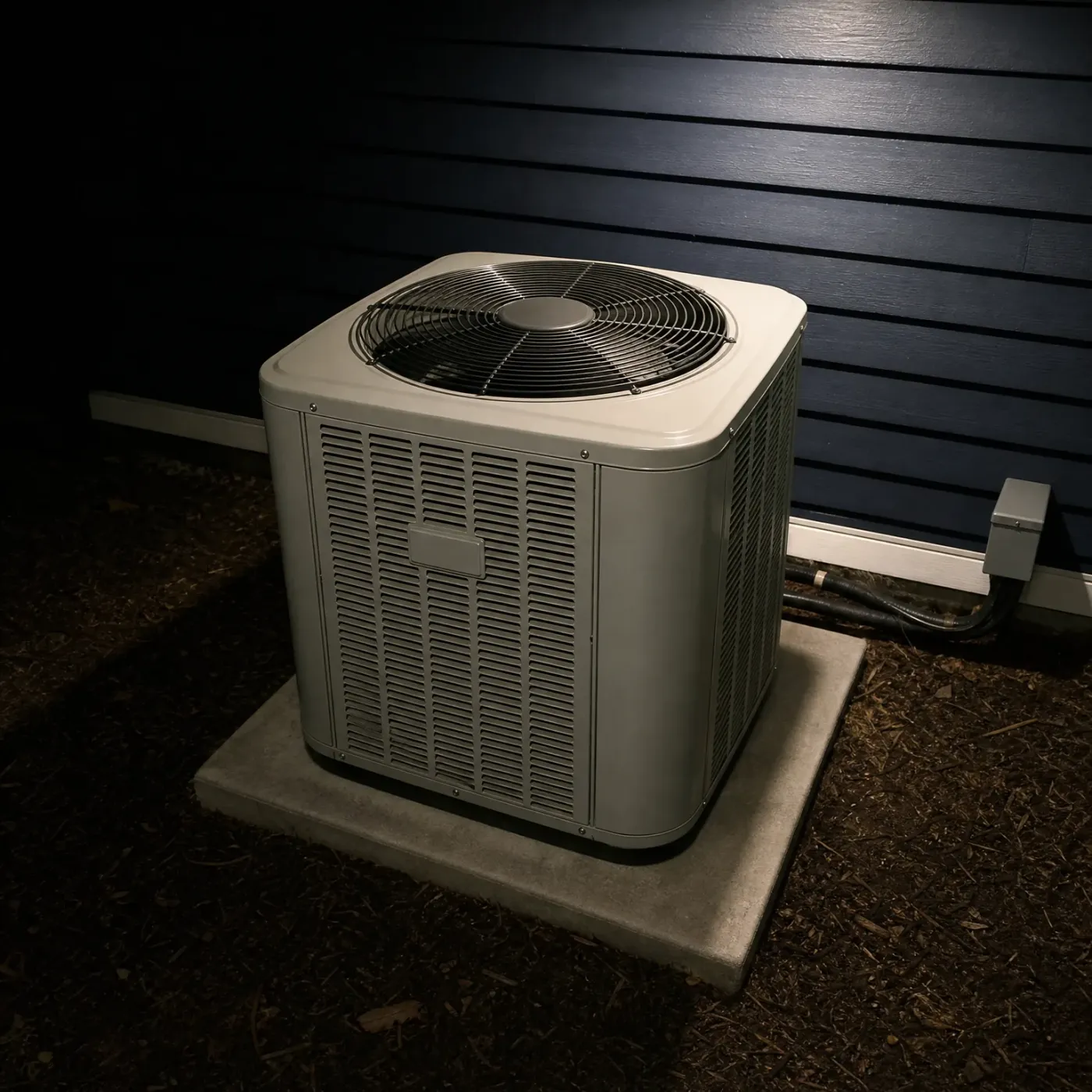
If a heat pump is the choice, the designation to look for is ENERGY STAR Cold Climate. To earn it, a unit has to deliver at least 1.75 units of heat per unit of electricity at 5°F and hold on to 70 percent of its 47°F capacity at that same temperature, verified by outside testing. A standard heat pump built to the federal minimum is not tested to that mark. In a county where half the heating season sits at or below freezing, that difference is not academic.