




A gray forced-air furnace with metal ductwork stands in an unfinished basement with exposed wooden joists, concrete walls, and a single hanging light bulb.

Furnace Installation in Lafayette, IN

Tell us about the job

Takes about a minute. No obligation.

New system or replacementFurnace or heatingTippecanoe County, IN
Step 1 of 2

What ZIP code is the job in?

Most houses in Tippecanoe County heat with utility gas, better than half of them. Electricity comes in second, and propane covers a small slice beyond that, likely homes without a gas line nearby. If your house already has a gas furnace, replacing it with another gas furnace is usually the straightforward path, since the gas line, the vent and the gas meter sizing are already there. A contractor can confirm what your house is set up for and size the new furnace to the space it has to heat.

8 months
October through May, your furnace is on duty
21°F
the average winter night it heats against
54%
of homes here heat with gas, so most furnaces here burn gas
80% AFUE
the federal minimum any new unit must meet
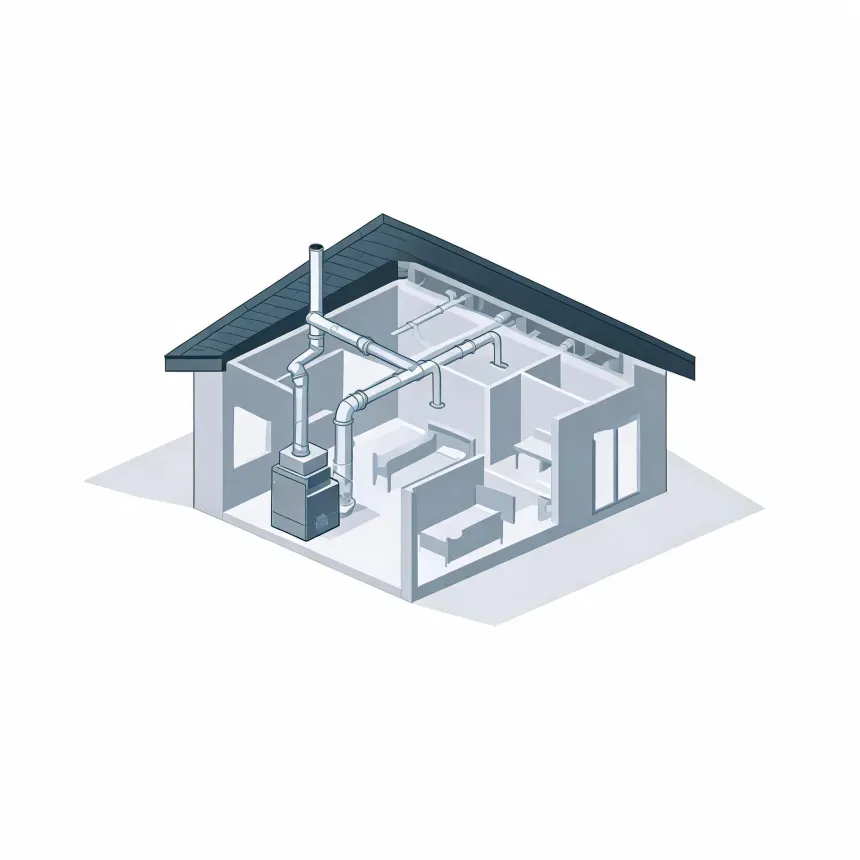
Isometric cutaway illustration of a small single-story house showing interior rooms, a furnace unit with a flue, and connected ductwork running below the dark gabled roof.
Your furnace works hardest from November through March.

NOAA nClimDiv, 1991–2020 normals

Furnaces in Lafayette start running in October and go through May.

Get yours installed in September, before the cold hits and before every installer in town is booked.

A standard furnace sized right is all this county needs

Heat runs October through May
Winter nights average 21°F
Climate zone 5A

Tippecanoe County sees its share of rough weather, including 83 damaging wind events and 26 hail events over the past decade. None of that changes what furnace to put in. Wind, hail and the odd tornado are a building and wiring question, not a furnace question, and a standard unit handles the cold the same way whether the week before was calm or stormy. Power outages are the one thing worth a thought, since a good share of Indiana households lost power for a full day at some point last year, and a gas furnace still needs electricity to run the blower and controls. That's worth asking your contractor about if it matters to you, but it's a battery or generator question, not a reason to size the furnace itself any differently.

Pick the furnace that fits, not the one with the lowest bill

Gas ran $8.99 per million Btu in Indiana last year, on the cheaper side nationally. A high-efficiency furnace will still cost more to install than it saves you in a season. What matters more is a furnace sized to your house and installed by someone who does it right.

Find a contractor
A gray high-efficiency gas furnace installed in an unfinished basement, surrounded by gas lines, a condensate drain, and sheet-metal ductwork.

The label number plays out every time it cycles on

The AFUE number on the label tells you how much of the fuel it burns turns into heat for your house. The rest goes out the vent. A furnace holds to that number on every cycle, all winter, for as long as it runs. One that wastes more heat up the vent has to run longer to reach the same temperature, and that extra runtime wears on an igniter, a blower motor or a heat exchanger ahead of schedule. None of that holds if the furnace is sized wrong for the house or the ducts and venting can't support it. A high rating installed wrong will run worse than a standard furnace installed right.

A furnace too big wastes money and wears out faster

An oversized furnace heats the house too fast, then shuts off before it's pulled the cold out of the walls and furniture. The house feels warm, then drops again, so the furnace short cycles all winter. Every start puts wear on the igniter and the heat exchanger, and short cycling means a lot more starts over a season.

The size comes from a load calculation, not the old furnace's rating

A contractor works out the right size with a heat loss calculation, room by room, using the square footage, the window area, the insulation and how the ducts are laid out. The furnace being replaced isn't the starting point. Plenty of houses have run for years on a furnace that was never sized right for them in the first place.

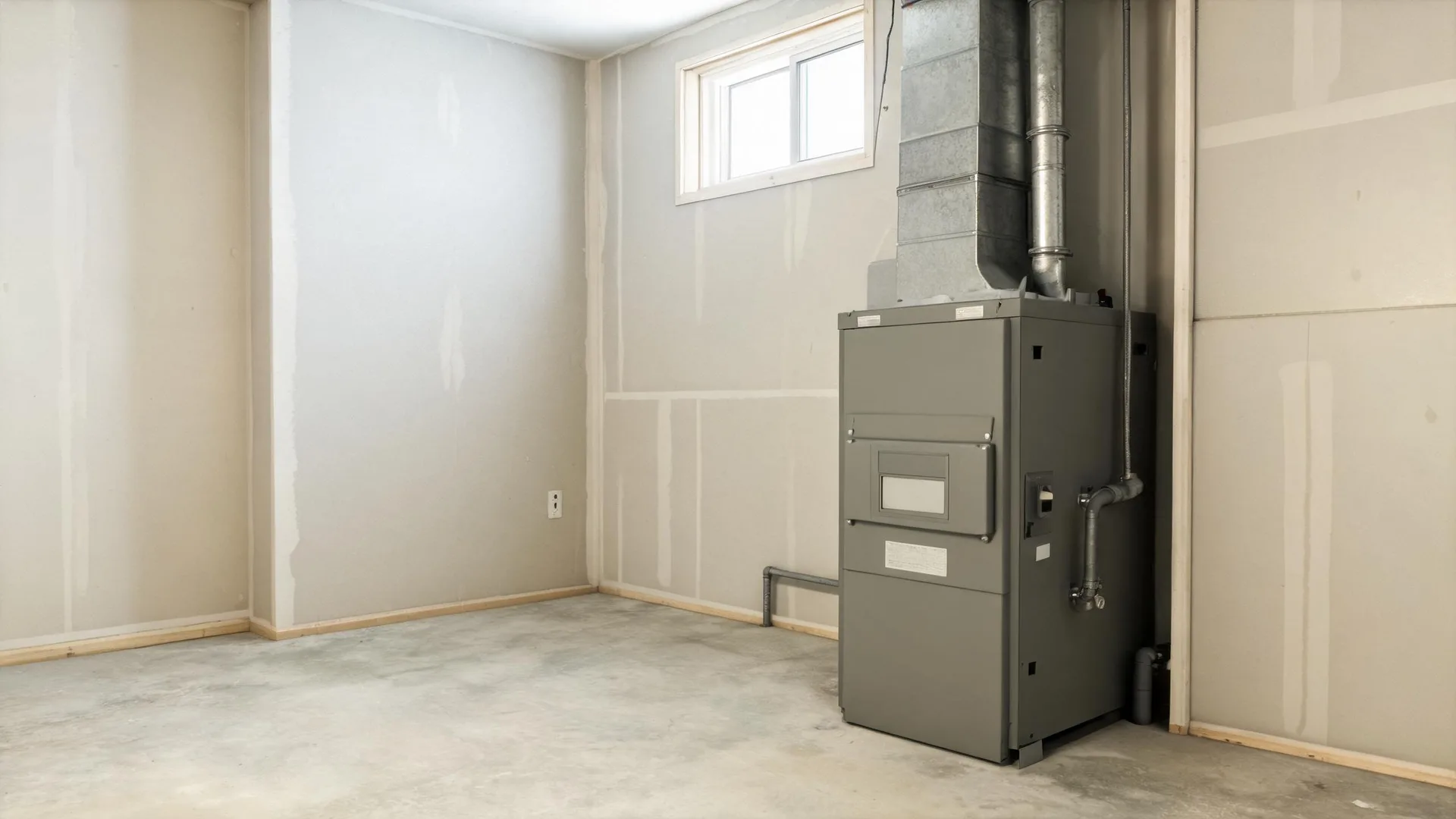
An unfinished basement featuring concrete block walls, exposed floor joists, a bare concrete floor, and a forced-air furnace with a large metal exhaust duct in the corner.

A high-efficiency gas furnace would save about $100 a year to run in Tippecanoe County compared with a gas furnace.

  • A high-efficiency gas furnace$440 a year
  • A gas furnace$540 a year

Estimates for a typical Tippecanoe County home, from EIA household energy data, Indiana fuel prices and NOAA climate normals. Your home will differ.

Install day starts with the old furnace coming out, and that's when a contractor can see things the quote couldn't predict, like a flue that needs a new liner or a gas line that needs a different fitting. The new furnace gets set in place, leveled, and connected to the ducts, the gas line, the vent and the electrical. Every joint in the duct connection gets sealed, since a leaky seam right at the furnace pulls heated air into the attic or basement instead of the house. The vent pipe gets pitched correctly so moisture drains out instead of back toward the furnace. Once it's buttoned up, a contractor runs it through a full cycle, checking the gas pressure, the temperature rise across the heat exchanger and the flame itself, since a flame that looks wrong usually means the gas pressure or the air mixture is off. The last step is carbon monoxide testing at the furnace and anywhere it could leak into the house, not a step worth skipping.