A quiet residential street at dusk lined with illuminated two-story brick houses and mature trees.

Furnace Repair in Lafayette, IN

Tell us about the job

Takes about a minute. No obligation.

RepairFurnace or heatingTippecanoe County, IN
Step 1 of 2

What ZIP code is the job in?

Eight months of real work

Furnaces in Tippecanoe County run from October through May. Overnight lows average 21°F in December, January and February. That's a long stretch where the igniter, blower motor and flame sensor all have to work every night without a break.

Same machine, usual failures

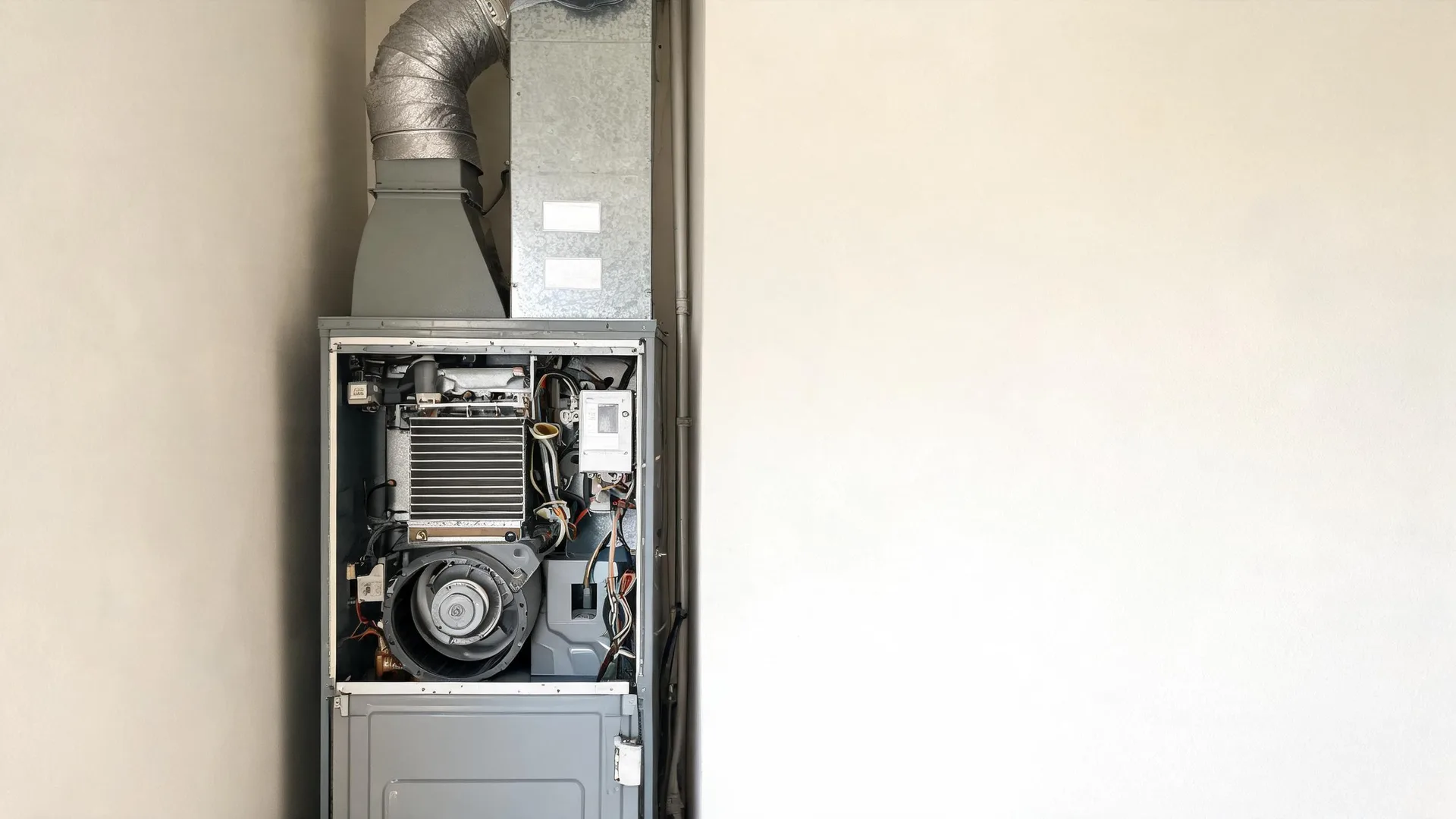
Nothing about winters here pushes a furnace past what it's built for. When one quits or starts short cycling, the cause is almost always something ordinary. A failed igniter. A flame sensor coated in residue. A filter so clogged the system can't pull air through it. Finding which one it is and fixing that part is the job.

8 months
October through May, your furnace is on duty
21°F
the average winter night it heats against
54%
of homes here heat with gas, so most furnaces here burn gas
10 winter storms
in ten years, the nights a failure hurts most
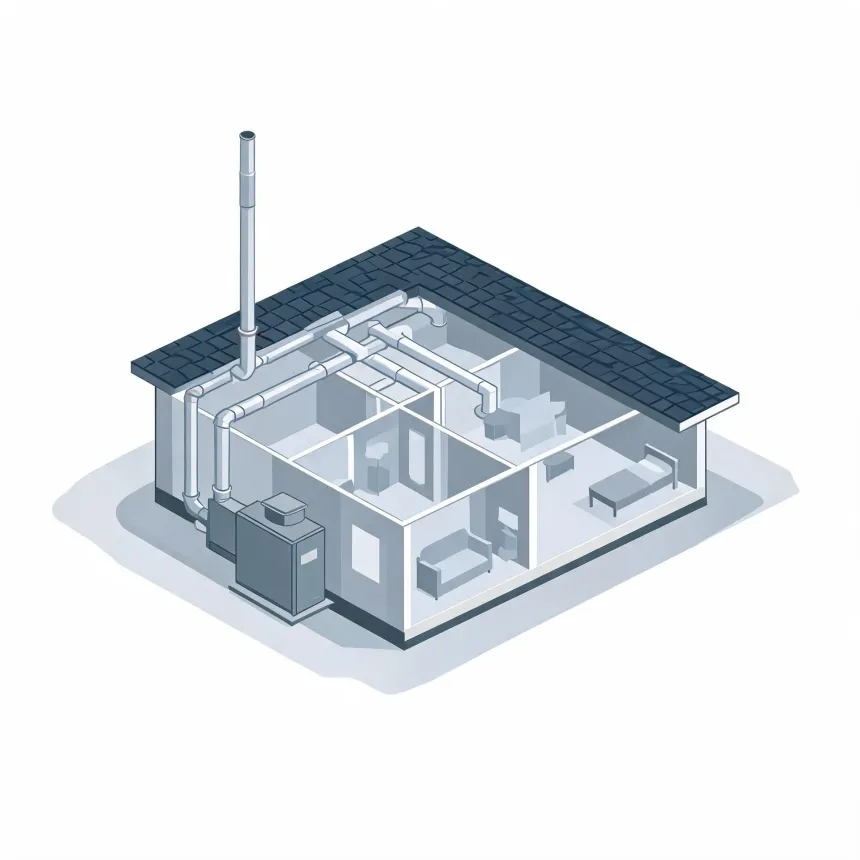
Isometric cutaway illustration of a single-story house with a dark shingled roof, showing interior rooms with furniture, a ducted air distribution system, a tall vertical flue pipe, and a gray furnace unit outside the wall.
Your furnace works hardest from November through March.

NOAA nClimDiv, 1991–2020 normals

A furnace with a failing part doesn't shut itself off. It keeps firing the burners and running the blower, trying to finish the cycle anyway.

A dirty flame sensor left alone can run the furnace hot enough to crack the heat exchanger. A clogged filter left alone can run the blower until its bearings seize. The part that started the problem is rarely the only one you end up paying for.

Tippecanoe County gets its share of rough weather. Damaging wind, hail, even the occasional tornado, and winter storms bring heavy snow and ice some years. None of that is aimed at a furnace sitting inside the house. A unit that fails usually fails for the same reason it would anywhere else, a worn igniter or a flame sensor that needs cleaning. Power loss is the one thing worth checking first. Outages long enough to matter happen often enough in Indiana that it's a real question, and a furnace that won't start after one sometimes just needs its switch reset or its breaker checked before anyone calls it broken.

Half these homes were built in 1987 or later. That furnace is worth fixing.

Half the homes in Tippecanoe County were built in 1987 or later. If your furnace came with a newer house, it likely still has plenty of working life left. A worn igniter or a dirty flame sensor doesn't mean the system is done, just that one part needs attention.

Find a contractor
A gray residential gas furnace installed in an unfinished basement, surrounded by ductwork, a metal flue pipe, and a gas supply line.

The furnace tells you before it quits

A furnace about to need a repair tells on itself before it quits outright. It short cycles, running a couple minutes and shutting off before the house warms up, because the flame sensor isn't reading a steady flame anymore. It clicks and clicks at the igniter without catching, or catches late with a soft thump when the burners finally light. The blower might keep running after the burners shut off, or run almost constantly, because the limit switch isn't telling it when to stop. Air coming out the vents cooler than it should be usually means the burners aren't getting a full light, not that the furnace is broken outright. A burning dust smell at the start of a cycle is normal once. If it lingers every time, something's overheating. None of these mean the furnace is finished. They mean a part is failing and the rest of the system is still trying to work around it.

Most failures are wear, not breakage

An igniter doesn't last forever. It heats up and cools down every cycle, and eventually the material just gives out, the same way a light bulb filament does. A flame sensor doesn't break, it just gets a coating of residue on it from normal combustion until it can't sense the flame anymore. Neither one is a sign anything was done wrong.

Some failures are really a different part acting up

A limit switch rarely stops working on its own. Most of the time it's reacting to something else, like poor airflow from a clogged filter making the furnace run hotter than it should. A blower motor usually gives plenty of warning too, running noisy or slow for a while as its bearings wear before it finally quits. Finding the part that's actually worn, instead of the one just reacting to it, is most of the job.

An unfinished basement containing a forced-air furnace with metal ductwork, exposed wooden ceiling joists, a hanging Edison bulb, and bare concrete floors.

A new furnace would cut about $110 a year off heating for a typical Tippecanoe County home.

  • A new high-efficiency furnace$440 a year
  • An older furnace$550 a year

Estimates for a typical Tippecanoe County home, compared with an older unit built to the previous federal minimum, from EIA household energy data, Indiana fuel prices and NOAA climate normals. Your home will differ.

Repair makes sense when one part has failed and the heat exchanger is sound.

Replacement makes sense when the heat exchanger is cracked or the furnace keeps needing parts.

A furnace is a collection of parts with different lifespans, and most repair calls only involve one of them. That's the first thing worth knowing before deciding whether a repair makes sense. An igniter or flame sensor failing in an otherwise sound furnace is a small job, and fixing it is the right call almost every time. The harder question comes up when the heat exchanger cracks or the blower motor's bearings finally seize after years of running noisy. At that point you're not patching a worn part, you're looking at what the rest of the furnace has left in it. A tech can tell you which situation you're in by looking at what else shows wear. A furnace that's been maintained, filters changed, nothing ignored, tends to fail one part at a time, and each one is worth fixing on its own. One that's been neglected tends to fail in a cluster, because one worn part has been quietly stressing the others for a while.