A quiet residential street at dusk lined with illuminated two-story brick houses and mature trees.

Heat Pump Repair in Lafayette, IN

Tell us about the job

Takes about a minute. No obligation.

RepairHeat PumpTippecanoe County, IN
Step 1 of 2

What ZIP code is the job in?

Heat pumps work year-round here

A heat pump in Tippecanoe County switches to heat in October and runs through May, then switches back to cooling in June through August. That's most of the year on one machine, with only brief breaks at each changeover.


Trouble shows up right at the switch

May and September are the months to watch. That's when the system shifts modes and asks something of parts that sat idle, and a weak part tends to fail right then instead of holding on quietly.

8 months
October through May, your system heats
3 months
June through August, it cools
21°F
the average winter night it heats against
83°F
the average summer afternoon it cools against
Isometric cutaway illustration of a single-story house showing interior rooms, ceiling ductwork, an indoor air handler, and an outdoor condenser unit connected by lines on the ground.
Your system heats October through May and cools June through August.

NOAA nClimDiv, 1991–2020 normals

Zone 5A means Tippecanoe County asks more of a heat pump's heating side than its cooling side.

A heat pump here fails for the same reasons it fails anywhere. Find the actual cause and fix that.

Weather here is unremarkable for a heat pump

126 severe weather events from 2015 to 2024
17% of homes statewide lost power a day or more in 2024
83 damaging wind events from 2015 to 2024

Half the homes in Tippecanoe County were built in 1987 or later. If yours is one of them, the heat pump may not be original to the house, and even if it is, a system that age usually still has working life left. Age by itself rarely explains a breakdown. What fails is almost always one part: a contactor, a capacitor, a sensor, a low charge. That's true whether the house is older or newer. A repair call is about finding that part, not about writing off the system because of its age.

A heat pump running wrong costs you every month it stays that way

Electricity here runs 15.37 cents per kilowatt-hour, and a heat pump that's running on a weak part doesn't use less power because it's struggling. It uses more, trying to do a job it can't finish. A system short on charge or working off a failing sensor will run longer to reach the same temperature, and every one of those extra hours shows up on the bill at that rate.

Find a contractor
A man in a cap, dark t-shirt and work trousers carries a canvas tool bag up porch steps toward a blue front door, with a tall planter and shrub beside the entry.
A dark gray heat pump unit mounted on a concrete pad next to a house with gray siding and a stone veneer wall.

Time tells you less than the part that's actually failing

A heat pump doesn't rack up age from one hard season. It racks up hours, year after year of switching between heat and cooling. If yours came with a newer build here, it hasn't put in the hours that wear a system down yet. That's worth knowing before you decide whether a repair is worth it. A technician can tell you more once they're there: what year it was made, what shape the parts are in, whether anything's been swapped already. None of that shows up by guessing at the house's age.

The reversing valve is the part unique to this machine

A heat pump has one part a furnace or straight air conditioner doesn't: the reversing valve. It's what lets the system switch between heat and cooling. When it sticks, the system can get stuck blowing cold air in winter or warm air in summer, running in the wrong direction entirely. A solenoid on top of the valve controls the switch, and that solenoid is a common failure point on its own.

Everything else fails the way any AC or furnace does

Past the reversing valve, a heat pump breaks down for the same reasons as any AC system. A capacitor weakens and can't start the compressor or the fan motor. A contactor pits and stops closing reliably. The refrigerant charge drops because of a slow leak, and the system loses capacity before it loses cooling or heat entirely. A dirty outdoor coil can't give up or pull in heat the way it needs to. None of that is specific to heat pumps.

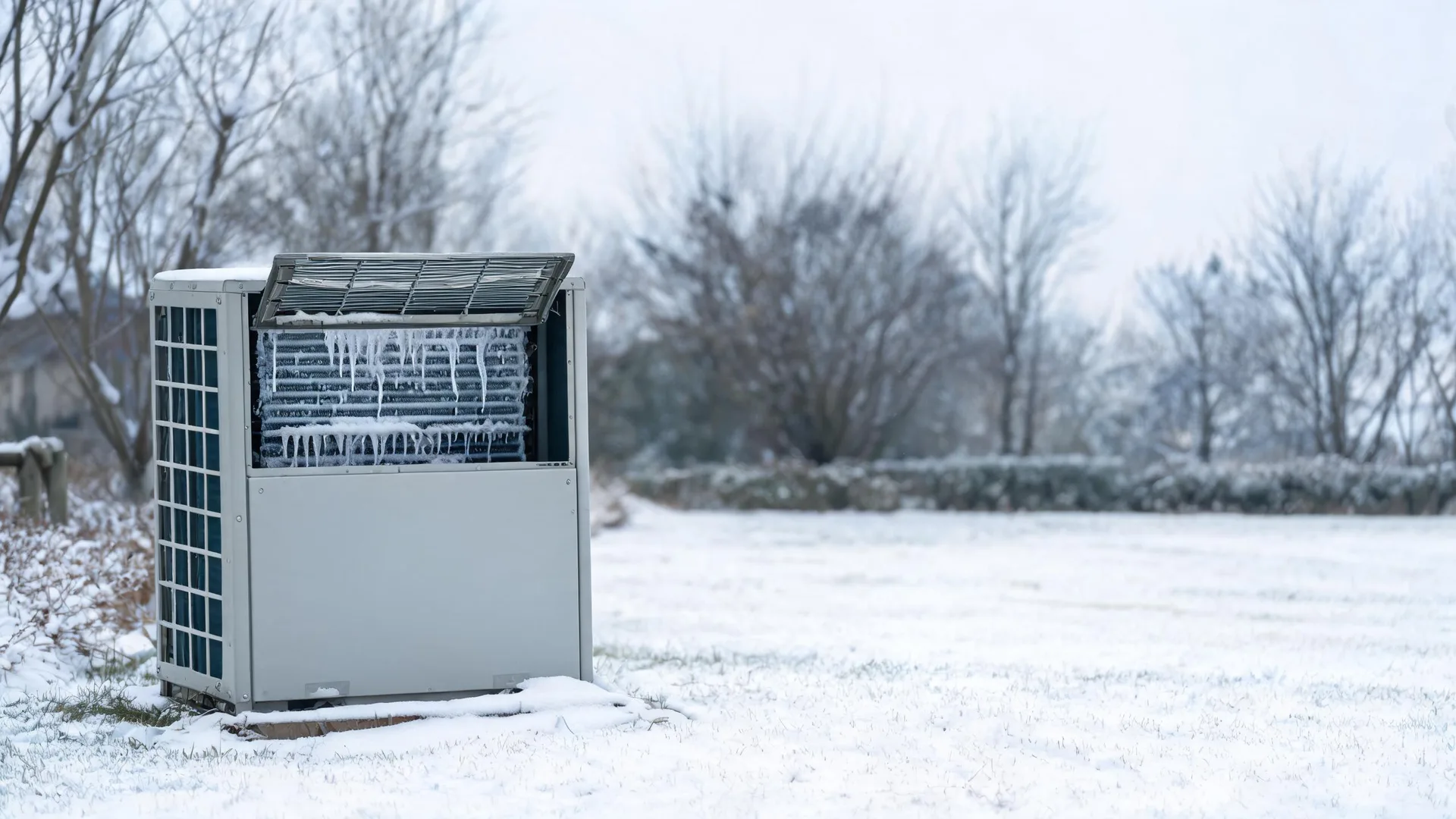
Most heat pump problems announce themselves before the system quits outright. Air coming out lukewarm instead of hot is one of the first signs, especially if the unit runs longer than it used to without getting the house to temperature. Ice building up on the outdoor unit and not clearing during the defrost cycle points to a stuck reversing valve or a failing defrost control. A system that short cycles, turning on and off in quick bursts, is usually struggling with a weak capacitor or a contactor that isn't holding. Listen for it too. A hard clunk when the system switches between heat and cooling can mean the reversing valve itself is going. Any of these is worth a call before the part it's straining gives out completely.

A weak part doesn't wait for a convenient time to fail, and it doesn't get cheaper to ignore while you wait. If the air's coming out lukewarm or the system runs longer than it used to, that's extra hours on the power bill right now, not just a sign of trouble later. Waiting doesn't give a struggling capacitor or a low charge a chance to fix itself. It just means more hours of a system working harder than it should to get the house to temperature. Getting a technician out as soon as you notice the problem is what stops that from adding up month after month.