






Three lit brick homes on a tree-lined residential street photographed at dusk.

Heat Pump Installation in Warsaw, IN

Tell us about the job

Takes about a minute. No obligation.

New system or replacementHeat PumpKosciusko County, IN
Step 1 of 2

What ZIP code is the job in?

Electricity in Kosciusko County runs 17.27 cents per kilowatt-hour on average, higher than most of the country pays. A heat pump moves heat instead of burning fuel for it, so it draws on that electric rate every time it runs. That makes the efficiency rating on the unit itself worth real attention here. Two systems that cost the same to install can run up different bills once the rate per kilowatt-hour is this high. Where the power is cheap, a less efficient unit barely shows up on the bill. Here, it does.

8 months
October through May, your system heats
3 months
June through August, it cools
20°F
the average winter night it heats against
82°F
the average summer afternoon it cools against
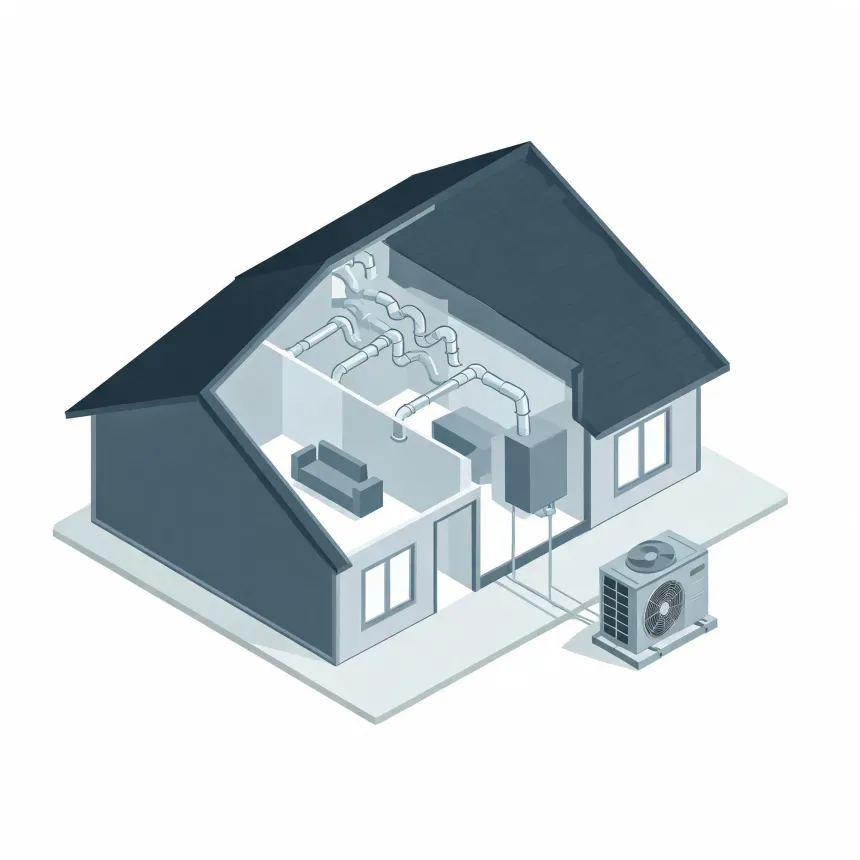
Isometric cutaway illustration of a house showing interior ductwork, an indoor air handler unit, and an outdoor condenser unit beside the building.
Your system heats October through May and cools June through August.

NOAA nClimDiv, 1991–2020 normals

Gas heats 65.6% of the homes in Kosciusko County.

A heat pump replacing a gas furnace is still new ground here, so sizing it right against the ductwork and the gas backup matters more than matching what was already in the house.

May and September are the months to get this done, not June and October

Cooling runs June through August
Heat runs October through May
Climate zone 5A
Here, the heat pump works less than it does almost anywhere elseHeating carries the load in zone 5A, and a heat pump here is not fighting summer humidity the way the dew point might suggest.

Kosciusko County falls under zone 5A in the 2021 energy code, a cool zone where the heating load counts for more than the cooling load does. Any split-system heat pump installed here, if built from 2023 on, has to clear federal minimums either way: at least 14.3 Btu of heat moved per watt-hour of electricity over the summer, and at least 7.5 Btu per watt-hour over the winter. That second number carries more weight in a zone like this one, since the unit will lean on heating mode more months than it leans on cooling. Buying above those minimums is an option. Buying below them is not, for anything made today. A federal tax credit is available on qualifying equipment, on top of whatever the unit saves on the power bill.

Check the efficiency rating before you pick the system

The efficiency rating on the unit decides what the next several winters and summers cost to run, more here than in places where power is cheaper. That number is worth settling before anything else about the install.

Find a contractor
A man in a cap, dark long-sleeved shirt and brown work pants carries a canvas tool bag up porch steps toward a blue front door, with a shrub in a blue planter beside it.
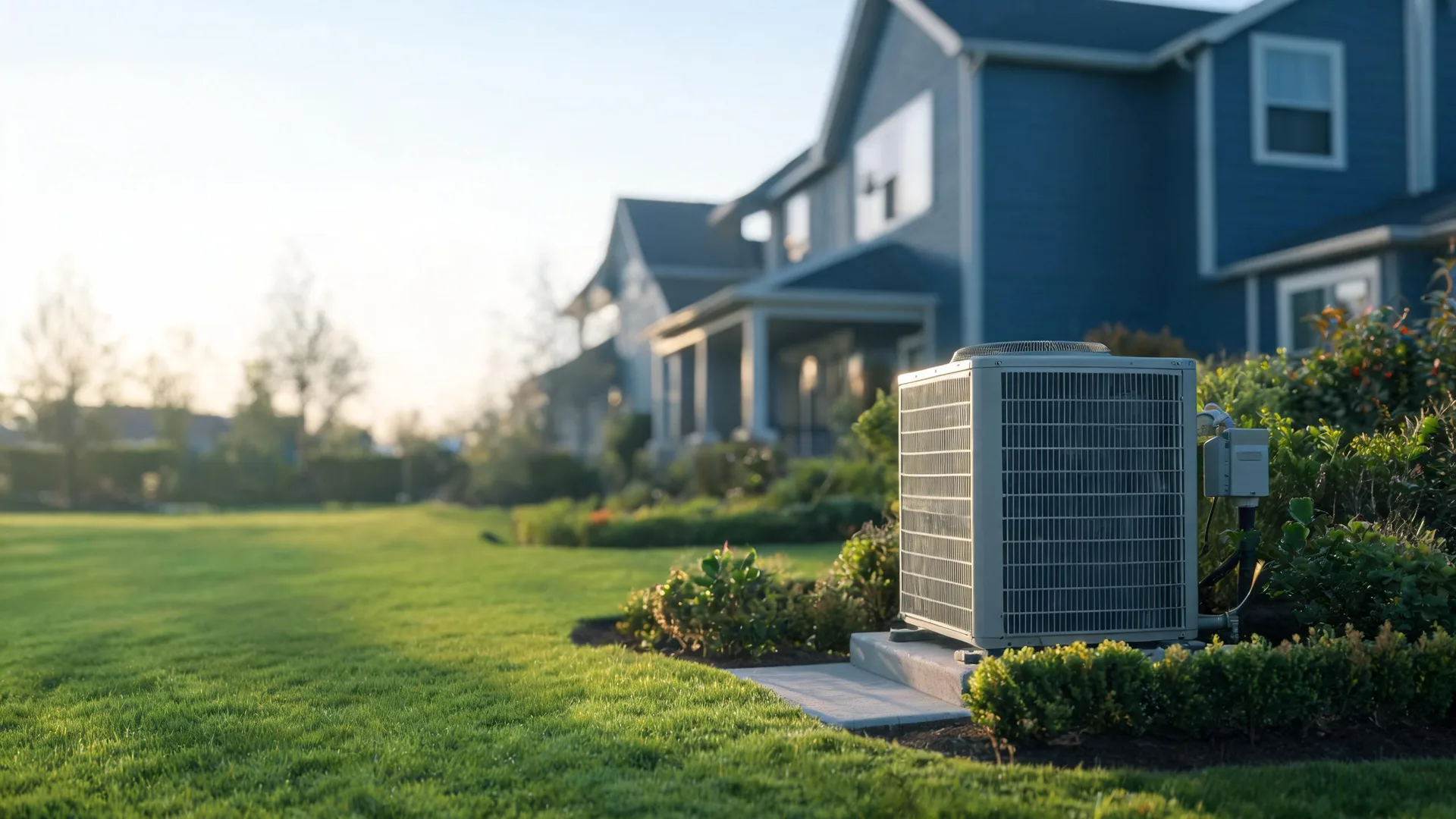
A white mini-split heat pump outdoor unit mounted on a concrete pad beside a gray-sided house, surrounded by gravel and green shrubs.

The old equipment doesn't get left behind

Whatever is running now gets disconnected, not left in place as a backup. Mixing an old furnace or air conditioner into a new heat pump setup almost never works cleanly, since the controls, the refrigerant, and in some cases the ductwork were never meant to share a system. The outdoor unit comes off its pad, the indoor coil or air handler comes out, and the refrigerant lines get reclaimed rather than cut open and vented, since letting refrigerant out is both wasteful and against code. Copper lines sometimes get reused if they're in good shape and sized right for the new system, but just as often they're replaced along with everything else. The electrical circuit feeding the old equipment gets evaluated too. A heat pump draws differently than a straight air conditioner or a furnace did, so that old breaker and wiring either get reused as is or get swapped for something sized to the new load. None of this is a reason to delay a decision. It's a normal part of swapping one system for another, and a contractor handles the disposal along with the install.

Two numbers on one label

A heat pump carries two ratings, not one: a cooling number and a heating number. Most buyers look at one and assume it covers the whole machine. It doesn't. A unit can rate high for cooling and only middling for heating, or the other way around. Whichever mode this machine runs in most, that's the number to weigh heaviest, because that's the one the house will actually live with.
The rating assumes it's sized right

That efficiency number gets tested at a specific capacity, matched to a specific load. Put a unit too big or too small for the house, and it stops running the way the label promised. Oversized, it short-cycles, switching on and off before it settles into steady operation, which is where the efficiency gain actually happens. Undersized, it runs constantly just to keep up, which wears on it the same way. The rating only means what it says when the sizing is done right first.

Sizing a heat pump starts with a load calculation, not a tape measure of the old equipment. A contractor works out how much heat the house loses on the coldest day and how much it gains on the hottest, room by room, based on insulation, window area, and duct layout. That number, not the size of the furnace it's replacing, is what the new unit gets matched to. Skip that step and guesswork takes over, usually toward oversizing, because a bigger unit feels like a safer bet. It isn't. A unit too large for the load blasts the house to temperature and shuts off, then does it again a few minutes later, never running long enough to pull moisture out of the air or settle into its most efficient stretch. A unit too small never shuts off at all, straining to close a gap it can't close on the coldest or hottest days. Either way, the equipment wears against itself. The right size is the one that runs long, steady cycles, not the one with the biggest number on the box.

Install day starts with the equipment already sized, so the crew is placing it, not figuring it out on the spot. The outdoor unit goes on a pad or mounted bracket, leveled, with clearance on all sides for airflow. Refrigerant lines run between the outdoor unit and the indoor coil, and those joints get brazed, then pressure tested before anything is charged, to catch a leak before it's buried in a wall. The line set gets evacuated to pull out moisture and air, since either one left behind ruins efficiency and can damage the compressor over time. Electrical work ties in a dedicated circuit sized to the unit's draw, with its own disconnect nearby. Once everything is connected, the system gets charged to the exact weight the manufacturer specifies, not just run until it feels cold. The last step is commissioning: checking airflow across the indoor coil, confirming refrigerant pressures match the charts for the outdoor temperature that day, and testing the thermostat through both heating and cooling calls before anyone leaves.