A row of illuminated two-story brick houses with front porches and mature trees photographed at twilight.

Heat Pump Repair in Auburn, IN

Tell us about the job

Takes about a minute. No obligation.

RepairHeat PumpDeKalb County, IN
Step 1 of 2

What ZIP code is the job in?

Winters here ask more of a heat pump than summers do

DeKalb County sits in zone 5A, where heating carries the bigger load and nights average 20°F through December, January and February. A heat pump here works harder pulling warmth out of cold air than it does cooling the house in summer.


That load wears a system down slowly, not suddenly

A heat pump that's been through a few winters here has done honest, steady work, not been pushed past what it's built for. When one starts acting up, the cause is more likely age or a part that's worn out than damage from strain, which is usually the kind of problem worth fixing.

8 months
October through May, your system heats
3 months
June through August, it cools
20°F
the average winter night it heats against
82°F
the average summer afternoon it cools against
Isometric illustration of a cutaway single-story house showing interior ductwork and vents connected to an outdoor condenser unit beside the building, on a white background.
Your system heats October through May and cools June through August.

NOAA nClimDiv, 1991–2020 normals

Check the outdoor unit before you call anyone

Clear away leaves, snow or anything blocking it, and see if the fan is actually spinning

Power here costs 14.77 cents a kilowatt-hour, so a heat pump running wrong costs you every month

Power costs 14.77 cents a kWh statewide
38 damaging wind events from 2015 to 2024
18 hail events from 2015 to 2024

Half the homes in DeKalb County were built in 1975 or earlier, and half in 1975 or later. That split doesn't point to any one cause when a heat pump quits. An older house might still have its original ductwork, or it might have been fully redone, and the same goes for one built more recently. What matters more is the equipment itself. Heat pumps wear out from age and from parts failing on their own, not from the house around them. If your system came with the house, that's worth checking against what's gone wrong. Either way, the fix comes from finding the actual part that failed, not from guessing based on the year the house went up.

A heat pump that's held up through winters here is usually worth repairing

Get the actual part diagnosed and fixed rather than planning around a replacement. A heat pump that's made it through its share of winters here has been doing steady work, not getting pushed past what it's built for, so age or a single worn part is the more likely cause.

Find a contractor
A gray heat pump outdoor unit mounted on a concrete pad next to the stone-accented exterior wall of a house.

Hours add up. Parts wear out one at a time.

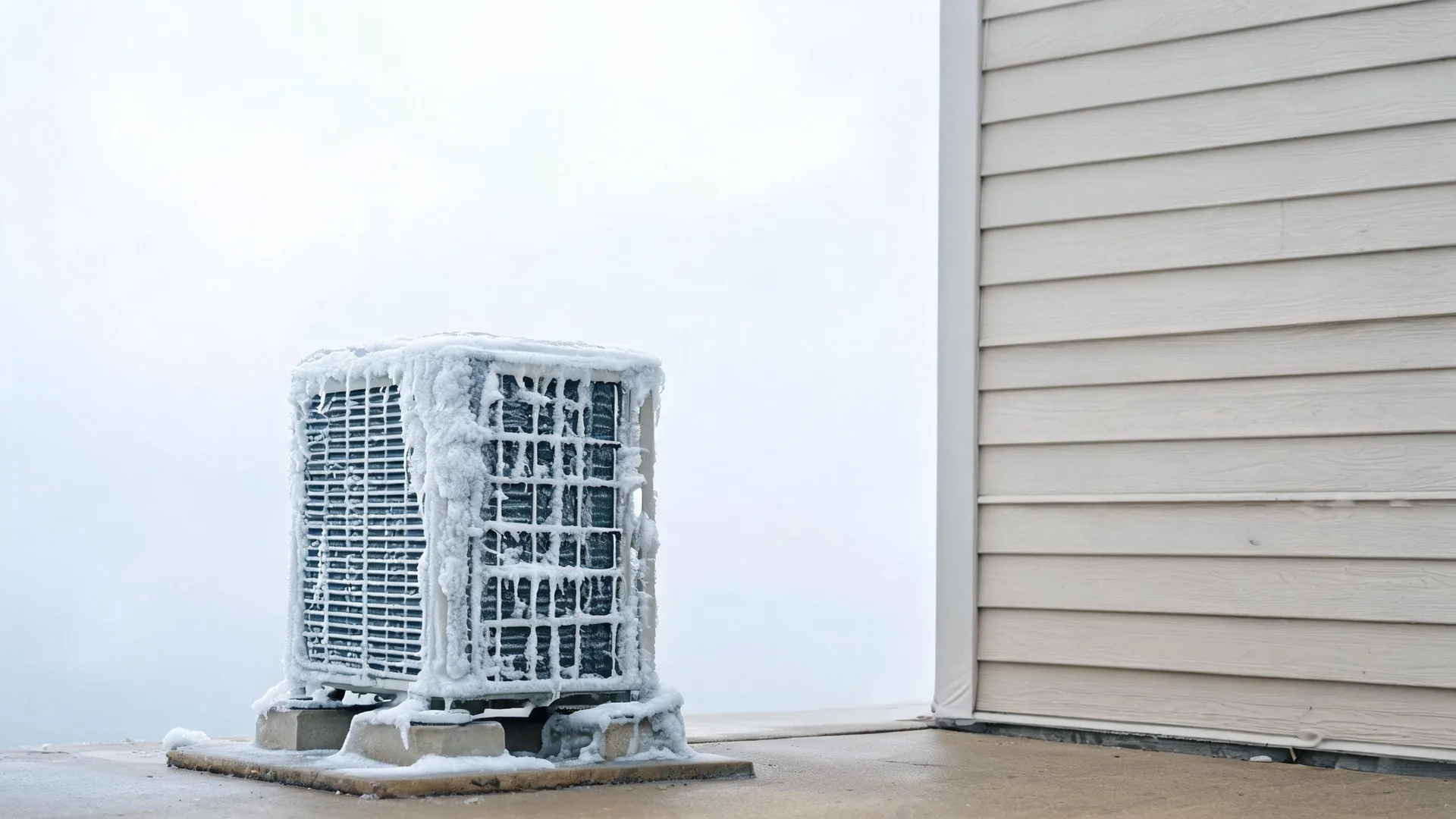
A heat pump runs most of the year, not just a few weeks in summer or winter, and that steady use shows up as wear on specific parts rather than sudden breakdown. The reversing valve can start sticking, so the system blows cold air when it should heat or won't switch back once the weather turns warm. A contactor or capacitor wears down from cycling on and off, and when one goes, the outdoor unit hums but the fan won't spin, or the whole unit stays silent. Ice building up on the outdoor coil and not clearing during the defrost cycle points to a failing defrost control board or a low refrigerant charge. If the system runs long stretches without reaching the set temperature, or it shuts off shortly after starting up, that's a part giving out, not the system working the way it should. None of this means the unit is done. It means something specific inside it has worn past its limit and needs to be found.

Running a fault doesn't wear it in, it spreads it

A sticking reversing valve left alone can carbon up further and stop switching at all. A compressor forced to run with a low refrigerant charge starts overheating, and that's the one part in a heat pump worth protecting most, since a failed compressor usually means replacing the outdoor unit rather than a part.

Ice and short cycling feed on themselves

Ice on the outdoor coil blocks airflow, so the unit runs longer to do less, and that extra runtime lets more ice build before the defrost cycle can catch up. A system that shuts off early and restarts over and over puts a hard start on the compressor each time, and that's the wear that turns a thermostat or sensor problem into a compressor replacement.

Most heat pump failures trace back to a handful of parts, and they tend to fail in the same order. The contactor and capacitor go first, since they're the parts cycling every time the system starts and stops, and a worn one leaves the outdoor fan not spinning or the unit silent. The reversing valve fails next, usually from carbon buildup after years of switching between heating and cooling, and once it sticks, the system can't change modes even if everything else works. The defrost control board tends to go after that, letting ice sit on the outdoor coil instead of clearing it on schedule. The compressor fails last, and almost always because something upstream was already broken and left to run anyway. Caught early, any of these is a part replacement. Left running, each one tends to take something else down with it.

A diagnostic visit starts outside at the unit itself. A tech checks the fan, the coil, and whether the system actually switches between heating and cooling when asked to. Readings come next. Refrigerant pressure, the electrical draw on the compressor, whether the contactor and capacitor are holding up under load. Most of this points to one part before any panel comes off. Once that part is confirmed, the tech can say what it takes to fix it and what happens if it's left alone. The visit isn't a guess followed by a repair. It's ruling things out until one explanation is left standing.