






A nighttime view of a tree-lined residential street with illuminated two-story brick houses and street lamps.

Heat Pump Repair in Boonville, IN

Tell us about the job

Takes about a minute. No obligation.

RepairHeat PumpWarrick County, IN
Step 1 of 2

What ZIP code is the job in?

A diagnostic visit starts outside at the unit itself. The tech checks refrigerant pressure, looks at the reversing valve, and watches how the compressor is drawing power. Inside, they check airflow at the vents and look at the indoor coil for ice or dirt buildup. A heat pump that's short cycling, blowing cold air during heating mode, or running nonstop without catching up all point to different problems, so the tech is ruling things out one at a time rather than guessing. Once they find the cause, they'll explain what failed and what it takes to fix it before doing any work.

7 months
October through April, your system heats
5 months
May through September, it cools
27°F
the average winter night it heats against
87°F
the average summer afternoon it cools against
Isometric cutaway illustration of a small house showing interior rooms with furniture, an indoor air handler with ductwork, and lines running to an outdoor condenser unit beside the building.
Your system heats October through April and cools May through September.

NOAA nClimDiv, 1991–2020 normals

Boonville sits in a mixed climate, real winters and real summers, that's what a heat pump here is built for.

So when one breaks down, it's usually a normal part failure, not something the weather did to it.

Boonville doesn't stress a heat pump more than anywhere else, so look for the part that failed

Power costs 14.77 cents a kWh statewide
Climate zone 4A
Cooling runs May through September

Half the homes in Warrick County were built in 1986 or later. If that includes yours, the heat pump giving you trouble may not be original to the house. Newer equipment still has plenty of working life in it, and a single failed part doesn't change that. Worth finding out from the contractor what's actually gone wrong before deciding it's time to replace anything.

Find out what broke before you decide to replace it

Get a contractor out to find the failed part before you plan on replacing the system.

Find a contractor
A man in a cap, dark shirt and tan work pants, seen from behind, carries a canvas tool bag up steps toward a blue front door beside a potted shrub.
A dark gray heat pump unit mounted on a concrete pad next to a house with gray siding and a stone veneer wall.

What to check before the tech gets there

Before anyone comes out, go stand by the outdoor unit and the indoor vents and see what it's actually doing. Is it running nonstop and never getting the house to temperature? Is warm air turning cold partway through a cycle? Is the outdoor unit caked in ice when it shouldn't be, or coated in leaves and debris on top? Check your thermostat batteries and settings first, since a dead battery or a mode switched to the wrong setting looks exactly like a broken system. Go to your breaker panel and check that nothing's tripped. Pull the air filter and hold it up to a light. If you can't see through it, that alone can cause weak airflow, a frozen coil, or a system that runs constantly without catching up. Walk around outside and clear anything blocking the unit, leaves, mulch, a grill pushed too close. None of this fixes a bad reversing valve or a failing compressor, but it rules out the simple stuff fast, and it gives the tech a clearer answer when they ask what the system was doing before it quit.

A frozen coil keeps freezing

Once ice forms on the indoor coil, it blocks airflow across itself, which drops the temperature further and grows the ice faster. Left running, a coil that started with a light frost can end up solid. That ice can also hold moisture against the coil long after a repair, so a tech may need it fully thawed before they can even see what's underneath.
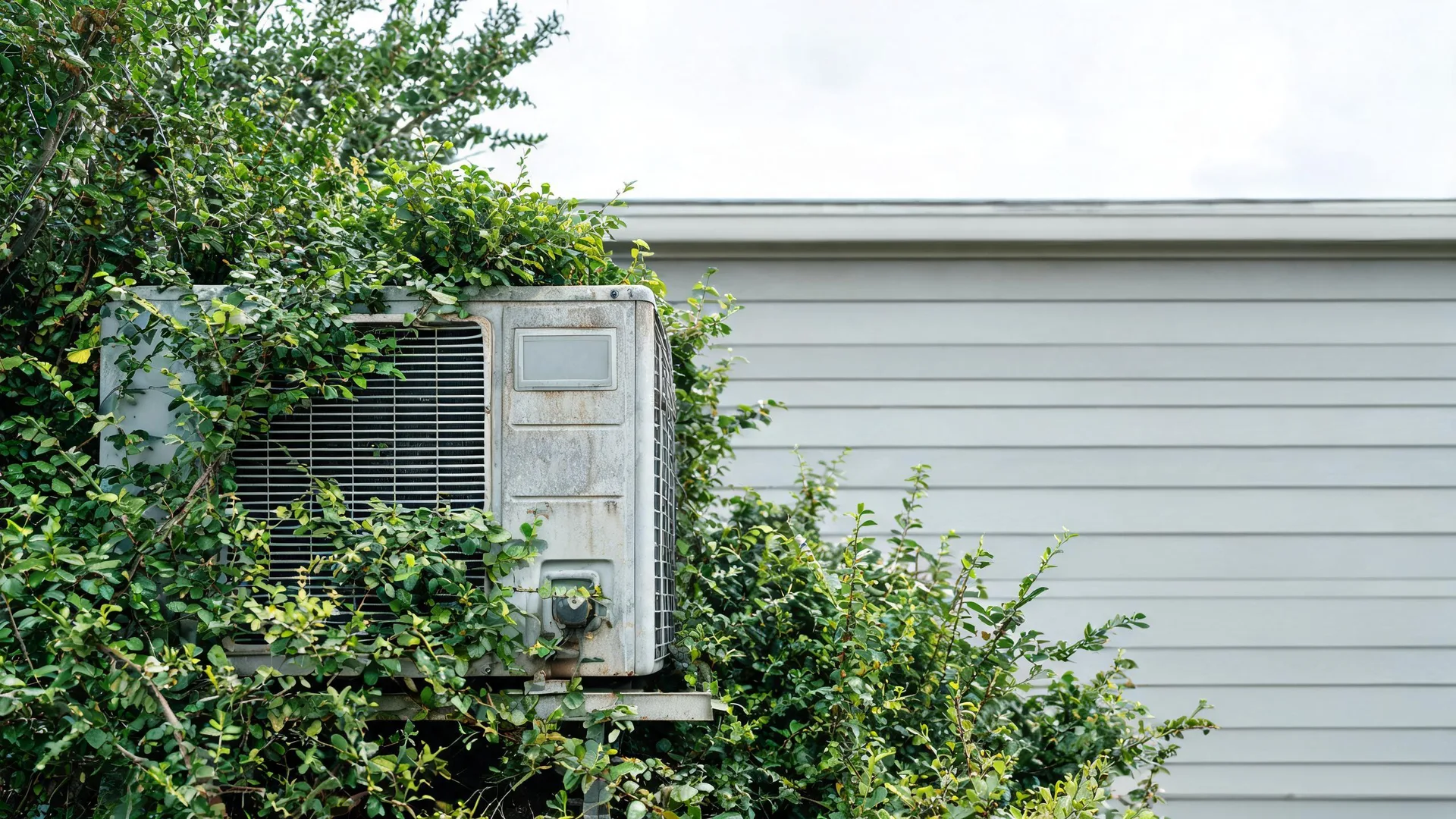
A struggling compressor wears faster

If the compressor is drawing hard because of low refrigerant or a failing capacitor, every hour it keeps running is an hour it's working outside its normal range. Compressors aren't built to run that way long term. A problem that starts as a part a tech can replace can end with a compressor that's seized, and that's a different repair entirely.

Most heat pump failures trace back to a handful of parts. The reversing valve can stick, so the system stays stuck in one mode instead of switching between heating and cooling. The capacitor that gets the compressor and fans started can weaken over time until the motor struggles to turn over. A contactor's switch can pit and burn from years of opening and closing, until it stops making contact at all. Low refrigerant almost always means a leak somewhere in the line, not the refrigerant wearing out, since it doesn't get used up. Outdoors, the defrost board and sensor can fail, and then the unit either ices over because it never defrosts or runs a defrost cycle it doesn't need. Indoors, a blower motor can wear out from just running for years, the way any motor does.

Age and wear matter more than which part failed. A heat pump with one bad component, a contactor, a capacitor, a sensor, is usually worth fixing, since the rest of the system owes you nothing and keeps running once that one piece is replaced. What changes the math is a compressor going bad, or a string of separate repairs inside a couple years. The compressor is the most expensive part in the system, and when it fails, the cost of fixing it starts competing with the cost of replacing everything around it. A contractor can tell you which situation you're in. A failed part on a sound system is a repair. A system that keeps finding new parts to fail is telling you something else.