A row of dark-clad single-story cottages with gabled roofs behind trimmed hedges, with a mown lawn in the foreground and large leafy trees under an overcast sky.

Heat Pump Repair in Carmel, IN

Tell us about the job

Takes about a minute. No obligation.

RepairHeat PumpHamilton County, IN
Step 1 of 2

What ZIP code is the job in?

Winters here ask a lot of a heat pump

Carmel is in zone 5A, where heating carries the bigger share of the load. Overnight lows average 22°F across December, January and February. A heat pump here leans on its backup heat more than one in a milder zone would, and that extra run time is what tends to expose a weak part.

The cause is usually ordinary

Nothing about this county runs harder on a heat pump than normal wear does. A system that is short cycling, stuck in defrost, or blowing air that never gets warm almost always comes down to a common part. A stuck reversing valve. A failed defrost sensor. A low refrigerant charge. Finding which one it is settles the repair.

8 months
October through May, your system heats
3 months
June through August, it cools
22°F
the average winter night it heats against
83°F
the average summer afternoon it cools against
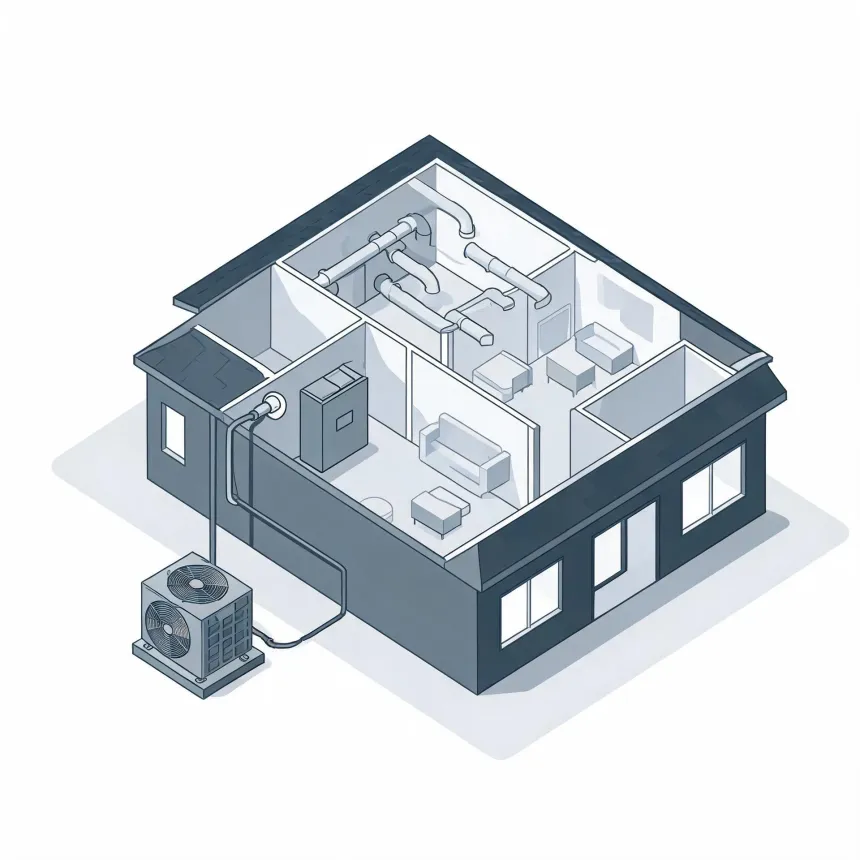
Isometric line illustration of a cutaway single-story house showing interior rooms, ceiling ductwork and an indoor air handler, connected by a line to an outdoor condenser unit on a pad beside the building.
Your system heats October through May and cools June through August.

NOAA nClimDiv, 1991–2020 normals

Heat here runs October through May, about eight months a year.

September is when a weak part gets found, right before the system has to carry the load.

Half the homes in Hamilton County were built in 2001 or later

Half the homes here were built by 2001
69 damaging wind events from 2015 to 2024
53 hail events from 2015 to 2024
Power here isn't cheap to wasteIndiana electricity ran 14.77 cents per kilowatthour in 2024, and a heat pump leaning on backup heat burns through it fast.

Before calling anyone, check the thermostat is set to heat and the setpoint is actually above room temperature. Look at the outdoor unit. If the coil is caked in ice or buried in leaves and debris, clear what you can reach and see if airflow improves. Check the indoor filter and swap it if it's gray or clogged, a blocked filter starves the system and can make it run constantly without warming the house. Go around to the vents and confirm air is actually coming out of them. Breaker panel is worth a look too, a tripped breaker to the outdoor unit will stop it cold while the indoor blower still runs like nothing's wrong. None of this fixes a bad reversing valve or a low charge, but it rules out the easy stuff first.

A heat pump stuck on backup heat gets expensive to ignore

Backup heat draws more power than the heat pump alone, and at 14.77 cents per kilowatthour that difference shows up on the bill fast. If yours is short cycling or stuck in defrost, the longer it runs that way, the more it costs before it's fixed.

Find a contractor
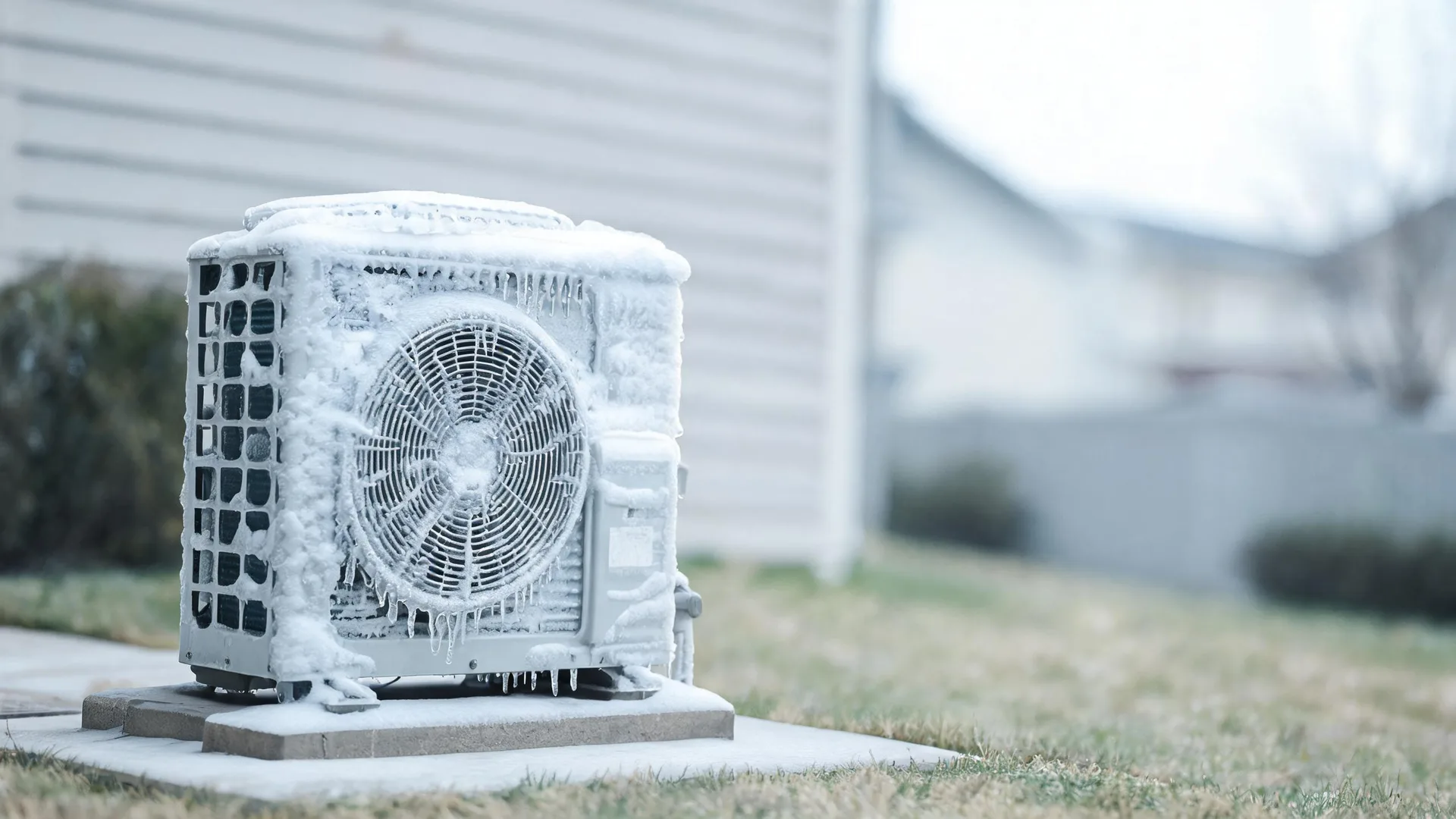
A residential heat pump outdoor unit mounted on a concrete pad next to a house with gray vinyl siding.

A newer system points to repair

If the heat pump came with the house, parts are likely original and still within their working life. A reversing valve or defrost sensor that fails this early is a one-off part failure, not old age catching up. That points to repair.

What you'll actually notice

The air coming out of the vents feels cool or barely warm, not hot like a furnace would put out. The outdoor unit might be running constantly, or it might have stopped while the indoor blower keeps blowing. You may hear it cycling on and off every few minutes instead of running a long steady stretch. Sometimes the whole system switches to backup heat on its own and stays there. You can usually tell because the air finally feels warm, but the unit sounds different and the room heats up faster than it normally would.

Why these signs matter

Short cycling wears on the compressor every time it starts back up, and a unit that keeps doing it is heading toward a harder failure, not away from one. A system stuck in defrost means the sensor that's supposed to end that cycle isn't doing its job, so the outdoor coil never gets back to actually heating. Weak warm air from the vents usually means the reversing valve isn't fully switching into heating mode. None of these smooth out on their own, and whatever part is failing only gets leaned on harder the longer it keeps running this way.

Most heat pump failures come down to a handful of parts, and they fail for the same reason. The system switches between heating and cooling, and in and out of defrost, thousands of times over its life, and eventually something wears from the switching itself. The reversing valve is the common one. It slides back and forth to route refrigerant one way for heating and the other for cooling, and the coil that pulls it can stick or weaken until the valve only shifts partway. That partial shift is why warm air turns lukewarm. Defrost sensors fail the same slow way. That sensor tells the system when the outdoor coil has iced over and needs to clear itself, and once it stops reading right, the unit either never defrosts or never stops trying to. A low refrigerant charge works differently. It does not wear out, it leaks, usually from a fitting or a pinhole in the coil, and a system running low never quite catches up no matter how long it runs. Capacitors and contactors in the outdoor unit wear out too, just from starting and stopping the compressor over and over. None of this has anything to do with the age of the house. It comes down to how many cycles the part has already been through.

A diagnostic visit starts outside at the unit. A tech hooks up gauges and checks the refrigerant pressure, because that number says whether the charge is low and by how much. Capacitors get tested under load, not just looked at. A weak capacitor can look perfectly fine sitting still and still fail to start the compressor. The reversing valve gets checked by watching whether it actually completes the switch between heating and cooling, not just whether it tries to. Defrost sensors get tested against the real coil temperature, since a sensor reading off by even a little throws the whole defrost cycle out of sync. Airflow gets checked too, at the vents and across the indoor coil, because restricted airflow can mimic a refrigerant problem that isn't really there. Most of this takes longer to explain than to actually do. Walking through it in order is how the part that gets replaced ends up being the part that was actually bad.